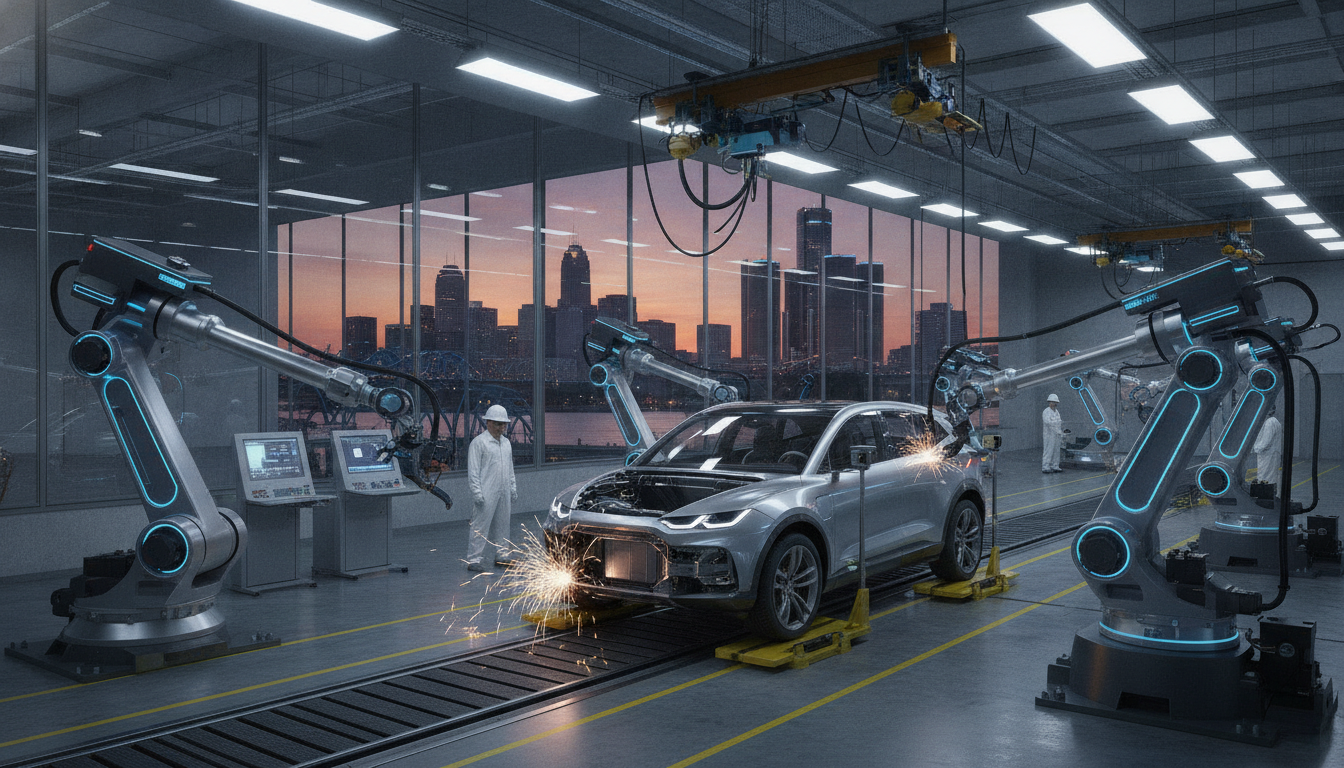
The skyline of Detroit has long been synonymous with the rhythmic pulse of internal combustion engines, but today, that pulse is being recalibrated. As the global automotive industry undergoes its most significant transformation in a century, the Detroit auto industry finds itself at a critical juncture. The rapid rise of electric vehicles (EVs) has introduced a new era of competition, pitting legacy American manufacturers against tech-heavy startups and aggressive international rivals.
The Global Race for EV Dominance
For decades, Ford, General Motors (GM), and Stellantis dominated the North American roads. However, the shift toward electrification has opened the door for new players. Companies like Tesla have already established a massive lead in software integration and battery efficiency, while Chinese manufacturers such as BYD are scaling production at a rate that threatens to undercut Western pricing structures.
According to reports from the U.S. Department of Energy, federal investments and tax credits under the Inflation Reduction Act have accelerated domestic production, but the pressure from overseas remains high. Industry analysts suggest that the next three to five years will determine whether Detroit can reclaim its status as the world’s undisputed automotive capital or if it will be forced to play a permanent game of catch-up.
Ford and GM: Pivoting in Real Time
Both Ford and GM have committed tens of billions of dollars to their EV transitions, yet the path has been anything but linear. Ford recently adjusted its strategy to include a heavier focus on hybrid models as consumer demand for pure battery-electric vehicles grew more slowly than initially projected. This move aims to provide a bridge for consumers who are wary of charging infrastructure limitations.
GM, on the other hand, continues to lean into its Ultium battery platform. Despite early production bottlenecks, the company remains focused on its goal to eliminate tailpipe emissions from new light-duty vehicles by 2035. This transition is not just about the vehicles themselves but about reimagining the entire manufacturing ecosystem in Southeast Michigan. You can read more about how these shifts are impacting the local Detroit economy in our previous coverage of industrial redevelopment.
Impact on Detroit Residents and the Workforce
For the residents of Detroit and its surrounding suburbs, this global competition is not just a corporate headline—it is a matter of job security and community stability. The Detroit auto industry remains the largest employer in the region, and the transition to electric vehicles requires a complete overhaul of the workforce’s skill set.
The United Auto Workers (UAW) has been vocal about ensuring that the shift to green energy does not result in a “race to the bottom” for wages. Historically, EV components—particularly batteries—have been produced in non-union plants. Recent negotiations have seen progress in bringing battery manufacturing under master labor agreements, but concerns remain regarding the total number of man-hours required to build an EV compared to a traditional engine.
Local experts note that for every plant that closes or transitions, hundreds of small-scale suppliers in the metro area must also pivot. If a local machine shop that specializes in pistons cannot find a way to manufacture battery trays or cooling systems, they risk shuttering, which trickles down to local tax bases and school funding. The city’s infrastructure development plans are also being influenced by this shift, as the city prepares for a future where charging stations are as common as gas pumps.
Data and Market Trends
Data from the U.S. Census Bureau and recent industry earnings calls highlight the scale of the challenge. In 2023, EV competition saw prices drop across the board as manufacturers fought for market share. While this is a win for consumers, it has squeezed the profit margins of Detroit’s legacy automakers, who are simultaneously funding the development of new technology while relying on the profits from gas-powered trucks and SUVs to stay afloat.
Moreover, the global supply chain remains a volatility factor. The concentration of mineral processing for batteries in Asia creates a strategic vulnerability. To combat this, Detroit-based firms are increasingly looking toward “near-shoring” and “friend-shoring,” seeking to build a North American supply chain that includes lithium and cobalt sourcing from Canada and the Western United States.
The Future Outlook for the Motor City
What happens next depends on a combination of consumer behavior, federal policy, and technological breakthroughs. While Ford and GM have shown resilience, the threat from electric vehicles produced by international competitors remains the primary focus of boardroom discussions in the Renaissance Center and Dearborn.
The City of Detroit has expressed optimism, citing the thousands of new jobs created at facilities like GM’s Factory ZERO, which spans the border of Detroit and Hamtramck. This facility serves as a blueprint for the future: a repurposed heritage plant now dedicated entirely to the assembly of electric trucks and SUVs. As the Detroit auto industry continues to evolve, the ability of these storied companies to innovate as fast as their global rivals will define the city’s economic narrative for the next century.