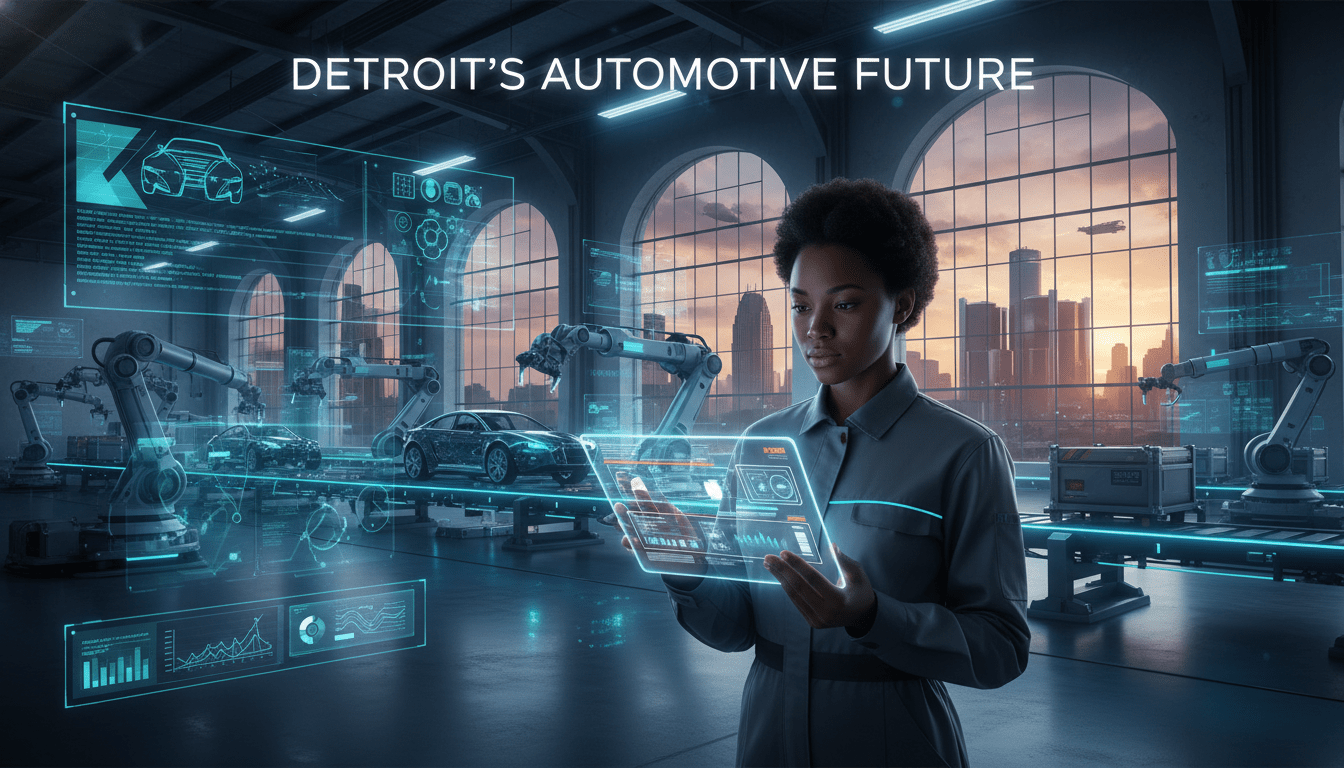
Detroit has long been defined by the assembly line—the physical movement of steel, rubber, and glass transforming into the automobiles that put the world on wheels. However, a quiet revolution is taking place inside the factories and logistics centers of Southeast Michigan. The era of the Detroit digital supply chain has arrived, driven by the necessities of electric vehicle production, artificial intelligence, and the lingering lessons of the post-pandemic global economy.
As automakers and manufacturers race to modernize, the integration of digital technologies into supply chain management is becoming as critical as the manufacturing process itself. According to data from Automation Alley, Michigan’s Industry 4.0 knowledge center, the digitization of the supply chain is no longer optional for local businesses—it is a survival mechanism in an increasingly volatile global market.
The Shift to Smart Logistics
The traditional supply chain was linear and often opaque. A part was ordered, shipped, and received, with limited visibility in between. Today, Detroit’s leading manufacturers are deploying complex networks of Internet of Things (IoT) sensors, blockchain tracking, and AI-driven predictive analytics to create what experts call a “digital twin” of the supply chain.
This technology allows companies to simulate logistics scenarios before they happen. For Detroit, a city deeply integrated into the North American trade corridor, this means increased efficiency at border crossings and reduced downtime in factories.
“The disruption we saw in 2020 and 2021 served as a wake-up call,” said a representative from the Michigan Economic Development Corporation (MEDC) in a recent industry report. “Detroit is uniquely positioned to lead the nation in smart logistics because the infrastructure—both physical and digital—is being built right here alongside our EV transition.”
For more on how local industries are adapting, read our coverage on Detroit’s automotive business trends.
Impact on Detroit Residents and the Workforce
For the average Detroit resident, the phrase “digital supply chain” might sound abstract, but the on-the-ground impact is tangible. The shift is altering the local job market significantly. Warehouses and logistics centers, once viewed as sources of manual labor, are increasingly seeking workers with digital literacy skills.
The demand is shifting from purely physical material handling to managing the data that moves materials. This evolution is creating a need for workforce development programs that bridge the gap between traditional manufacturing skills and IT competencies. Local institutions and nonprofits are stepping up to offer certifications in logistics technology, ensuring that Detroiters are not left behind as the industry upgrades.
Furthermore, this efficiency promises to reduce the congestion and pollution associated with freight. Smarter logistics means fewer empty trucks on I-75 and I-94, as algorithms optimize routes and load capacities to ensure that every mile driven is productive. This contributes to the broader goal of a cleaner, more efficient Detroit city environment.
The EV Catalyst: Why Now?
The transition to Electric Vehicles (EVs) is the primary engine driving the Detroit digital supply chain. Unlike internal combustion engines, which rely on thousands of mechanical parts often sourced from established suppliers, EVs rely heavily on batteries, semiconductors, and software.
These components often have more fragile, time-sensitive, and geographically diverse supply lines. General Motors and Ford have both publicly emphasized the need for resilient, transparent supply chains to support their ambitious EV targets. A delay in a single microchip shipment can halt an entire production line, making real-time digital tracking essential.
According to reports from the Detroit Regional Chamber, the region’s ability to attract tech talent is now inextricably linked to its logistics capabilities. Tech startups focusing on supply chain visibility are beginning to cluster in Detroit, drawn by the proximity to major OEM (Original Equipment Manufacturer) customers.
Infrastructure Meets Innovation
The digital supply chain is also merging with physical infrastructure projects. The Gordie Howe International Bridge, currently under construction, is expected to be one of the most technologically advanced border crossings in North America. It is designed to integrate with smart transport systems, allowing for seamless data exchange between vehicles and customs infrastructure.
This symbiosis of infrastructure and software is expected to cement Detroit’s status as a premier trade hub. By digitizing customs data and freight tracking, the friction of international trade across the Detroit River—one of the busiest borders in the world—could be drastically reduced.
Key Technologies Driving Change
- Artificial Intelligence: Used to predict disruptions (like weather or port strikes) weeks in advance.
- Blockchain: Ensures the authenticity of parts, crucial for safety-critical automotive components.
- Autonomous Mobile Robots (AMRs): automating movement within Detroit-area warehouses.
What Happens Next
The trajectory for the Detroit digital supply chain is upward. As federal investments in domestic manufacturing (via the CHIPS Act and the Inflation Reduction Act) take hold, the volume of materials moving through Southeast Michigan will likely increase.
For Detroit, the challenge remains in execution. Can the region train enough workers to manage these digital systems? Can local internet infrastructure support the massive data loads required by smart factories? These are the questions city leaders and business executives will face in the coming years.
What is clear, however, is that Detroit is redefining what it means to be an industrial powerhouse in the 21st century. It is no longer just about muscle; it is about the mind—the digital intelligence that keeps the global economy moving.
For further reading on national logistics trends, visit the U.S. Department of Transportation Freight Management page.