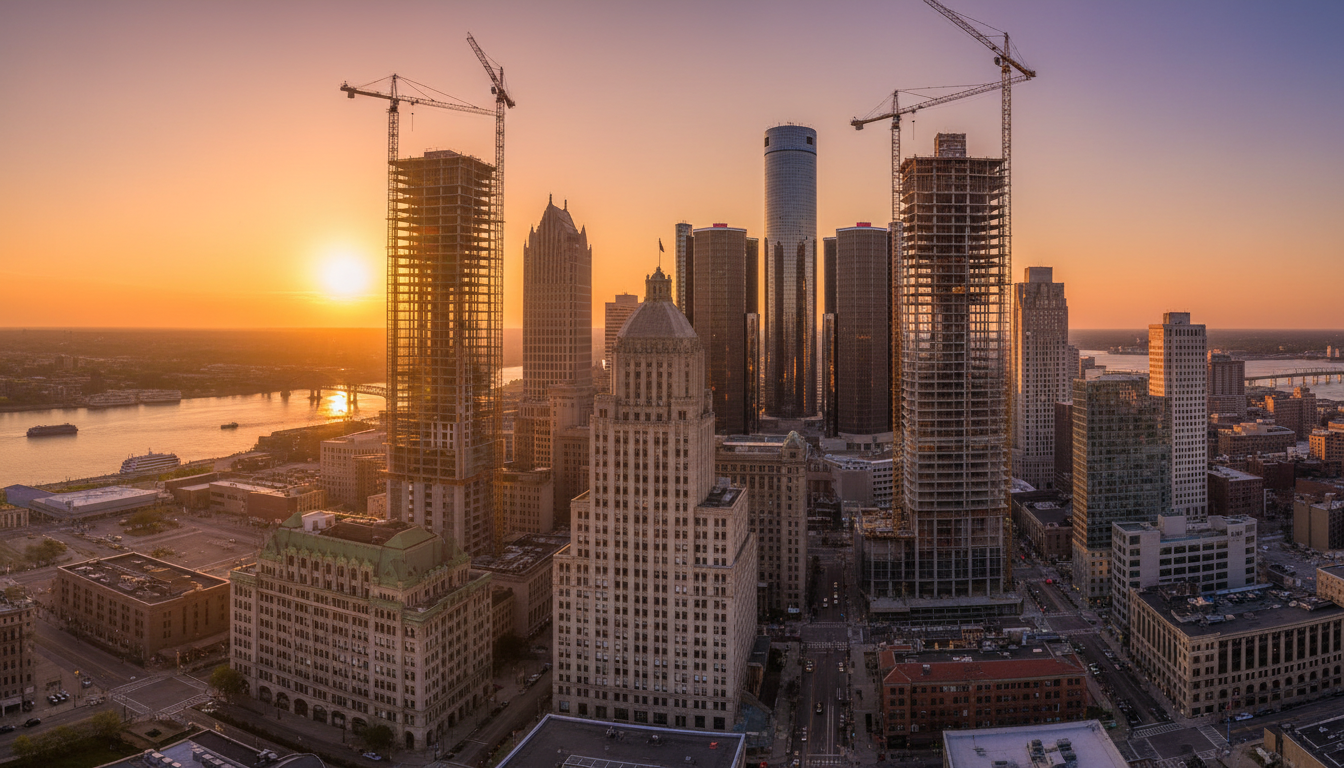
The Detroit economy is demonstrating a notable degree of resilience as 2024 progresses, with key indicators showing steady growth in employment and business investment. Despite persistent concerns regarding national inflation and its impact on consumer purchasing power, the city’s financial outlook remains cautiously optimistic. Recent data suggests that Detroit is successfully navigating the transition into a post-pandemic economic landscape, even as residents feel the squeeze of rising costs for essentials.
Employment and Sector-Specific Growth
According to the most recent Detroit Economic Outlook report released by the University of Michigan, the city is expected to continue adding jobs through 2025. The report, compiled by the Research Seminar in Quantitative Economics (RSQE), highlights that while the pace of growth may moderate compared to the immediate post-reopening surge, the underlying fundamentals of the Detroit economy remain strong. Employment gains are particularly evident in the professional and business services sectors, as well as in the continued stabilization of the manufacturing core.
City officials have pointed to the diversification of the local workforce as a primary driver of this stability. While the automotive industry remains the backbone of the region, the expansion of healthcare, technology, and logistics has provided a safety net against traditional industry volatility. According to the City of Detroit’s Mayor’s Office, significant investments in workforce development programs have begun to bridge the skills gap, allowing more residents to participate in high-growth industries that were previously out of reach.
The Inflation Challenge
Despite these gains, inflation remains a primary concern for both policymakers and households. Data from the U.S. Bureau of Labor Statistics (BLS) indicates that while the Consumer Price Index (CPI) has cooled from its 2022 peaks, the cumulative effect of price increases over the last three years continues to strain the financial outlook for many Detroiters. Specifically, the costs of energy, food, and services have remained elevated, often outpacing wage growth for lower-income brackets.
Economic analysts suggest that Detroit’s unique demographic profile makes it particularly sensitive to inflationary shifts. With a higher percentage of residents on fixed incomes or in entry-level service roles, the “inflation tax” is felt more acutely here than in wealthier suburban enclaves. Business owners, too, are grappling with higher interest rates and increased costs for raw materials, which has slowed some planned expansions in the retail and hospitality sectors.
Impact on Detroit Residents and Small Businesses
The impact of the current economic climate on local residents is a tale of two realities. On one hand, the increase in available jobs has lowered the unemployment rate significantly. On the other hand, the cost of living—particularly housing—has risen sharply. For many, the growth in the Detroit economy feels distant when compared to the immediate pressure of monthly bills.
Small business owners in neighborhoods outside of the downtown core report a mix of optimism and anxiety. While foot traffic has returned to pre-pandemic levels in many areas, the cost of inventory and labor has forced many to raise prices. Local entrepreneurs have expressed that while they see more customers, their profit margins are being squeezed by the very inflation that the Federal Reserve is working to tame. Organizations like the Detroit Economic Growth Corporation (DEGC) have increased their outreach, providing grants and technical assistance to help these small businesses weather the current financial climate.
Real Estate and Infrastructure Investment
Investment in Detroit’s physical landscape continues to be a bright spot. Major projects, including the completion of the Hudson’s site development and ongoing work in the Corktown area, signal a long-term bet on the city’s future. The Detroit housing market also shows signs of stabilization; while prices are higher than they were five years ago, the city remains one of the most affordable major urban centers in the country, attracting a new wave of middle-class families and young professionals.
Infrastructure spending, bolstered by federal funds, is also contributing to the local economic engine. Road improvements, the expansion of greenways, and updates to public transit are not only creating temporary construction jobs but are also laying the groundwork for more sustainable long-term economic growth. These improvements are essential for connecting residents in outlying neighborhoods to the new job hubs being created downtown and in the Midtown district.
Future Economic Outlook
Looking ahead, economists believe that Detroit is well-positioned to handle a potential national slowdown, provided that the transition to electric vehicles (EVs) and green energy continues to bring investment to the region. The University of Michigan’s forecast suggests that while inflation will continue to be a factor, the city’s payrolls will continue to expand, albeit at a slower rate than in the previous 24 months.
The consensus among financial experts is that the Detroit economy is no longer the fragile entity it was a decade ago. It has built a more robust foundation characterized by better fiscal management and a more diverse industrial base. However, the path forward will require a delicate balance between encouraging high-level investment and ensuring that the benefits of growth are felt by every Detroiter, regardless of their zip code. As the city moves into the latter half of the decade, the focus will likely shift from simple recovery to sustainable, equitable expansion.