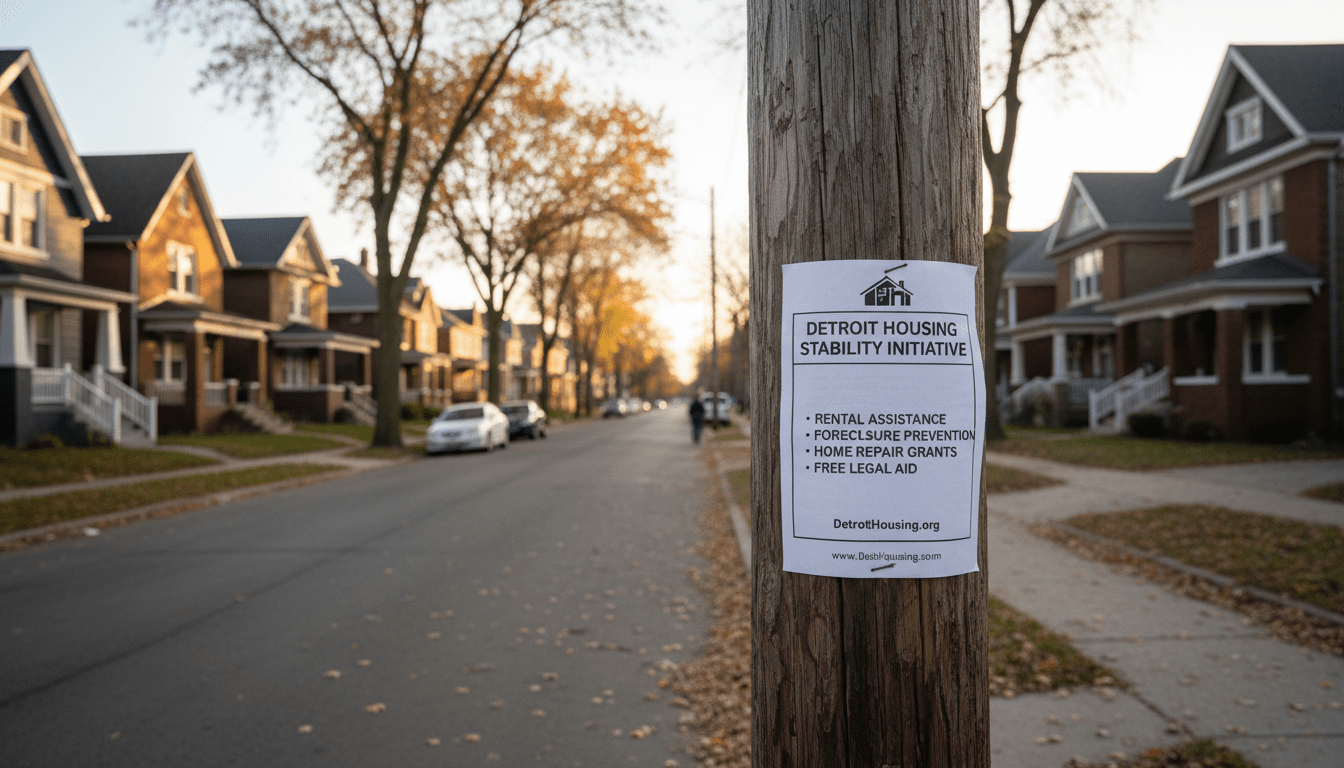
For thousands of residents across the city, the landscape of Detroit rental assistance has shifted significantly in the wake of the pandemic. While the massive federal tranches of the COVID Emergency Rental Assistance (CERA) program have largely concluded, the City of Detroit and local non-profits are pivoting toward long-term stability measures, focusing heavily on legal defense and targeted eviction diversion strategies.
Housing stability remains a critical issue in Detroit, where a significant portion of the population are renters. As inflation impacts the cost of living and rental rates creep upward in developing neighborhoods, the need for robust support systems has not waned. City officials and housing advocates are now emphasizing the importance of the “Right to Counsel” ordinance and the coordinated entry systems managed by Wayne Metropolitan Community Action Agency and the United Community Housing Coalition (UCHC).
The Shift from Emergency Cash to Eviction Diversion
During the height of the pandemic, rental assistance was primarily defined by direct financial payments to landlords to cover arrears. Today, the approach is more holistic, aiming to resolve disputes before they result in displacement. According to the City of Detroit’s Housing & Revitalization Department, the focus has moved toward the Eviction Diversion Program (EDP), which combines limited financial assistance with legal representation.
This shift is crucial for the city’s housing ecosystem. Rather than simply paying off debt, the current framework seeks to address the root causes of eviction, including substandard housing conditions and landlord-tenant disputes. Organizations like Wayne Metro continue to serve as the backbone for processing applications for available state and local funds, though the criteria have become stricter compared to the pandemic era.
“The goal is to prevent homelessness before it starts,” a representative from the United Community Housing Coalition noted in a recent community update. “While the massive federal checks are gone, the infrastructure to help tenants understand their rights is stronger than ever.”
Right to Counsel: A Game Changer for Detroiters
Perhaps the most significant development in Detroit rental assistance infrastructure is the full implementation of the Right to Counsel ordinance. Passed by the City Council, this measure guarantees free legal representation to low-income tenants facing eviction in 36th District Court.
Prior to this ordinance, data showed that less than 5% of tenants had legal representation in eviction court, while the vast majority of landlords did. This disparity often led to swift eviction judgments, regardless of the tenant’s circumstances or the condition of the property. Now, eligible Detroit residents have access to attorneys who can negotiate settlements, request more time to move, or challenge evictions based on uninhabitable living conditions.
The program is funded through a combination of city budget allocations and philanthropic contributions like those from the Gilbert Family Foundation, aiming to level the playing field. Early data suggests that represented tenants are significantly more likely to remain in their homes or secure a soft landing compared to those who navigate the court system alone.
Impact on Detroit Residents and Neighborhoods
For families in neighborhoods from Brightmoor to the East Side, these programs offer a lifeline. Housing stability is directly linked to educational outcomes for children and employment stability for adults. By keeping families in place, Detroit aims to maintain neighborhood cohesion and prevent the blight that often follows waves of evictions.
However, the challenge remains accessibility. Residents must be proactive. The Detroit housing market trends indicate that as property values rise, the pressure on long-term renters increases. The availability of resources is often contingent on income levels, typically capped at 200% of the federal poverty guidelines for legal services.
Residents facing housing insecurity are urged to contact the Detroit Eviction Help line or visit the Detroit Housing Resource HelpLine. Accessing these services early—upon receiving a Notice to Quit rather than waiting for a court date—drastically improves the chances of a favorable outcome.
Background and Data: The Affordability Crisis
The necessity for ongoing Detroit rental assistance is underscored by economic data. According to the U.S. Census Bureau, Detroit has a high rate of “rent-burdened” households—defined as those spending more than 30% of their gross income on rent and utilities. In some zip codes, this figure exceeds 50%, leaving families with little cushion for medical emergencies or car repairs.
A report from the University of Michigan’s Poverty Solutions highlighted that eviction filings in Detroit have historically been among the highest in the nation. While numbers dropped during the eviction moratoriums, they began to tick back up as protections expired. The intervention of the Right to Counsel and the diversion programs is the city’s primary defense against returning to pre-pandemic eviction rates.
Furthermore, local development projects are increasingly required to include affordable units, but the supply still lags behind the demand. For more on how the city is handling new construction, readers can review our coverage on neighborhood development updates across the metro area.
What Happens Next?
Looking ahead to the remainder of 2024 and into 2025, the sustainability of these programs will depend on continued funding. While the American Rescue Plan Act (ARPA) provided a temporary surplus of funds, city officials are tasked with finding permanent revenue streams to support the Office of Eviction Defense.
Tenants and landlords alike are watching closely. Landlords argue that rental assistance processes need to be streamlined to ensure property owners can meet their own financial obligations, such as taxes and maintenance. Meanwhile, tenant advocates are pushing for an expansion of rights, including rent stabilization discussions and stronger enforcement against retaliatory evictions.
For more information on eligibility and how to apply for current programs, residents should visit the official City of Detroit Housing and Revitalization website.