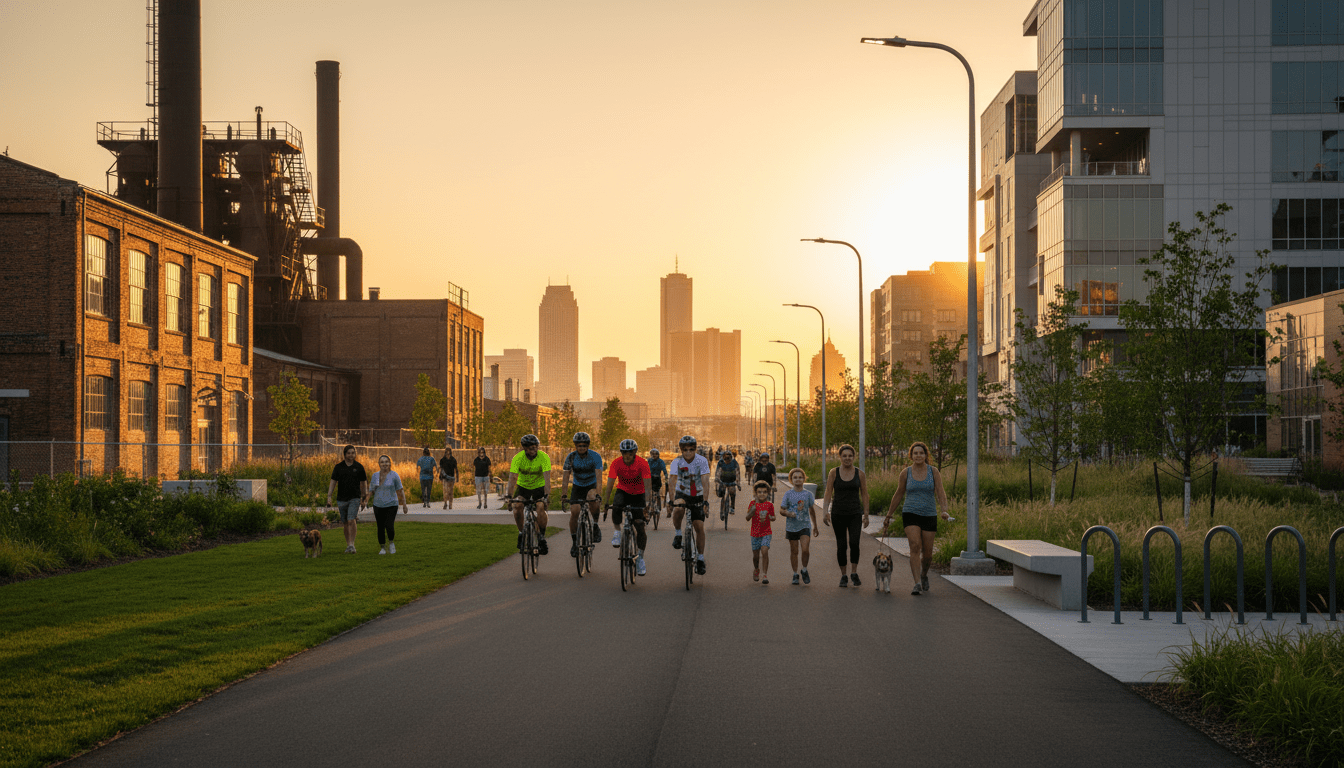
Construction on the Joe Louis Greenway is accelerating across the city, marking a pivotal moment in Detroit’s transition toward a more connected, non-motorized infrastructure network. As crews break ground on new segments of the 27.5-mile loop, city planners and community leaders are focusing on how this massive development will alter the economic and social landscape of the 23 neighborhoods it traverses.
The project, which aims to unify Detroit, Hamtramck, and Highland Park, represents one of the most ambitious urban reclamation efforts in the Midwest. By converting former railway easements and industrial corridors into recreational thoroughfares, the greenway is designed to bridge the gap between the booming riverfront and neighborhoods that have historically faced isolation due to freeway construction and industrial zoning.
Connecting Communities Through Infrastructure
According to the City of Detroit, the Joe Louis Greenway is more than just a bike path; it is a strategic infrastructure investment intended to spur neighborhood revitalization. The loop connects residents to public transit, jobs, and parks, effectively linking the Detroit Riverfront to areas as far north as 8 Mile Road.
Recent progress has been visible in the “freight yard” section and the connections moving toward the Southwest side. Data from the City of Detroit General Services Department indicates that once completed, nearly 10 percent of the city’s population will live within a 10-minute walk of the greenway. This proximity is expected to change commuting habits and increase access to the riverfront for residents who previously lacked safe, direct routes.
“This is about equity of access,” stated a spokesperson for the Detroit Riverfront Conservancy in a recent press briefing regarding the connectivity between the riverwalk and the new inland paths. “Residents in neighborhoods like Core City and Midwest will finally have a direct line to the amenities that have largely been concentrated downtown over the last decade.”
Economic Impact on Detroit Real Estate
The expansion of the Joe Louis Greenway is already influencing the Detroit housing market in adjacent zip codes. Real estate analysts have observed a trend where property inquiries increase in corridors slated for greenway development. This phenomenon, often called the “greenway effect,” suggests that proximity to recreational infrastructure is becoming a primary driver for both residential and commercial investment in the city.
Local business owners are also anticipating a shift in foot traffic patterns. Commercial nodes along the route, particularly where the greenway intersects with major avenues like Grand River and Woodward, are being eyed for mixed-use developments. However, this economic optimism is paired with caution regarding the stability of existing communities.
Impact on Detroit Residents
For long-time Detroit residents, the construction brings both promise and concern. The primary benefit is the immediate improvement in blight removal and the creation of safe, lit spaces for recreation. The transformation of abandoned railway cuts into manicured paths removes long-standing eyesores that have plagued specific neighborhoods for decades.
However, concerns regarding gentrification remain a topic of discussion at community meetings. As seen with similar projects like the Atlanta BeltLine, rapid property value increases can strain long-term residents. In response, city officials have pointed to the “Framework Plan,” which includes zoning recommendations and housing strategies aimed at preserving affordability along the route.
Community advocacy groups have emphasized the need for policy that ensures current residents can afford to stay and enjoy the new amenities. “The greenway must serve the people who are here now, not just those who will move here in five years,” noted a representative from a local neighborhood association during a recent town hall.
Funding and Federal Support
The project has garnered significant attention at the federal level, securing crucial funding to ensure its completion. The U.S. Department of Transportation has recognized the project’s utility in reconnecting communities divided by highways. Grants such as the RAISE grant have been instrumental in funding complex bridges and crossings that ensure the loop is continuous and safe for pedestrians and cyclists.
This federal support underscores the national significance of Detroit’s approach to adaptive reuse. Unlike traditional Detroit development projects that focus on vertical construction, this horizontal expansion focuses on healing the urban fabric.
Timeline and What Happens Next
Construction is proceeding in phases. The immediate focus remains on completing the connectivity between the Dequindre Cut and the northern sections into Highland Park. Concurrently, efforts are underway to finalize the acquisition of the remaining rail parcels needed to close the loop on the west side.
While the full loop is a multi-year project, segments are opening on a rolling basis, allowing residents to utilize the path as it grows. The City has projected substantial completion of the main loop within the coming years, though specific dates depend on construction variables and weather conditions.
As the Joe Louis Greenway takes shape, it serves as a litmus test for Detroit’s ability to balance rapid development with community needs, setting a precedent for future infrastructure projects in the region.