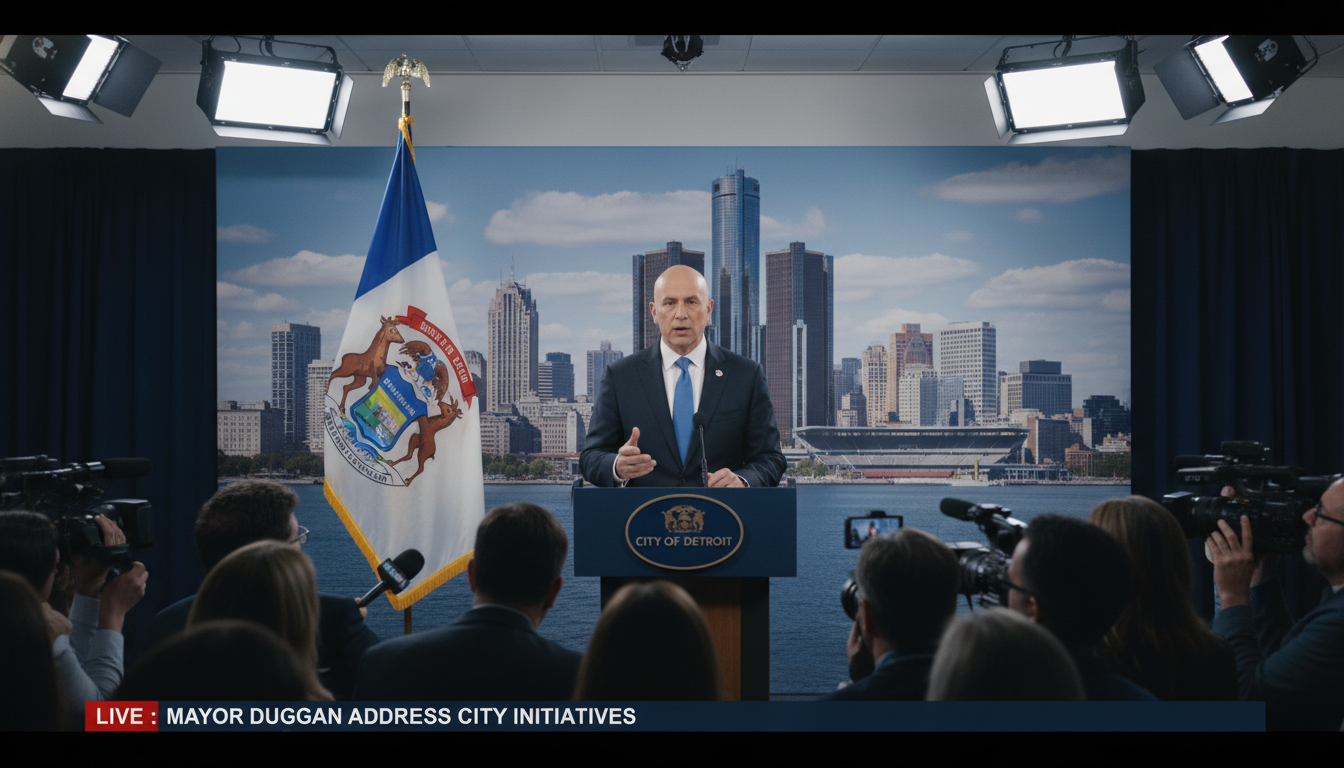
Detroit Mayor Mike Duggan has signaled a potential paradigm shift in the upcoming 2026 Michigan gubernatorial race, positioning himself as a Mike Duggan independent governor candidate. This move, which breaks from his decades-long affiliation with the Democratic Party, aims to offer what he describes as a "third choice" for voters who feel disenfranchised by increasing political polarization. As the longest-serving mayor of Detroit in recent history, Duggan’s possible departure from traditional party lines has sent ripples through the state’s political establishment, raising questions about the future of Michigan election dynamics and the role of third party politics in a traditionally blue-leaning state.
The Strategic Pivot to an Independent Platform
The decision to explore an independent run is not merely a branding exercise; it reflects a calculated response to the current national political climate. According to reporting from the Detroit Free Press, Duggan has expressed a desire to lead a coalition that prioritizes pragmatic governance over ideological purity. By running as an independent governor candidate, Duggan seeks to bypass the often-bruising primary process of the major parties, allowing him to maintain his appeal to moderate Republicans, centrist Democrats, and the growing block of unaffiliated voters.
For many years, Duggan has been a central figure in Detroit neighborhood development, leveraging a reputation for administrative efficiency and data-driven results. His supporters argue that this "get-it-done" mentality is exactly what Michigan needs at a state level, independent of the constraints imposed by national party platforms. However, political analysts note that an independent run in Michigan is fraught with logistical hurdles, including rigorous signature requirements and the lack of an established party infrastructure.
Impact on Detroit Residents and Voters Choice
For the residents of Detroit, a Duggan gubernatorial run represents a double-edged sword. On one hand, having a former mayor in the Governor’s mansion could lead to increased state focus on urban infrastructure and social programs. On the other hand, it signals the end of an era for the city’s local leadership. Since taking office in 2014, Duggan has overseen the city’s exit from bankruptcy and a significant revitalization of the downtown core. The potential transition of power within the Mayor’s office will be a pivotal moment for Detroit infrastructure projects and long-term planning.
Voters choice in Michigan has traditionally been limited to the two major parties, with third-party candidates rarely breaking double digits in statewide polls. Duggan’s entry as a high-profile independent could change that math. Residents interviewed across various Detroit neighborhoods expressed a mixture of curiosity and skepticism. While many appreciate his track record in the city, others worry that an independent run might inadvertently act as a spoiler, shifting the balance of power in ways that may not benefit the city’s most vulnerable populations.
Background and Data on Michigan Third Party Politics
Data from the Michigan Secretary of State shows that interest in non-major party candidates has been slowly rising over the last decade. In the 2020 and 2022 election cycles, while the majority of votes were cast for Democrats or Republicans, the number of registered voters identifying as "independent" has reached record highs in suburban and urban corridors. According to the Michigan Bureau of Elections, an independent candidate for governor must collect a minimum of 30,000 valid signatures, with specific geographic distribution requirements, to secure a spot on the general election ballot.
Historically, Michigan has been a difficult state for independent or third-party candidates. Unlike states with more flexible ballot access laws, Michigan’s system is designed to favor the established two-party structure. However, Duggan’s unique position—possessing high name recognition and a robust fundraising network—makes him a uniquely formidable contender. Political science experts from Wayne State University suggest that if Duggan can capture even 15% of the moderate vote, he could fundamentally alter the outcome for both the Democratic and Republican nominees.
The Role of Third Party Politics in 2026
The conversation surrounding third party politics in Michigan is no longer confined to the fringes. With Mike Duggan entering the fray as a potential independent governor candidate, the 2026 race is shaping up to be one of the most unpredictable in Michigan’s history. This shift reflects a broader national trend where voters are increasingly looking for alternatives to the traditional party system. In Michigan, where the margins for statewide office are often slim, a credible "third choice" could be the deciding factor in who leads the state through the next decade.
What Happens Next for the Duggan Campaign
As Mike Duggan continues his listening tour across the state, his campaign team is expected to begin the formal process of vetting legal requirements for an independent run. The next six months will be critical as he gauges financial support from Michigan’s business community and assesses the appetite for his message in more rural parts of the state. While his Detroit base is strong, the success of an independent governor candidate depends on building a broad, statewide coalition that transcends geographic and economic divides.
For Detroiters, the focus remains on the immediate future of the city. Regardless of Duggan’s statewide ambitions, the initiatives he started regarding housing and transportation will require steady hands. The coming months will provide more clarity on whether Duggan will formally file his candidacy or if this "third choice" narrative is a strategic maneuver to influence the policy platforms of the major party candidates. For now, the prospect of a Mike Duggan independent governor candidate run remains the most discussed topic in Michigan politics, promising a 2026 election cycle unlike any other.