In the heart of Midtown and stretching into the neighborhoods of Northwest Detroit, a quiet transformation is taking place that goes beyond construction cranes and new storefronts. As the city continues its economic pivot from a purely industrial powerhouse to a diverse hub of technology and innovation, residents are increasingly engaging in lifelong learning programs. According to local educators and workforce development leaders, this surge in intellectual curiosity is becoming a critical driver for the city’s sustained recovery.
While often viewed through the lens of K-12 education, the concept of learning is taking on new urgency for Detroit’s adult population. From coding bootcamps in Corktown to history lectures at the Detroit Public Library, the appetite for new knowledge is reshaping the local workforce and community dynamics. Data from the Bureau of Labor Statistics indicates that regions with higher participation in adult education and continuous training programs show greater resilience against economic downturns, a trend that Detroit policymakers are keen to capitalize on.
The Economic Imperative of Curiosity
For decades, the narrative of Detroit’s labor force was defined by stability and specialized, repetitive skills. However, the rapid transition toward electric vehicle manufacturing and fintech has altered the equation. Curiosity—the willingness to explore new systems and acquire new skills—is no longer just a personality trait; it is an economic survival skill.
“The residents coming through our doors aren’t just looking for a paycheck; they are looking to understand the machinery of the future,” said representatives from local workforce development agencies. Programs like Detroit at Work have seen a shift in applicants who are not only seeking immediate placement but are asking for training in robotics, IT, and green energy infrastructure. This demonstrates a fundamental change in the local mindset: a move from static employment to dynamic career evolution.
This shift is vital for the city’s broader economic goals. As reported in our coverage of Detroit’s economic trends, the arrival of major tech hubs requires a talent pool that is agile. Employers in the Downtown district have noted that while technical certifications are necessary, the “soft skill” of curiosity—manifested as the ability to troubleshoot and learn on the fly—is increasingly what separates successful candidates from the rest.
Impact on Detroit Residents and Neighborhoods
The impact of this trend is visible at the neighborhood level. Community centers and libraries are evolving into “learning lounges” where the flame of curiosity is kept alive for residents of all ages. The Detroit Public Library (DPL), for instance, has expanded its programming beyond book lending to include technology workshops, small business seminars, and local history research assistance.
For long-time residents, these resources provide a bridge to the “new” Detroit. “It’s about agency,” explains a program coordinator at a Detroit community center. “When a resident learns how to use digital tools to manage their home business or researches the zoning laws affecting their block, that is curiosity in action. It transforms them from passive observers of gentrification to active participants in development.”
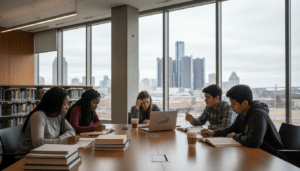
This engagement also fosters social cohesion. When residents participate in adult education classes—whether for GED preparation or art appreciation—they build networks outside of their immediate family circles. These interactions strengthen the social fabric of neighborhoods, a key component discussed in recent reports on Detroit’s neighborhood revitalization.
Institutions Anchoring the Learning Ecosystem
Detroit’s major cultural and academic institutions are pivoting to support this ecosystem of lifelong learning. Wayne State University and the University of Michigan’s Detroit Center have ramped up continuing education offerings, aiming to make higher education more accessible to non-traditional students. These institutions are recognizing that the “four-year degree” model is not the only path to knowledge.
Furthermore, the Detroit Institute of Arts (DIA) and the Michigan Science Center are playing pivotal roles. By offering free or discounted admission to residents, these institutions lower the barrier to entry for cultural exploration. Attendance data suggests that local engagement with these institutions has rebounded post-pandemic, with a marked increase in adults attending educational lectures and maker-fairs without children—indicating that adults are seeking these spaces for their own intellectual growth.
Challenges and Accessibility
Despite the positive momentum, barriers remain. Transportation reliability and the digital divide continue to hinder access to lifelong learning opportunities for some of Detroit’s most vulnerable residents. While the city has made strides in expanding internet access, physical proximity to training centers remains a hurdle for residents in the outer neighborhoods.
Advocates argue that for curiosity to truly fuel Detroit’s renaissance, learning opportunities must be hyper-local. Proposals to utilize vacant school buildings as adult education hubs are currently being debated in city planning meetings. The goal is to ensure that a mother in Brightmoor has the same access to upskilling and cultural enrichment as a young professional in Midtown.
Future Outlook: A City of Learners
Looking ahead, the integration of lifelong learning into the city’s strategic plan appears inevitable. City officials have hinted at future partnerships between private corporations and public education entities to create “learning pipelines” that run from high school through retirement.
The flame of curiosity in Detroit is burning brighter than it has in years. As the city continues to navigate complex social and economic changes, the willingness of its citizens to learn, adapt, and question will likely be the determining factor in the success of Detroit’s next chapter. The transition from the Motor City to a “City of Minds” is underway, driven by the collective curiosity of its people.