In the wake of recent military escalations involving Iranian strikes, a renewed and fervent debate has gripped Washington, D.C., echoing loudly across the streets of Detroit. As the White House navigates a volatile landscape in the Middle East, members of the United States Congress—specifically the Michigan delegation—are confronting the reality of their limited authority under the War Powers Resolution of 1973. For residents of Detroit and the broader Metro area, this is not merely a distant geopolitical abstraction; it is a matter of economic stability, community safety, and constitutional integrity.
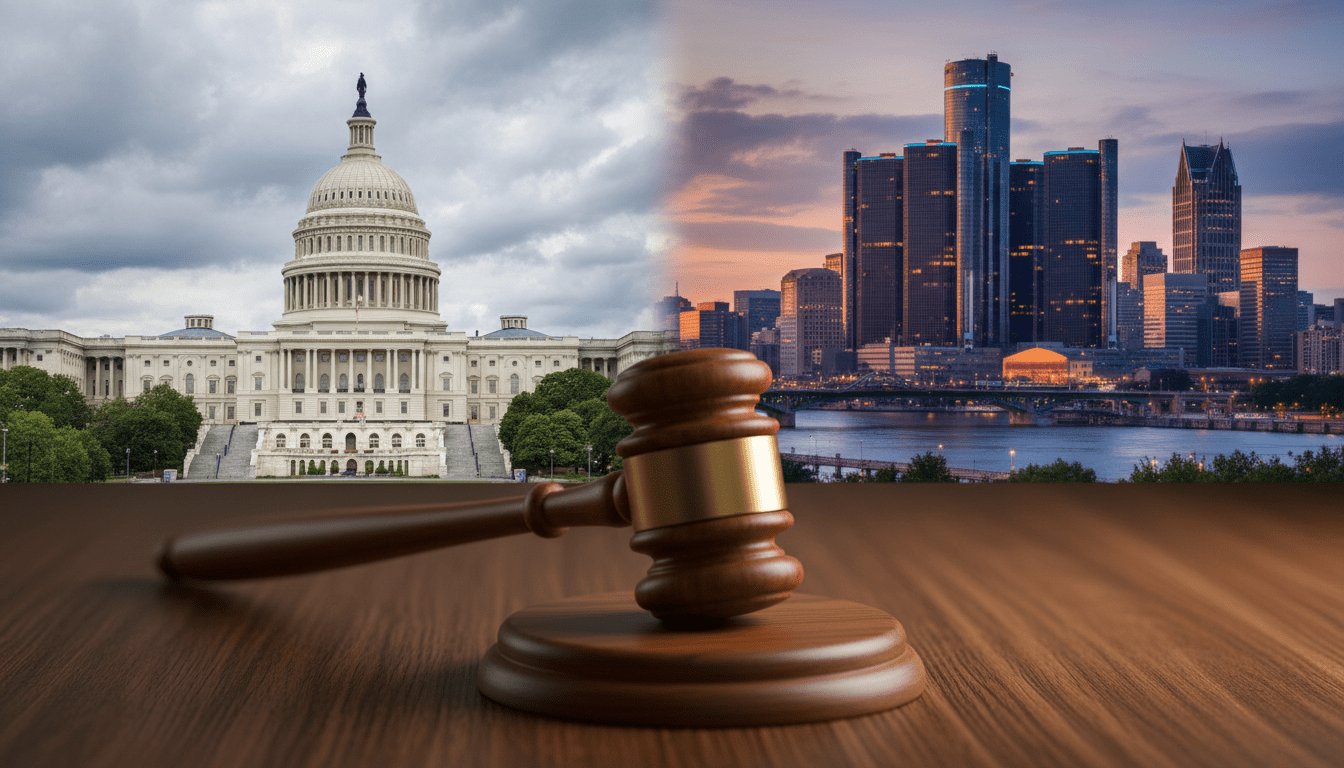
The constitutional tussle over who holds the keys to military engagement has intensified. While Article I of the Constitution grants Congress the power to declare war, Article II names the President as Commander-in-Chief. This inherent tension has led to decades of executive overreach, a trend that local representatives are now aggressively attempting to curb. As Detroiters watch gas prices fluctuate and community members express concern for relatives abroad, the question of congressional war powers has moved from legal textbooks to the forefront of local political discourse.
The Michigan Delegation leads the Charge
Michigan lawmakers have emerged as pivotal figures in the bipartisan effort to reclaim legislative oversight over military action. The state’s diverse political landscape has produced a delegation that is uniquely sensitive to the costs of conflict. Following the strikes, representatives from Metro Detroit have been vocal about the necessity of adhering to the War Powers Act to prevent an unauthorized spiral into a broader regional war.
According to statements from the U.S. Congress archives and recent press releases, Michigan representatives have co-sponsored legislation aimed at prohibiting funding for offensive military force against Iran without explicit congressional approval. This legislative maneuvering highlights a significant frustration among lawmakers: the executive branch often utilizes the 2001 and 2002 Authorizations for Use of Military Force (AUMF) to justify operations that were never originally intended by the legislature.
Local political analysts suggest that the push from Michigan representatives is driven by a constituency that is increasingly war-weary. “The electorate in Detroit is focused on infrastructure, housing, and economic recovery,” noted a policy researcher at a Detroit-based civic organization. “There is very little appetite for open-ended foreign conflicts that drain resources which could be utilized here at home.”
Impact on Detroit Residents and Communities
The debate over congressional war powers resonates deeply within Metro Detroit, home to one of the highest concentrations of Middle Eastern Americans in the country. When tensions flare between the U.S. and Iran, the anxiety is palpable in neighborhoods surrounding Detroit, where many residents maintain close familial ties to the region.
Community leaders in the area have expressed that the lack of congressional checks and balances adds to a sense of instability. “When the President can act unilaterally, it creates fear,” said a local community organizer working in Southwest Detroit. “Our families need to know that there is a democratic process involved before the country enters a conflict that could devastate our homelands and endanger our relatives.”
Furthermore, local veterans’ groups have weighed in on the issue. Chapters of veterans organizations within the city have held discussions regarding the constitutional necessity of debate before deployment. For many Detroit veterans who served in Iraq and Afghanistan, the conversation about the War Powers Act is personal. They argue that bypassing Congress disrespects the service of those who are sent into harm’s way without the clear backing of the people’s representatives.
Economic Ripple Effects in the Motor City
Beyond the geopolitical and emotional toll, the limitation of congressional war powers poses a direct economic threat to Detroit. The city’s economy remains inextricably linked to the automotive industry and logistics sectors, both of which are highly sensitive to global oil markets. Instability in the Persian Gulf, unchecked by congressional oversight, historically leads to spikes in crude oil prices.
Data from the U.S. Energy Information Administration has consistently shown that geopolitical risks in the Middle East correlate with rising gas prices at the pump. For Detroiters, many of whom rely on personal vehicles for commuting due to the region’s sprawling geography and developing transit infrastructure, a spike in fuel costs acts as an immediate regressive tax.
“If tensions escalate without a check from Congress, we see immediate volatility in the markets,” explains a local economic analyst. “For the Detroit auto industry, uncertainty is the enemy. Higher fuel costs drive down demand for trucks and SUVs, which are the profit centers for our local automakers. Protecting congressional authority is, in a roundabout way, protecting the stability of the local economy.”
For more on how global events shape our local financial landscape, readers can explore our coverage on the Detroit economy updates.
The Legal Struggle: Context and Background
To understand why Congress is currently struggling to assert its authority, it is necessary to look at the erosion of the War Powers Resolution. Passed over President Nixon’s veto in 1973, the law was designed to ensure that the President could not commit U.S. armed forces to combat abroad without congressional authorization for more than 60 days.
However, in practice, Presidents from both parties have found ways to side-step these requirements, often citing “imminent threats” or using limited strikes that fall below the threshold of “war” as defined by executive lawyers. This interpretation leaves Congress in a reactive position, often debating the legality of a strike after it has already occurred and the consequences are unfolding.
Legal scholars at Michigan universities have pointed out that without a veto-proof majority, Congress has limited tools to enforce the resolution. This leaves the power of the purse—cutting off funding—as the primary, albeit politically difficult, mechanism for stopping military action.
What Happens Next?
As the Senate and House continue to debate the parameters of the AUMF repeal and the reinforcement of the War Powers Act, Detroit residents should expect their local representatives to remain at the forefront of the issue. The upcoming legislative sessions will likely see introduction of amendments aimed at clarifying exactly what constitutes “hostilities,” thereby closing loopholes used by the executive branch.
For Detroit, the outcome of this constitutional struggle will determine not just the future of U.S. foreign policy, but the stability of local communities and the economy. As the city continues its revitalization efforts, the demand for a foreign policy that is accountable, transparent, and constitutionally sound remains a high priority for voters.
Stay tuned to DetroitCityNews.com for further reporting on Michigan politics and how national decisions affect our neighborhoods.