Recent statements from President Donald Trump suggesting that a potential military campaign regarding Iran would be of “short duration” have sparked a complex wave of reactions across Metro Detroit. While the administration frames the strategy as a limited engagement designed to avoid a protracted conflict, the ripple effects are being felt acutely in Southeast Michigan, home to the nation’s largest concentration of Arab Americans and the heart of the global automotive industry.
The President’s comments, aimed at assuring the public that the United States is not seeking another “forever war,” come amidst heightened tensions in the Middle East. However, for residents of Wayne County and business leaders in Detroit, the geopolitical maneuvering is far more than a distant headline. It represents immediate anxiety regarding family safety abroad and tangible concerns about the stability of the local economy.
The Strategic Signal and Local Anxiety
President Trump indicated that any military action taken against Iran would not involve ground troops and would not last long. “It would be a very short war,” Trump has stated in media appearances, suggesting a strategy reliant on air power rather than a full-scale invasion. While this rhetoric is intended to minimize fears of a draft or long-term entrenchment, it has done little to quell the unease in Metro Detroit communities.
According to political analysts observing the situation from Washington, the “short duration” signal is a double-edged sword. It implies overwhelming force to achieve quick objectives, which raises humanitarian concerns that resonate deeply in Michigan. For Detroit, a city that has become a central hub for dialogue on U.S. foreign policy due to its demographics, the nuances of the President’s language are scrutinized closely.
Local political organizers in Detroit have expressed skepticism regarding the timeline. “History tells us that conflicts described as short rarely stay that way,” noted a representative from a local civic engagement group based in Detroit. “Our community is watching these developments with extreme caution, knowing that instability in the region affects us directly here at home.”
Impact on Metro Detroit’s Arab American Community
The human impact of the escalating tension is most palpable in Dearborn and surrounding Metro Detroit areas. Southeast Michigan is home to hundreds of thousands of residents with roots in Lebanon, Iraq, Yemen, and Iran. While the specific focus of the current rhetoric is Iran, the interconnected nature of the region means that any military campaign—even a short one—creates widespread fear.
Community centers in Dearborn have reported an uptick in concerned residents seeking information. For many, the promise of a “short duration” campaign offers no comfort regarding the safety of relatives living in the region. Reports from local mental health organizations suggest that anxiety levels rise significantly in these communities whenever rhetoric concerning Middle Eastern conflict heats up.
“We are talking about people’s families,” said a local business owner in East Dearborn. “When you hear about potential strikes, you aren’t thinking about politics; you are thinking about whether your grandmother or cousin is safe. It disrupts daily life here. It affects how people run their businesses and how they focus on their jobs.”
Furthermore, the political ramifications in Michigan, a critical swing state, cannot be overstated. The administration’s handling of this file is likely to influence voter sentiment in Wayne County significantly. Local political observers note that the Arab American vote has become increasingly pivotal, and foreign policy decisions are weighed heavily alongside domestic issues.
Economic Ripple Effects: The Auto Industry and Energy
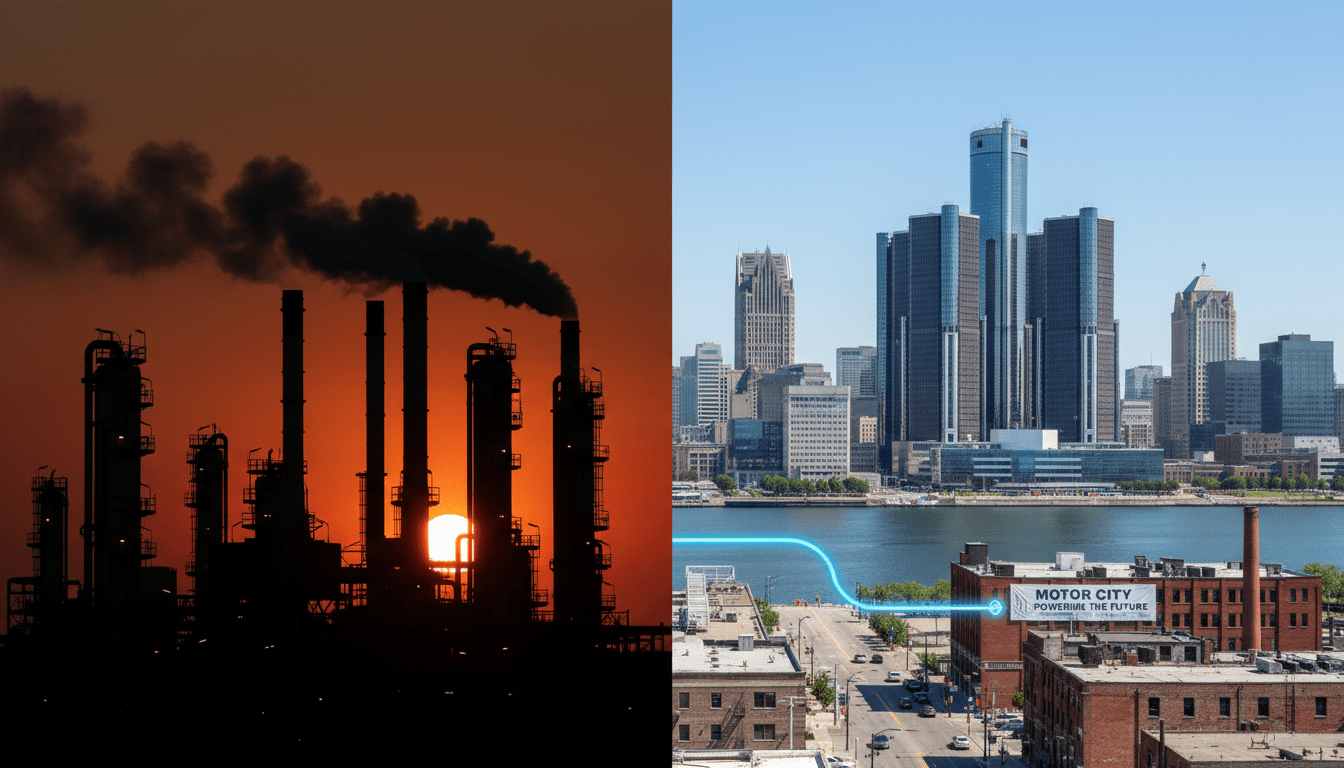
Beyond the geopolitical and humanitarian concerns, a potential conflict with Iran poses a direct threat to Detroit’s economic engine: the automotive industry. Any instability in the Persian Gulf historically leads to volatility in global oil markets. While the U.S. is more energy-independent than in previous decades, global prices are interconnected.
If a “short duration” campaign leads to a spike in oil prices, Detroit automakers could face headwinds. The current profitability of General Motors, Ford, and Stellantis relies heavily on the sales of trucks and SUVs—vehicles that are sensitive to rising gas prices.
Data from the U.S. Energy Information Administration highlights how quickly geopolitical events can translate to volatility at the pump. For Detroiters already managing inflation, a sudden jump in gas prices would act as a regressive tax, reducing disposable income and slowing local spending.
“Detroit’s economy is inextricably linked to energy prices,” explained a local economic analyst. “Even if the military engagement is short, the market reaction can be swift and severe. If gas prices spike, we typically see a cooling in the auto market, which impacts everything from assembly plant overtime shifts to the revenue of parts suppliers in Macomb and Oakland counties.”
Supply chain experts are also monitoring the situation. While direct trade with Iran is non-existent due to sanctions, broader regional instability can disrupt shipping routes, potentially delaying parts for various industries. For a manufacturing sector still recovering from pandemic-era disruptions, stability is the highest priority.
What Happens Next for Detroit?
As the situation evolves, Detroit leadership remains watchful. Mayor Mike Duggan’s office and other local officials have focused on maintaining social cohesion within the city, ensuring that international tensions do not translate into local discord.
The City of Detroit has worked hard to foster an inclusive environment, and community leaders are urging residents to support neighbors who may be experiencing distress due to the news. Meanwhile, local business associations are advising companies to monitor energy costs and supply chain vulnerabilities closely.
While President Trump’s assertion of a “short duration” campaign is intended to reassure the American public, the reality in Detroit is more nuanced. Between the deep personal connections many residents have to the Middle East and the region’s economic sensitivity to energy markets, the Motor City remains on high alert. Whether the rhetoric translates into action—and whether that action remains as limited as promised—is a question that will define the coming months for many in Southeast Michigan.