The landscape of Detroit is undergoing a visible and structural transformation as the city continues to execute a multi-year strategy to expand and modernize its urban parks and recreational corridors. From the massive scale of the Joe Louis Greenway to the revitalization of pocket parks in long-neglected neighborhoods, Detroit is positioning its outdoor infrastructure as a cornerstone of its broader economic and social recovery.
A Vision for Connectivity and Equity
According to the City of Detroit’s General Services Department, the current administration has prioritized the equitable distribution of high-quality recreational areas. The focus has shifted from merely maintaining existing plots to creating a connected network of Detroit green spaces that bridge the gap between downtown investment and neighborhood stability. This initiative is most prominently represented by the Joe Louis Greenway, a planned 27.5-mile loop that will eventually connect 23 Detroit neighborhoods to the riverfront, Hamtramck, Highland Park, and Dearborn.
Construction on the greenway has accelerated throughout late 2023 and into 2024, with new segments opening to provide residents with non-motorized transit options and safe outdoor environments. City planners emphasize that these developments are not just about leisure; they are essential components of modern Detroit infrastructure improvements intended to reduce carbon footprints and improve localized air quality.
The Detroit Riverfront: A National Standard
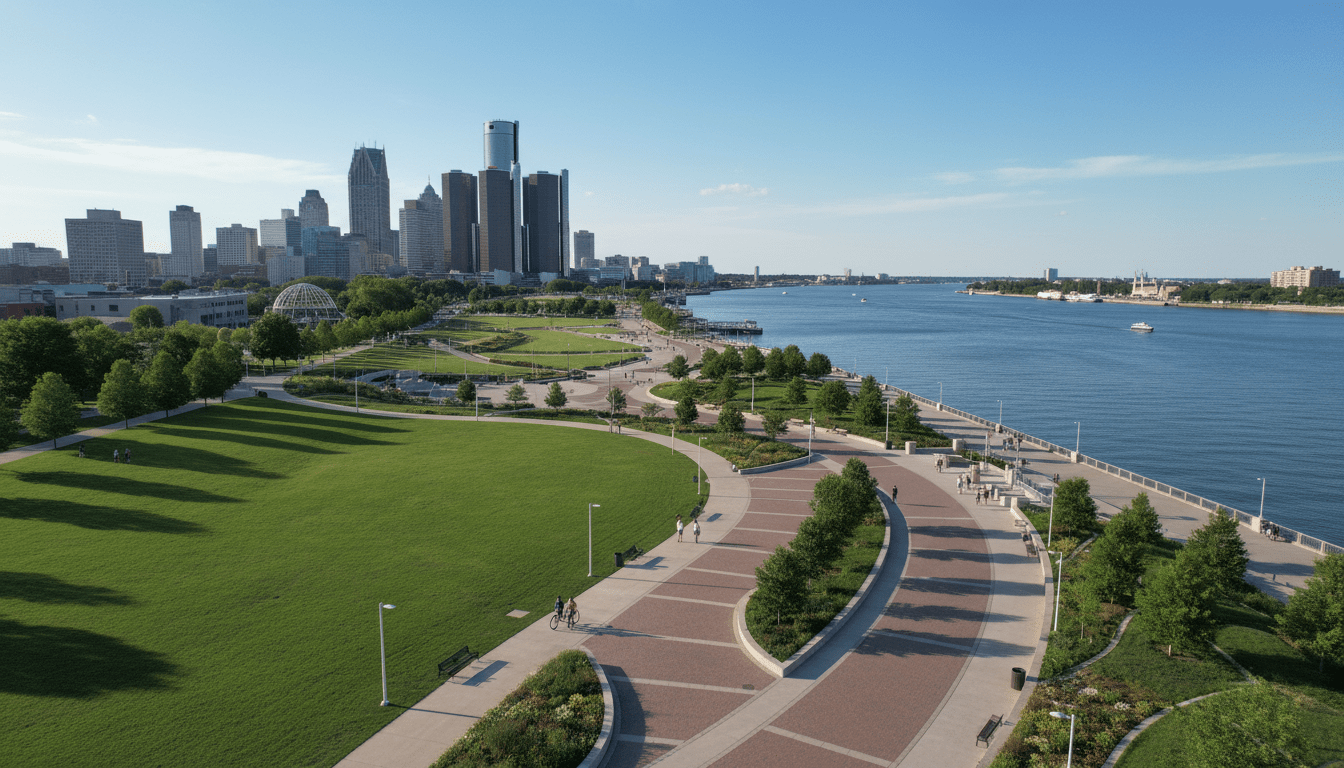
The Detroit Riverfront Conservancy has played a pivotal role in this transformation. For several consecutive years, the Detroit Riverwalk has been recognized as one of the best riverwalks in the United States by various national publications and urban planning organizations. This success has served as a blueprint for other projects across the city. The recent completion of the Southwest Greenway—a mile-long trail connecting the riverfront to the Michigan Central mobility district in Corktown—demonstrates the city’s commitment to linking major Detroit neighborhood development hubs through green corridors.
Data from the Trust for Public Land (TPL) highlights that while Detroit’s ParkScore has historically faced challenges regarding investment per resident, the city has seen significant upward movement in accessibility. TPL reporting indicates that approximately 80% of Detroit residents now live within a 10-minute walk of a park, a metric the city aims to increase to 100% through the Strategic Neighborhood Fund.
Impact on Detroit Residents
The expansion of Detroit green spaces has direct implications for the health and economic well-being of local citizens. Public health experts at Wayne State University have noted that increased access to high-quality outdoor areas correlates with lower rates of chronic illness and improved mental health outcomes in urban populations. For many Detroiters, these parks serve as free, accessible venues for physical activity and community gathering.
Furthermore, the development of these spaces is impacting property values. Residents in neighborhoods like Fitzgerald and Jefferson-Chalmers have seen localized improvements in home valuations following the renovation of nearby parks. “When we invest in the soil and the trees of a neighborhood, we are signaling to the residents that their community has value,” stated a representative from the Detroit Parks Coalition. However, the city must also balance this growth with protections against displacement, ensuring that long-term residents can remain in their homes as neighborhood amenities improve.
Background and Funding Mechanisms
The funding for this green revolution comes from a complex mosaic of public and private sources. The American Rescue Plan Act (ARPA) provided a critical influx of capital, allowing the city to tackle a backlog of maintenance and equipment upgrades. According to official City of Detroit records, over $100 million has been earmarked for park improvements over the last three fiscal years.
This is supplemented by private philanthropy and corporate partnerships. The Detroit Riverfront Conservancy, for instance, operates as a non-profit that leverages private donations to maintain public land to a world-class standard. This public-private model is now being studied by other post-industrial cities looking to reclaim their waterfronts and vacant land for public use.
Environmental Resilience and Future Outlook
Beyond recreation, the new generation of Detroit green spaces is designed with environmental resilience in mind. Incorporating bioswales, rain gardens, and permeable pavement, these parks are being built to manage the increasing frequency of heavy rainfall events that have previously overwhelmed the city’s aging sewer systems. By utilizing parks as “sponges” for stormwater, Detroit is mitigating flood risks in adjacent residential areas.
Looking ahead to 2025, the city plans to break ground on several new neighborhood projects while continuing the phased expansion of the Joe Louis Greenway. The ultimate goal is a city where green space is not a luxury found only in affluent corridors, but a fundamental right accessible to every Detroiter. As the city continues to navigate its post-bankruptcy era, the prioritize-of outdoor parks suggests that Detroit sees its natural assets as a primary engine for its ongoing revitalization.