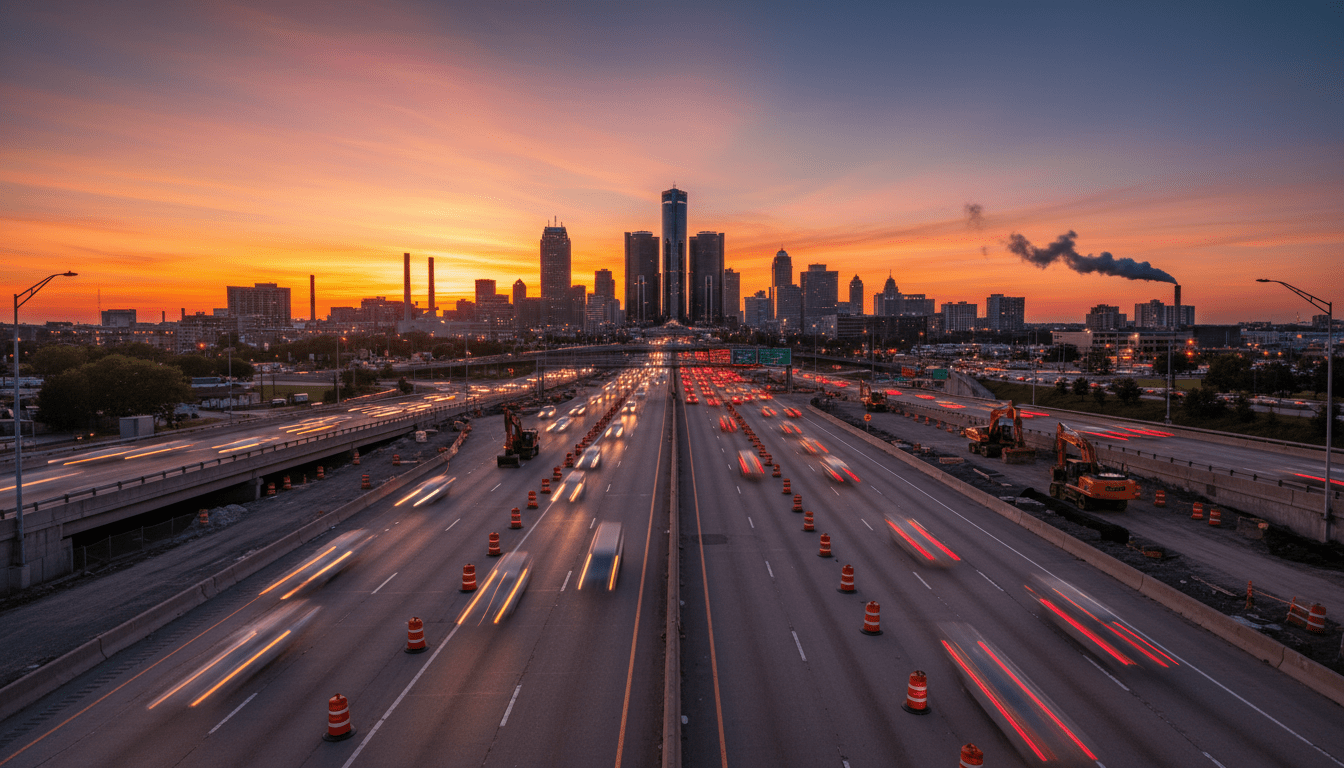
Detroit motorists are navigating a complex grid of orange barrels and detour signs as the 2024 construction season reaches its peak. From the multi-year I-75 modernization project to local bridge repairs over I-94, the scale of current infrastructure investment is reshaping how residents and visitors move through the city. While these projects promise a smoother and safer future for Michigan’s transportation network, the immediate reality of Detroit road closures is forcing a significant adjustment in daily routines.
The I-75 Modernization Project: A Multi-Year Transformation
The centerpiece of regional traffic disruption remains the I-75 Modernization Project. According to the Michigan Department of Transportation (MDOT), this comprehensive overhaul aims to improve safety and ease congestion on one of the state’s busiest corridors. The current phase, specifically focusing on Segment 3, involves the complete reconstruction of more than five miles of pavement between 8 Mile Road and north of 13 Mile Road.
MDOT officials report that this segment includes the replacement of several aging bridges and the installation of a new drainage tunnel to mitigate the flooding issues that have historically plagued this stretch of the freeway. The I-75 construction Detroit residents face today is not merely a resurfacing effort but a total redesign of the highway’s footprint. This includes the implementation of a High-Occupancy Vehicle (HOV) lane—the first of its kind in Michigan—intended to encourage carpooling and reduce the overall volume of traffic Detroit today experiences during rush hours.
For those traveling from the northern suburbs into the downtown core, the closures often mean narrowed lanes and shifting traffic patterns. MDOT has utilized a system of temporary crossovers to keep traffic moving, but speed reductions and narrow corridors frequently result in significant delays during peak commute times. To stay informed about real-time updates, residents are encouraged to monitor MDOT’s official Mi Drive portal, which provides live camera feeds and incident reports.
Surface Street Disruptions and Neighborhood Connectivity
Beyond the major freeways, local Detroit road closures are significantly impacting neighborhood connectivity. The City of Detroit’s Department of Public Works (DPW) has initiated several high-profile projects focused on the “Streets for People” initiative. This program prioritizes pedestrian safety and multi-modal transit over high-speed vehicular throughput. One major area of focus is Michigan Avenue in Corktown, where ongoing reconstruction is transforming the historic brick-paved road into a more accessible corridor for cyclists and pedestrians.
Data from the City of Detroit indicates that surface street closures are often linked to the expansion of the Joe Louis Greenway, a 27.5-mile loop that will eventually connect neighborhoods across the city. Construction of the greenway requires temporary closures of key intersections and residential side streets, particularly in the Northwest and Southwest sectors of the city. While these closures are temporary, they require residents to seek alternative routes through already congested residential areas.
The Impact on Detroit Residents and Local Businesses
The ubiquity of Detroit road closures has a profound effect on the daily lives of residents. For many, a commute that once took twenty minutes has stretched to forty-five as traffic spills off the freeways and onto secondary arteries like Woodward Avenue and Gratiot Avenue. Local business owners in construction zones have also expressed concerns regarding customer access. In districts like Midtown, where bridge work over I-94 has restricted north-south travel, some retailers have reported a decrease in foot traffic.
A spokesperson for a local business association noted that while the infrastructure improvements are desperately needed, the lack of predictable timelines can be frustrating. “Consistency in communication is key for our members,” the association stated. “When a closure is extended by two weeks without notice, it affects staffing, deliveries, and customer confidence.” This sentiment highlights the delicate balance between the city’s long-term development goals and the immediate needs of its economic engine. For more on how these changes align with broader city initiatives, see our previous report on neighborhood development projects across the city.
Economic Context and Infrastructure Funding
The surge in traffic Detroit today is experiencing is fueled by a historic influx of state and federal funding. The Bipartisan Infrastructure Law, passed at the federal level, has allocated billions to Michigan for highway and bridge repair. According to data from the U.S. Department of Transportation, Michigan is slated to receive over $7 billion in federal highway formula funding over five years. This capital is being deployed across the city to address what experts have long called a “maintenance deficit.”
The current I-75 construction Detroit is undergoing is a direct beneficiary of these funds. By addressing structural deficiencies now, the state aims to avoid the much higher costs associated with emergency repairs later. Furthermore, the modernizations include updated technology such as Intelligent Transportation Systems (ITS), which allow MDOT to monitor traffic flow in real-time and adjust ramp meters or digital signage to alleviate bottlenecks before they become gridlocked.
Safety and Navigating the Construction Zones
With so many active work zones, safety remains a primary concern for both workers and drivers. Michigan State Police have increased patrols in construction zones where Detroit road closures are in effect, enforcing strict speed limits. Under Michigan law, fines are doubled for moving violations in work zones, and causing injury to a worker can result in felony charges. As part of our ongoing coverage of public transit strategies, we recommend that commuters consider utilizing the QLine or DDOT bus routes to bypass the most congested construction hubs.
Safety advocates suggest that drivers allow for at least fifteen minutes of extra travel time and use navigation apps that provide real-time updates on accidents and sudden lane closures. The phrase “traffic Detroit today” has become a top search query for a reason: the situation on the ground changes hourly as crews move equipment and shift barriers.
What Happens Next: Looking Toward 2025
As the winter months approach, many major projects will enter a “winter maintenance” phase, where barriers are moved to allow for snow plowing, though permanent changes to the road surface will remain. MDOT anticipates that the current phase of the I-75 project will reach a major milestone by late 2024, with some lanes reopening to their final configuration. However, residents should prepare for a new set of Detroit road closures in the spring of 2025 as the next stage of neighborhood streetscapes and bridge rehabilitations begin.
The long-term outlook for Detroit’s infrastructure is one of modernization and increased durability. While the current inconvenience is significant, the transition from crumbling 1950s-era design to a 21st-century multi-modal network is a necessary evolution for a city on the rise. For the most up-to-date information on specific street closures, the city recommends visiting the DPW’s construction dashboard, which is updated weekly to reflect the latest project statuses.