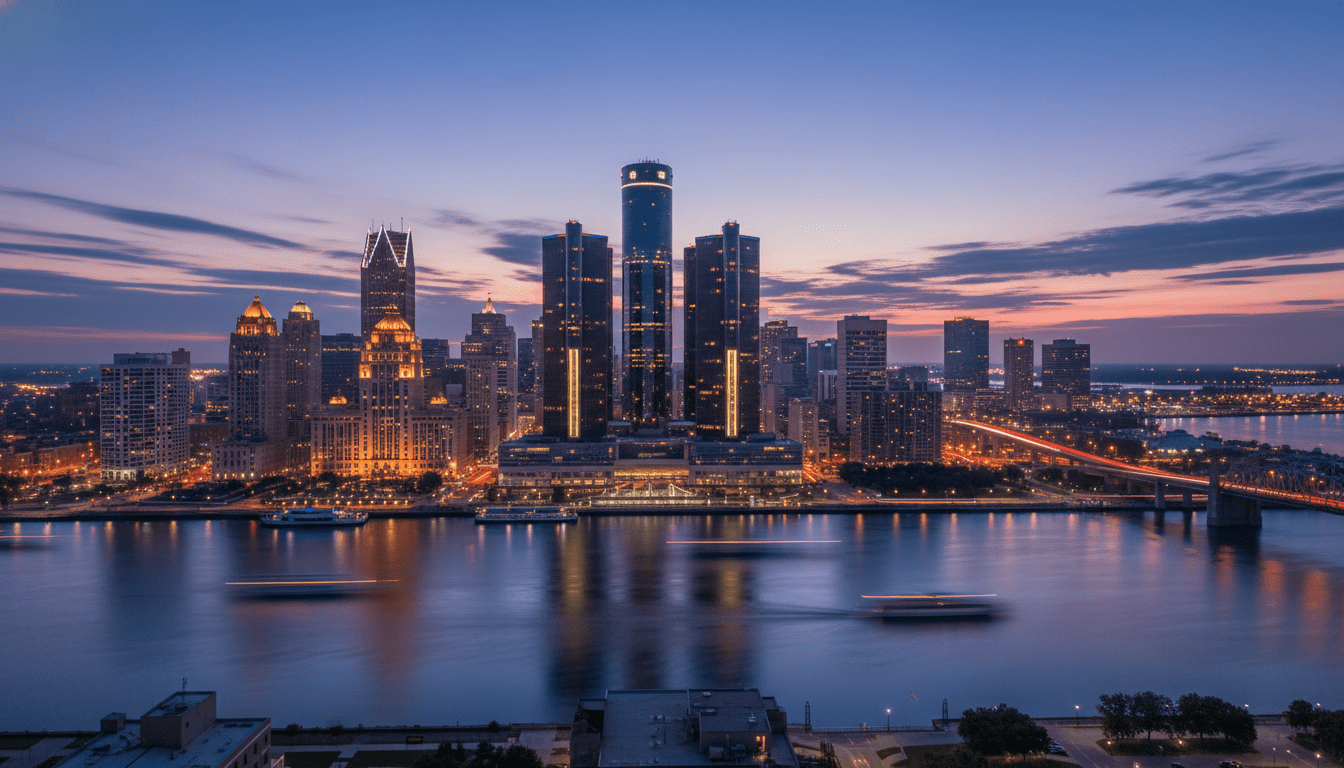
The skyline of Detroit is currently a study in transition as the city’s commercial real estate market adjusts to a new economic reality. For decades, the narrative of Detroit commercial real estate was one of vacancy and slow recovery, but the current era is defined by a more complex evolution. Today, developers and city officials are navigating a landscape where the demand for traditional office space has cooled, while the appetite for high-end retail and innovative residential living remains robust. This shift is not merely a change in building usage but a fundamental restructuring of the city’s urban core and its surrounding neighborhoods.
The Office Market: Adaptation and Innovation
The traditional office space in Detroit, once the backbone of the central business district, is facing significant headwinds as hybrid work models become permanent fixtures for major employers. According to a recent report from the Detroit Economic Growth Corporation (DEGC), the city is seeing a divergence between ‘Class A’ modern office spaces and older, less efficient buildings. While modern facilities with integrated amenities continue to attract tenants, older structures are being reconsidered for new purposes. Bedrock, the real estate firm founded by Dan Gilbert, has been at the forefront of this trend, moving forward with massive mixed-use projects like the Hudson’s site development, which seeks to blend office, residential, and hotel components into a single footprint. This strategy acknowledges that the purely commercial district of the past is no longer viable in a world where flexibility is prioritized.
Data from local market analysts suggests that office vacancy rates in the downtown core have fluctuated near 18-20% over the last year. However, this has spurred a creative wave of re-urbanization. Many developers are looking at ‘office-to-residential’ conversions as a way to solve two problems at once: high commercial vacancy and a shortage of urban housing. These projects are complex and expensive, but they are increasingly supported by tax incentives aimed at maintaining the vibrancy of the downtown area. As noted in recent downtown development updates, these conversions are essential for keeping the street-level activity high, even if the cubicles above remain empty.
Retail Resilience and the Rise of Neighborhood Hubs
In contrast to the office sector, retail space in Detroit is experiencing a localized boom. From the luxury boutiques along Woodward Avenue to the artisanal shops in Corktown, retail is proving to be a primary driver of foot traffic. The DEGC’s ‘Motor City Match’ program has been instrumental in this growth, providing grants and support to small businesses looking to occupy vacant storefronts. This initiative has helped diversify the retail offerings across the city, moving beyond the downtown core and into neighborhoods like Live6 and Jefferson-Chalmers. This expansion of business real estate in Detroit reflects a growing confidence in the local consumer base.
Retailers are no longer just looking for high-traffic corners; they are seeking spaces that offer community engagement. In Midtown, for example, the mix of student populations from Wayne State University and healthcare workers from the Detroit Medical Center has created a stable environment for retail space in Detroit to thrive. This neighborhood-centric approach to commercial real estate ensures that economic growth is not confined to a few square blocks but is distributed more equitably across the city’s geography.
Impact on Detroit Residents
For the average Detroit resident, the health of the commercial real estate market has direct implications for daily life. A thriving commercial sector provides the municipal tax base necessary to fund essential services, from public safety to park maintenance. When office buildings remain empty, the surrounding service economy—cafes, dry cleaners, and small delis—suffers, often leading to a loss of entry-level jobs. Conversely, the successful conversion of these spaces into residential or retail units brings new life and safety to the streets.
Furthermore, the trend toward mixed-use developments is improving the walkability of Detroit’s neighborhoods. As discussed in our economic growth report, the integration of retail and housing allows residents to access services without relying on long commutes. This shift is particularly beneficial for those in emerging districts who are seeing improved access to grocery stores and essential retail for the first time in years. The focus on ‘Detroit property trends’ is shifting from purely financial metrics to the lived experience of the people who call the city home.
Background and Economic Data
According to data from the University of Michigan’s most recent Detroit Economic Outlook, the city is expected to see steady job growth through 2025, which provides a stabilizing force for the real estate market. However, the high-interest-rate environment remains a significant hurdle for new construction. Many developers are currently focusing on finishing existing projects rather than breaking ground on new ventures. This cautious approach has led to a tightening of available ‘Class A’ retail space, driving up rents in popular districts like the Eastern Market area.
Infrastructure also plays a key role. The expansion of the QLine and improvements to the city’s bus system are influencing where businesses choose to locate. Companies are increasingly looking for locations that offer transit options for employees who prefer not to drive. This synergy between transportation and real estate is a hallmark of the city’s current development strategy, as outlined by the City of Detroit’s planning department.
What Happens Next
Looking ahead, the Detroit commercial real estate market will likely be defined by its ability to remain agile. The ‘Detroit property trends’ of the next decade will be characterized by the reuse of historic structures and the densification of neighborhood commercial corridors. We can expect to see more projects that combine affordable housing with ground-floor commercial space, supported by public-private partnerships. While the era of the massive, single-tenant office tower may be waning, the era of the vibrant, multi-functional urban center is just beginning. As long as the city continues to foster an environment where small businesses can grow alongside major developments, Detroit’s commercial future remains promising.