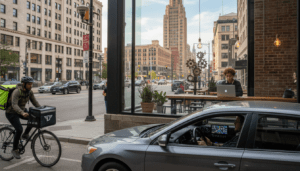
As Detroit moves closer to 2026, the city’s economic landscape is undergoing a significant transformation. Once defined almost exclusively by its heavy manufacturing and automotive roots, the Motor City is increasingly becoming a hub for digital-first entrepreneurship. Recent data and city initiatives suggest that the rise of remote business models is not just a temporary trend but a foundational shift in how Detroiters participate in the global economy.
The Rise of Digital Entrepreneurship in Wayne County
According to the U.S. Census Bureau’s Business Formation Statistics, Wayne County has consistently seen a high volume of new business applications over the last three years. Analysts suggest that a growing percentage of these filings are for online-based services that require minimal overhead. This pivot toward the digital space is being fueled by a combination of increased high-speed internet access and a robust support network for small business owners.
Economic development experts point to the fact that Detroit remote business opportunities are expanding as local entrepreneurs leverage global platforms to provide services ranging from digital marketing to specialized consulting. Unlike traditional brick-and-mortar establishments, these low-cost online ventures allow residents to bypass the rising costs of commercial real estate in revitalizing neighborhoods like Midtown or Corktown.
How This Impacts Local Residents
For Detroit residents, the surge in remote business opportunities represents a lowering of the barrier to entry for wealth creation. Many of these ventures can be launched with little more than a reliable laptop and a high-speed connection, which is becoming more accessible through city-wide programs. The impact is particularly felt in residential neighborhoods outside the downtown core, where residents can now operate international businesses from their living rooms.
This shift is also addressing long-standing transportation hurdles. By operating remotely, Detroiters are no longer tied to the limitations of regional transit when seeking employment or building a customer base. Local business owners have noted that the flexibility of online work allows for a better work-life balance, particularly for those in caregiving roles. Furthermore, the diversification of the local economy provides a safeguard against the cyclical nature of the manufacturing sector.
Infrastructure and Support Systems
The transition to a digital-first economy is being actively supported by the Detroit Economic Growth Corporation (DEGC). Through programs like Motor City Match, the city has begun to emphasize the importance of digital literacy and tech-readiness for small business owners. While the program initially focused on physical storefronts, there is a growing recognition of the need to support the digital infrastructure of home-based businesses.
Additionally, the Connect 313 initiative—a collaborative effort involving the City of Detroit and several private partners—has been instrumental in bridging the digital divide. By ensuring that more households have access to reliable devices and internet, the initiative has laid the groundwork for Detroit remote business opportunities to flourish in the coming year. As reported in previous updates on Detroit tech hub expansion, the city is positioning itself as a leader in digital inclusion.
Identifying Low-Cost Online Trends for 2026
While the market is broad, several specific sectors are seeing concentrated growth within the Detroit ecosystem. Professional services, such as remote bookkeeping and administrative support, remain top choices for those seeking low-cost entry points. The creative economy is also booming; Detroit has long been a center for design and music, and local creators are now using e-commerce and digital licensing to monetize their work globally.
Another emerging field is specialized tech support for small businesses. As more traditional Detroit companies digitize their operations, there is a rising demand for local experts who can manage cloud transitions and cybersecurity. These roles often start as freelance or micro-business opportunities before scaling into larger agencies. Residents interested in these fields are often directed toward resources like TechTown Detroit, which provides mentorship for tech-based startups as detailed in our coverage of Detroit small business grants.
Economic Data and Future Projections
Data from the Michigan Economic Development Corporation (MEDC) indicates that the state is prioritizing the growth of the “knowledge economy.” In Detroit, this translates to a projected 15% increase in home-based business registrations by the start of 2026. This growth is expected to contribute significantly to the city’s tax base while reducing the vacancy rates of residential properties as they become dual-use spaces.
Financial analysts suggest that the low-cost nature of these businesses makes them more resilient to inflationary pressures. Because remote entrepreneurs in Detroit can tap into higher-paying markets in coastal cities while maintaining the relatively lower cost of living in the Midwest, the “geographic arbitrage” is becoming a powerful tool for local economic mobility.
What Happens Next
Looking toward 2026, the City of Detroit is expected to announce further investments in digital infrastructure. There are ongoing discussions regarding tax incentives for home-based entrepreneurs and the potential for neighborhood-based “co-working hubs” that provide professional amenities without the cost of a full office lease. The success of this digital transition will likely depend on the continued collaboration between government agencies, non-profits, and the private sector to ensure no neighborhood is left behind in the virtual economy.
As the city continues to reinvent itself, the move toward remote and online business models stands as a testament to Detroit’s enduring spirit of innovation and self-reliance. Whether it is a consultant in Brightmoor or a graphic designer in East English Village, the new face of Detroit business is increasingly digital, diverse, and decentralized.