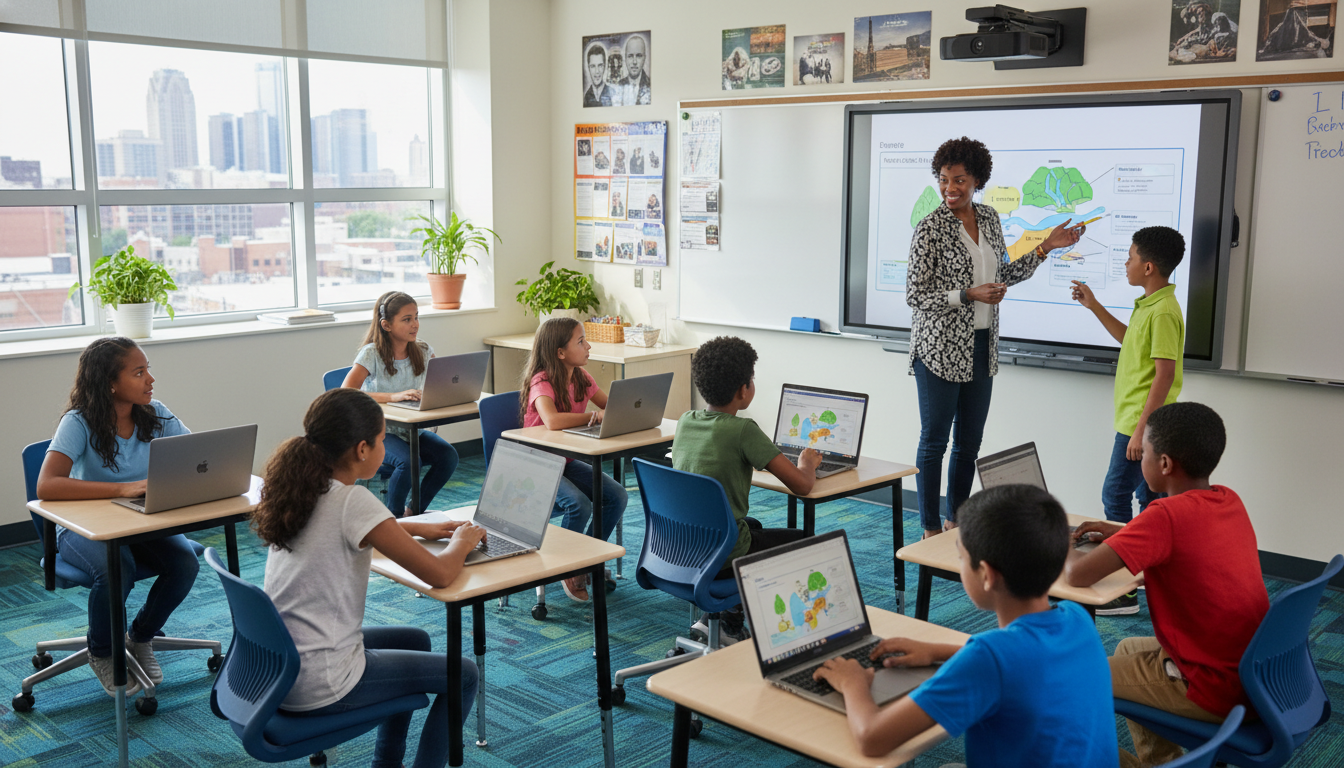
DETROIT — In an era where digital literacy is as fundamental as reading and writing, the Detroit Public Schools Community District (DPSCD) is undergoing one of the most significant technological overhauls in its history. From interactive whiteboards to one-to-one laptop initiatives, Detroit schools are rapidly integrating education tech into daily lessons, fundamentally changing the landscape of classrooms across the city.
This shift is not merely about providing gadgets; it is a calculated effort to bridge the long-standing digital divide that has historically hindered students in urban centers. According to recent reports from the DPSCD Board of Education, the district has moved toward a sustainable model where every student has access to a dedicated device, ensuring that digital learning continues both inside and outside the school building.
The Evolution of Digital Learning in Detroit
The transformation began in earnest during the pandemic, but the momentum has continued through the 2023-2024 academic year. The district has phased out aging desktops in favor of portable laptops and tablets that allow for a more dynamic classroom environment. These tools are integrated with platforms such as Microsoft Teams, Canvas, and i-Ready, which provide personalized learning paths for students based on their individual academic levels.
In many Detroit schools, traditional chalkboards have been replaced by Promethean boards—large, touch-sensitive displays that allow teachers to stream educational content, conduct interactive polls, and save digital notes for students to review later. This technology allows teachers to pivot from a traditional lecture style to a more collaborative approach, which educators say is crucial for keeping students engaged in a high-tech world.
Dr. Nikolai Vitti, Superintendent of DPSCD, has frequently emphasized that technology is a tool for equity. By providing the same high-level education tech found in affluent suburban districts, Detroit is working to level the playing field for its 48,000 students. This investment is supported by a mix of federal COVID-19 relief funds and state-level grants aimed at modernizing aging school infrastructure.
Impact on Detroit Residents and Families
The introduction of new technology in the classrooms has a ripple effect that extends beyond the school walls, impacting families and the broader community. For many Detroit residents, the school-issued laptop is the primary computing device in the household. This access allows parents to become more involved in their children’s education through real-time grade tracking and direct communication with teachers.
However, the transition has also highlighted the city’s ongoing challenges with home internet connectivity. While the "Connected Futures" initiative helped distribute thousands of hotspots to families, maintaining reliable high-speed access remains a concern for some neighborhoods. Local organizations like the Detroit Public Schools Community District continue to partner with private providers to offer low-cost internet solutions for families.
For students, the benefits are clear. Early exposure to digital learning tools prepares them for a workforce that is increasingly reliant on technical proficiency. Whether they are learning to code in middle school or using advanced research databases in high school, Detroit students are gaining the skills necessary to compete for high-wage jobs in Michigan’s growing tech and automotive sectors. This connects directly to broader Detroit neighborhood revitalization efforts, as a better-educated workforce attracts more investment to the city.
Background and Data on the Digital Shift
Data from the Michigan Department of Education (MDE) indicates that technology integration is linked to improved student attendance and engagement metrics. In Detroit, preliminary data suggests that classrooms utilizing interactive digital learning tools have seen a marked increase in participation among students who were previously disengaged.
The scale of the investment is significant. Over the past three years, the district has allocated tens of millions of dollars toward hardware, software licenses, and, perhaps most importantly, professional development for teachers. According to the U.S. Census Bureau, Detroit has historically had one of the lowest rates of home broadband adoption among major American cities, making the district’s role as a technology provider even more critical. By transforming Detroit schools into tech hubs, the city is addressing a core component of systemic inequality.
Furthermore, the integration of technology aligns with the local economy updates seen in the downtown core, where tech startups and innovation centers are becoming more prevalent. The goal is to create a pipeline from the Detroit classroom directly to the local tech economy.
Teacher Training and Implementation Challenges
While the hardware is impressive, educators emphasize that the "tech" is only as good as the teacher using it. The district has implemented mandatory training sessions to ensure that staff can do more than just turn on a laptop. Teachers are learning how to use data analytics from educational software to identify which students are struggling with specific concepts in real-time.
Despite the progress, challenges remain. Maintenance of thousands of devices is a logistical hurdle, and the district must constantly update security protocols to protect student data. There is also the ongoing debate regarding screen time; administrators are working to find a balance between digital learning and traditional face-to-face instruction to ensure social-emotional development is not neglected.
What Happens Next
Looking forward, the district is exploring the integration of artificial intelligence (AI) in a controlled, educational setting. The focus will be on teaching students how to use AI ethically and effectively, further preparing them for the future of work. As the initial federal funding for these programs begins to sunset, the district will need to secure long-term state funding to ensure that the devices in students’ hands today can be replaced and upgraded in the years to come.
The commitment to technology is part of a broader strategy to make Detroit schools a first-choice option for families. As the city continues to evolve, the modernization of its classrooms stands as a testament to the belief that every student, regardless of their zip code, deserves access to the tools of the 21st century.