As Detroit moves through its annual fiscal planning cycle, a familiar friction has re-emerged within the walls of the Coleman A. Young Municipal Center. The debate over Detroit spending priorities has intensified, pitting city officials’ focus on large-scale economic development against residents’ calls for direct neighborhood investment. While the city’s financial outlook remains stable, many community members argue that the benefits of Detroit’s much-touted ‘comeback’ have not yet reached the doorsteps of those in the outlying neighborhoods.
The Divide Between Downtown and Neighborhoods
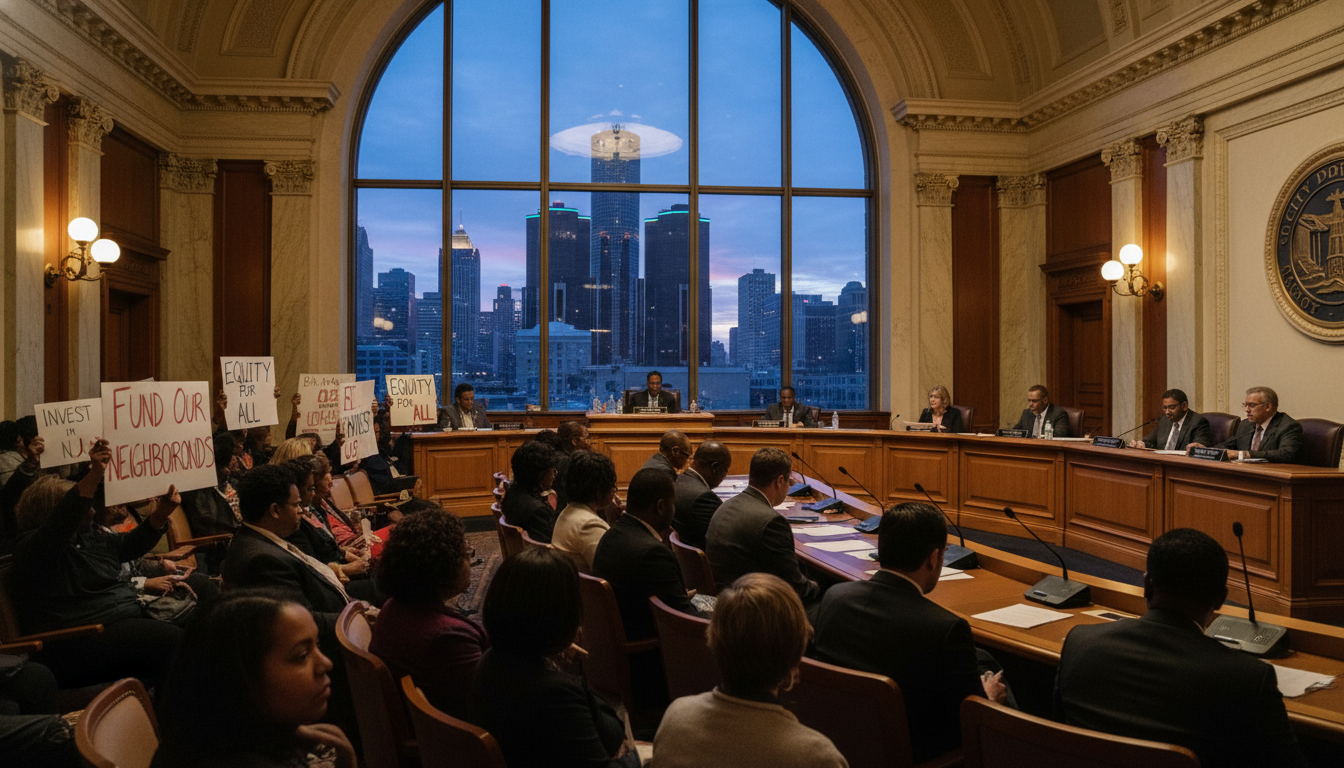
During recent public hearings regarding the city’s nearly $2.8 billion budget for the upcoming fiscal year, the testimony from the public was clear. Residents from districts across the city voiced concerns that significant portions of the budget—and potential tax revenue—are being diverted toward corporate incentives rather than essential services. According to the City of Detroit Budget Department, the General Fund remains healthy, yet the allocation of these funds remains a point of contention.
Critics point to the ‘Two Detroits’ narrative, suggesting that while the 7.2 square miles of Greater Downtown see rapid growth and gleaming new skyscrapers, residential blocks just a few miles away continue to struggle with blight, unreliable transit, and aging infrastructure. Organizations such as the Detroit People’s Platform have been vocal in their opposition to tax abatements for multi-million dollar developments, arguing that these funds should be captured to support the city’s underfunded libraries and public schools.
Impact on Detroit Residents
The debate over Detroit spending priorities has tangible consequences for the city’s roughly 630,000 residents. For many, the priority isn’t a new hotel or a renovated stadium; it is the fundamental reliability of city services. Residents in areas like Jefferson Chalmers and the North End have consistently petitioned for improved drainage systems to prevent the chronic basement flooding that has plagued the city during heavy rain events over the last three years.
“We see the cranes downtown every day,” said one resident during a City Council evening session. “But on my street, we are still waiting for the sidewalks to be leveled and for the trees to be trimmed so they don’t take out the power lines every time the wind blows. It feels like the city has money for billionaires but not for the blocks we’ve lived on for forty years.”
This sentiment is backed by local advocates who argue that the city’s reliance on Tax Increment Financing (TIF) and other abatement tools effectively siphons money away from the General Fund. When a developer receives a tax break, that revenue does not enter the city’s coffers to be spent on neighborhood police patrols, park maintenance, or trash collection. You can read more about neighborhood development initiatives and how they are being funded in our previous coverage.
Background & Data: The Fiscal Reality
Data from the U.S. Census Bureau continues to highlight the economic disparity in the region. Despite the influx of new businesses, Detroit remains one of the most impoverished large cities in the United States, with a poverty rate hovering near 30%. This reality makes the discussion of Detroit spending priorities even more urgent for local policymakers.
Mayor Mike Duggan’s administration has defended its strategy, asserting that corporate incentives are necessary to attract jobs and increase the overall tax base in the long run. The administration argues that without these developments, the city would not have the revenue growth required to fund neighborhood programs like the Strategic Neighborhood Fund. According to official reports from the City of Detroit Budget Office, the city has made significant strides in blight removal through the ‘Blight to Bright’ initiative, which officials cite as a primary example of neighborhood-focused spending.
However, many residents remain skeptical of the trickle-down effect. They point to the fact that while property values are rising, so are the costs of living, making affordable housing a critical and often underfunded priority in the current budget framework.
The Role of Corporate Tax Abatements
A central pillar of the clash involves the use of Public Act 210 and other state-level incentives to lure developers. Recent projects in the District Detroit area have come under fire for requesting hundreds of millions in subsidies. While these projects promise to create thousands of construction and permanent jobs, community activists argue that the city should demand higher Community Benefits Agreements (CBAs) to ensure that residents directly benefit from the public investment.
The City Council has the difficult task of balancing these developer requests with the increasing pressure from their constituents. Some council members have begun to push for more transparency in how these deals are structured, questioning whether the city is giving away too much for projects that would have likely happened regardless of the incentives.
What Happens Next
As the City Council moves toward a final vote on the budget, several amendments are expected to be introduced. These amendments will likely focus on increasing the allocation for home repair grants, expanding the city’s basement backup protection program, and providing more robust funding for community-led safety initiatives. The outcome of these negotiations will serve as a bellwether for the city’s political direction leading into the next election cycle.
For the residents of Detroit, the hope is that the final budget reflects a more equitable distribution of wealth. The ongoing clash over Detroit spending priorities is not merely a fiscal debate; it is a conversation about the soul of the city and whether its future includes all of its citizens or just those in its most affluent corridors. The community will continue to monitor these developments closely as the city attempts to bridge the gap between its corporate ambitions and the lived realities of its neighborhoods.