Detroit’s commercial landscape is undergoing a significant transformation as a wave of new grant programs and financial initiatives begins to take root across the city’s 139 square miles. For many local entrepreneurs, the availability of non-dilutive capital has become a lifeline, bridging the gap between a business concept and a sustainable storefront. According to the Detroit Economic Growth Corporation (DEGC), these strategic investments are not just about individual success stories; they are fundamental to the stabilization of the broader Detroit economy.
The Expansion of Motor City Match and Local Support
Central to this resurgence is the Motor City Match program, a partnership between the City of Detroit, the DEGC, and various financial institutions. Recently, the program has reached new milestones in its mission to revitalize neighborhood commercial corridors. To date, the initiative has awarded millions in grants, helping to open hundreds of brick-and-mortar businesses. This effort is designed to ensure that the Detroit small business ecosystem remains inclusive, providing opportunities for minority and women-owned enterprises that have historically faced barriers to traditional lending.
Data from the City of Detroit suggests that for every dollar awarded through these grants, several more are leveraged in private investment. This multiplier effect is critical for neighborhoods that have seen decades of disinvestment. By providing technical assistance alongside financial awards, the program ensures that recipients are equipped with the business plan and marketing strategies necessary to survive in a competitive urban market.
Impact on Detroit Residents and Neighborhood Stability
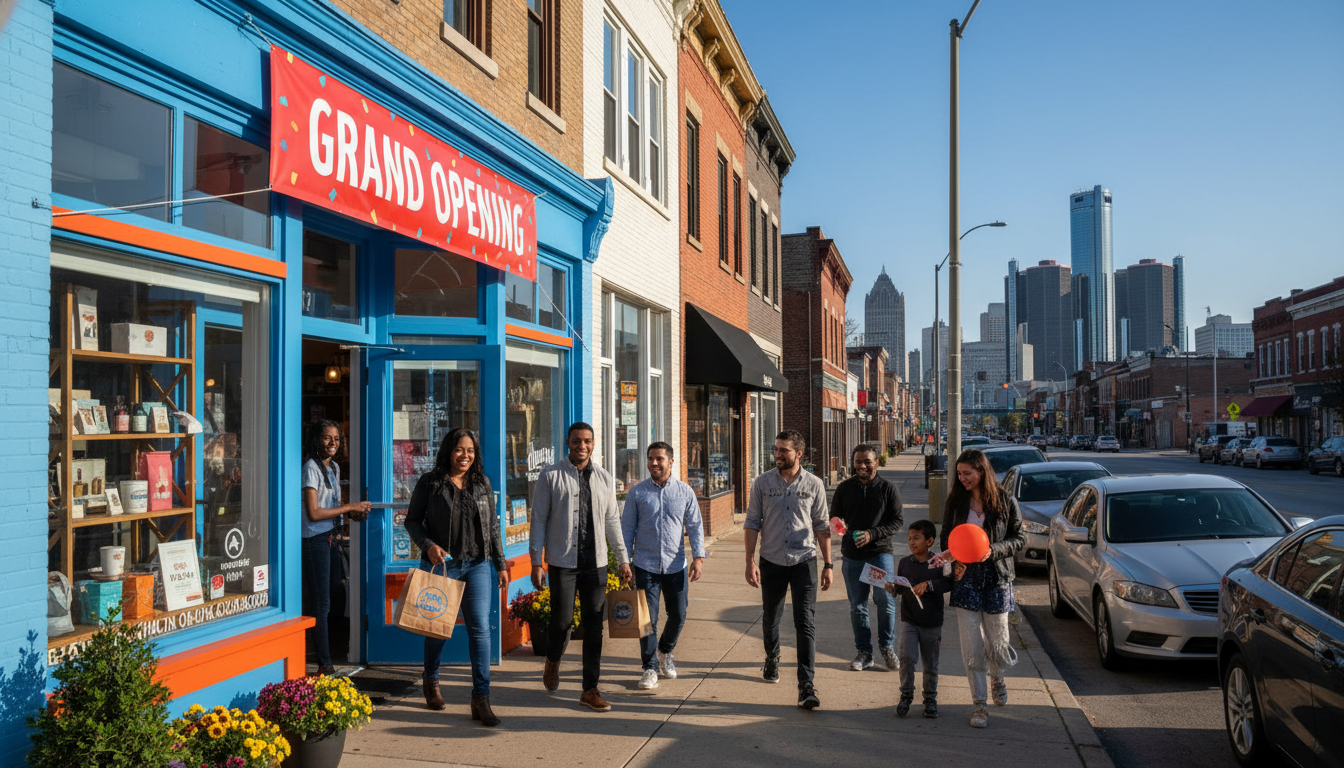
The influx of Detroit small business funding does more than just fill empty storefronts; it directly impacts the daily lives of residents. When a new grocery store, pharmacy, or service provider opens in a previously underserved neighborhood, it reduces the need for long commutes and keeps capital circulating within the community. For residents in areas like Jefferson-Chalmers or the Livernois Avenue of Fashion, these businesses serve as community hubs.
Local business owners said that the psychological impact of seeing active construction and new signage cannot be overstated. It signals to the community that the neighborhood is a place of growth rather than decline. Furthermore, these businesses are the primary drivers of local employment. Unlike large national retailers, small businesses in Detroit are more likely to hire residents from the immediate zip code, creating a direct pathway to economic mobility for the local workforce.
Background and Economic Data
The reliance on grants has increased as traditional interest rates have climbed, making standard commercial loans less accessible for startups. A report from the U.S. Small Business Administration (SBA) highlights that while Detroit’s entrepreneurship rates are high, the survival rate of new businesses often hinges on the initial capitalization. Programs funded through the American Rescue Plan Act (ARPA) have been instrumental in providing this foundation over the last three years.
Furthermore, the Michigan Economic Development Corporation (MEDC) has integrated state-level resources through the “Match on Main” program, which provides grants to local units of government to support small business projects. This layered approach—combining city, state, and federal resources—has created a robust safety net. According to the U.S. Census Bureau’s Business Formation Statistics, Michigan has seen a steady increase in new business applications, with Detroit accounting for a significant portion of that entrepreneurial energy.
Navigating the Funding Landscape
Despite the successes, the process of securing Detroit small business grants remains competitive and complex. Applicants are often required to demonstrate significant community impact and long-term financial viability. Organizations like the New Economy Initiative (NEI) have stepped in to provide the “wraparound services”—legal aid, accounting help, and digital literacy—that make a grant application successful. This holistic approach ensures that the local economy is built on a foundation of professionalized, scalable businesses rather than temporary ventures.
Sustainability is the current focus of city planners. While the initial grant might cover the build-out of a space or the purchase of equipment, the long-term goal is to transition these businesses into traditional bankability. By establishing a track record of success with grant funds, entrepreneurs can eventually qualify for the larger lines of credit needed for expansion or property acquisition.
What Happens Next for Detroit Entrepreneurs
Looking ahead, the City of Detroit is exploring ways to make these funding pools permanent. Mayor Mike Duggan’s administration has consistently emphasized that neighborhood revitalization is the second phase of Detroit’s comeback, following the stabilization of the downtown core. As ARPA funds eventually sunset, the challenge will be identifying new, sustainable revenue streams to keep the grant cycles moving.
Future initiatives are expected to focus heavily on green energy transitions and digital infrastructure for small businesses. By helping local shops modernize their operations, the city aims to ensure that Detroit’s small business community can compete in an increasingly digital global economy. For now, the momentum remains strong, with several new grant rounds scheduled for the upcoming fiscal year, promising even more growth for the city’s diverse entrepreneurial class.