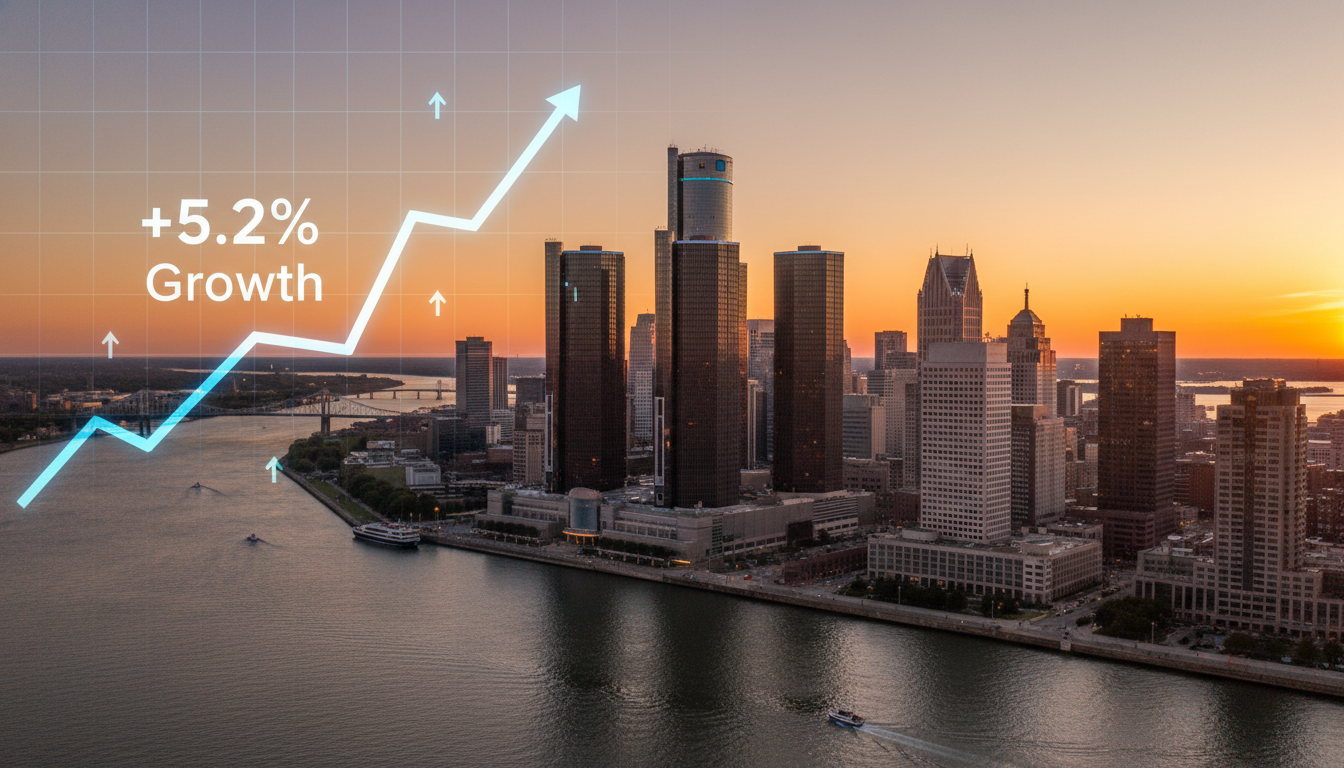
The city of Detroit is experiencing a transformative period in its labor market, with recent data indicating a shift toward long-term economic stability. For decades, the narrative surrounding the city’s economy was one of contraction; however, modern Detroit employment trends suggest a reversal that is catching the attention of national analysts and local residents alike. From the expansion of electric vehicle manufacturing to the rise of specialized logistics hubs, the city’s industrial base is diversifying, providing a broader range of opportunities for the local workforce. This evolution represents a departure from the post-bankruptcy era, moving toward a proactive strategy of industrial retention and technological integration.
The Numbers: A Record-Breaking Labor Market
According to the Michigan Bureau of Labor Market Information and Strategic Initiatives, Detroit’s unemployment rate has reached historic lows in 2024, mirroring a broader trend of recovery across the Great Lakes region. In recent reporting periods, the city has seen its jobless rate dip to levels not seen in over 20 years, a feat that many economists thought would take decades to achieve. This decline is not merely a statistical anomaly but the result of coordinated efforts between the public sector, private investors, and community-led workforce development initiatives. Data from the U.S. Census Bureau also suggests a gradual increase in the city’s median household income, which correlates with the availability of higher-paying industrial and technical roles within the city limits.
While the national economy has faced headwinds including inflation and fluctuating interest rates, Detroit’s localized growth in the manufacturing sector has provided a unique cushion. The concentration of automotive investment, particularly in electric and autonomous vehicle technology, has anchored the city’s labor demand. This demand is bolstered by the City of Detroit’s “Detroit At Work” initiative, which has successfully placed thousands of residents into high-growth career tracks. For more information on these initiatives, residents can explore workforce development programs in Michigan that are currently bridging the gap between local talent and global industry needs.
Impact on Detroit Residents and Neighborhoods
For residents in neighborhoods like Jefferson-Chalmers, the North End, and southwest Detroit, the impact of these Detroit employment trends is becoming increasingly tangible. One of the primary benefits of the current economic climate is the reduction of the “commute burden.” Historically, many Detroiters had to travel outside the city limits for stable, high-paying work. However, with the resurgence of the Stellantis Detroit Assembly Complex and the General Motors Factory ZERO, thousands of jobs have returned to the city’s core. When major employers locate within the city, it often leads to improved public transit routes and increased foot traffic for surrounding small businesses, creating a multiplier effect that benefits the entire community.
Local business owners have noted that the tightening labor market has led to increased competition for workers, which in turn has driven up starting wages across various sectors. Entry-level roles that once offered minimum wage are now frequently starting at $18 to $20 per hour to attract and retain talent. This wage growth is a critical component of the city’s strategy to reduce the poverty rate and increase homeownership. The influx of steady income into neighborhoods also supports Detroit neighborhood investment growth, as residents have more disposable income to invest in home repairs and local retail.
Industrial Growth and Tech Integration
The primary driver of these favorable Detroit employment trends has been the renewed focus on advanced manufacturing and the “knowledge economy.” The Michigan Central Innovation District, a $950 million project led by Ford Motor Company, is a prime example of how Detroit is positioning itself as a hub for future mobility. This project is expected to create thousands of jobs not just in engineering, but also in hospitality, maintenance, and facility management. Kevin Johnson, president and CEO of the Detroit Economic Growth Corporation (DEGC), has frequently highlighted that the goal is to create a “balanced economy” where both high-tech roles and traditional manufacturing positions can thrive side-by-side.
Furthermore, the logistics and transportation sector has seen a significant boost due to Detroit’s strategic location on the international border. The upcoming completion of the Gordie Howe International Bridge is already spurring job creation in construction and is expected to lead to a long-term increase in warehousing and customs-related employment. According to data from the DEGC, over $1 billion in private investment has been funneled into the city’s commercial and industrial corridors over the past fiscal year alone, signaling a strong vote of confidence from the private sector.
Addressing the Skills Gap and Future Challenges
Despite the positive data, challenges remain in ensuring that all Detroiters can participate in this economic resurgence. Experts from the United Way for Southeastern Michigan point to a persistent “skills gap” between the requirements of modern, digitized manufacturing and the current qualifications of some segments of the local workforce. To combat this, the city has expanded its vocational training programs to include coding, robotics, and advanced logistics management. These “wraparound services,” which also include affordable childcare and transportation assistance, are essential for removing the barriers that have historically kept some residents on the sidelines of the labor market.
Another challenge is the retention of young talent. For years, Detroit experienced a “brain drain” where college graduates left the city for opportunities in other states. Today, the growth of the fintech sector downtown and the creative industries in the Midtown and New Center areas are helping to reverse this trend. The city is becoming a destination for entrepreneurs and tech professionals who see Detroit as a place where they can make a significant impact.
What Happens Next: Outlook for 2025
Looking forward, the development of the District Detroit and the completion of the Hudson’s site project are expected to further diversify the city’s economy by adding thousands of office, retail, and service-sector jobs. The shift toward a diversified economy is crucial for long-term sustainability, as it reduces the city’s vulnerability to fluctuations in any single industry. The collaboration between state agencies, city leadership, and private developers will be the determining factor in maintaining the current momentum.
In conclusion, the current Detroit employment trends reflect a city that is successfully leveraging its industrial heritage while embracing the demands of the 21st-century economy. By focusing on both large-scale industrial projects and neighborhood-level workforce development, Detroit is building a more inclusive economic future. For official labor statistics and detailed reports, residents and investors are encouraged to visit the Michigan Labor Market Information website, which provides comprehensive data on the state’s evolving economic landscape.