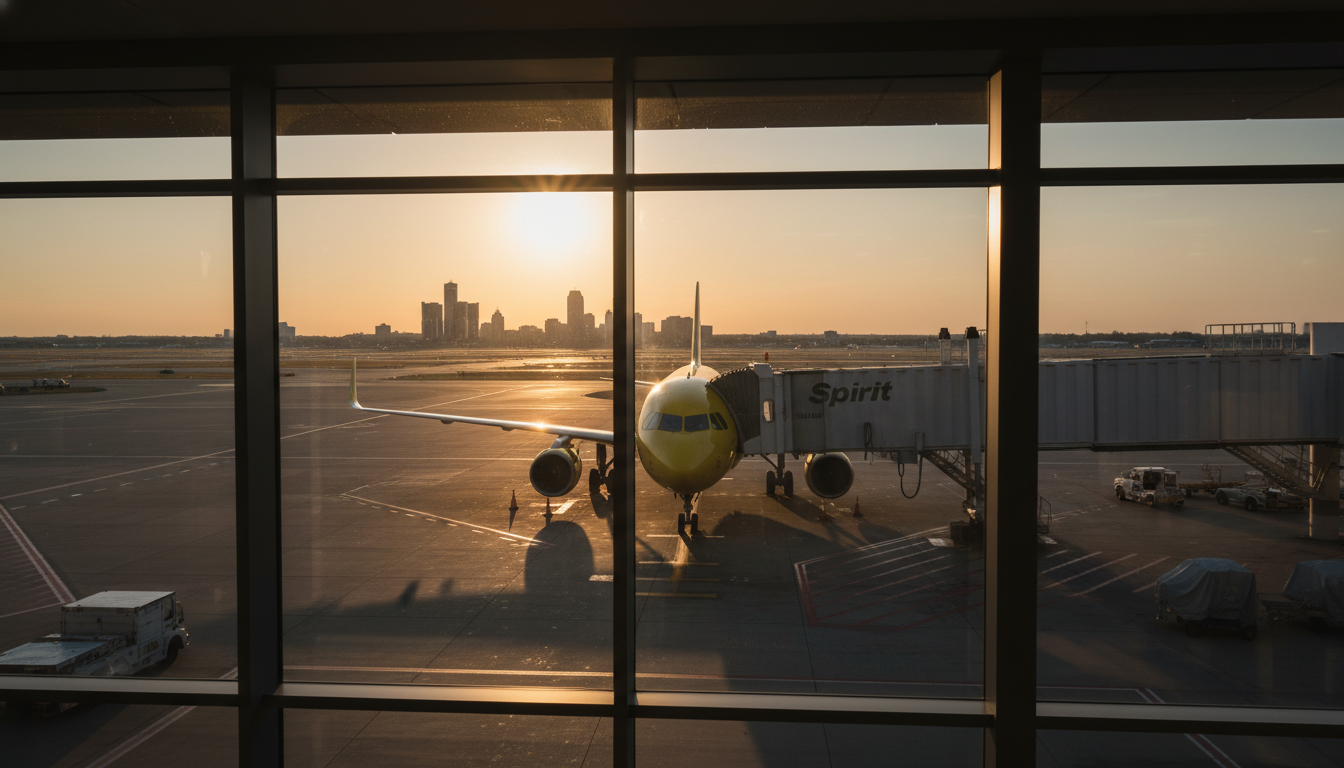
In a move that marks a significant shift for the regional aviation landscape, Spirit Airlines has officially announced the suspension of its operations at Detroit Metropolitan Wayne County Airport (DTW). The Florida-based ultra-low-cost carrier, which has been a staple at the McNamara and Evans terminals for over two decades, cited a broader strategic restructuring following recent financial challenges and a failed merger attempt. For thousands of Detroit-based travelers who rely on the carrier for affordable domestic and Caribbean transit, the departure signals an immediate end to several low-fare routes that once connected the Motor City to leisure hubs across the country.
The Logistics of the Spirit Airlines Shutdown
The Spirit Airlines shutdown in Detroit comes as the company navigates a complex Chapter 11 bankruptcy restructuring process. According to official filings with the U.S. Securities and Exchange Commission (SEC), the airline is pivoting its business model to focus on high-yield markets while shedding underperforming stations. Detroit, despite its high volume of traffic, has become a difficult market for ultra-low-cost carriers (ULCCs) to maintain profitability due to rising operational costs and intense competition from legacy carriers like Delta Air Lines, which maintains a primary hub at DTW.
A spokesperson for the Wayne County Airport Authority confirmed that they were notified of the carrier’s intent to cease operations by the end of the current fiscal quarter. “We are working closely with Spirit to ensure a smooth transition for their remaining scheduled flights and to mitigate the impact on airport personnel,” the authority stated in a recent press release. Travelers with existing bookings are being directed to Spirit’s online portal for refunds, as the airline has confirmed it will not be re-accommodating passengers on other airlines.
Impact on Detroit Residents and Local Economy
The news of the Spirit Airlines shutdown has sent shockwaves through the local community, particularly among budget-conscious families and frequent flyers to Florida and Nevada. For many Detroit residents, Spirit was the primary affordable option for non-stop travel to destinations like Fort Lauderdale, Las Vegas, and Orlando. With Spirit’s departure, industry analysts predict a potential spike in ticket prices as the remaining carriers face less competition on these popular corridors.
“Competition is the primary driver of lower airfares for the average Detroiter,” says a recent report from the Detroit City News Economic Desk. “When a major low-cost player exits a hub, we typically see a ‘fare creep’ where legacy carriers no longer feel the pressure to match bottom-dollar pricing. This could make seasonal travel significantly more expensive for local families.”
Beyond the passengers, the local workforce is also bracing for the fallout. While many of the ground handling and maintenance roles at DTW are managed by third-party contractors, the direct Spirit employees—including gate agents and localized flight crews—face an uncertain future. The Michigan Department of Labor and Economic Opportunity has reportedly begun preparations to assist displaced workers through its Rapid Response program, should the job losses reach the threshold for a WARN Act notice.
Understanding the Airline Industry Shift
The broader airline industry is currently undergoing a period of intense consolidation and reassessment. The U.S. Department of Transportation (DOT) has noted that while travel demand remains high, the cost of fuel, labor, and aircraft maintenance has squeezed the margins of carriers that rely on high-volume, low-margin business models. Data from the Bureau of Transportation Statistics shows that while Detroit Metro Airport remains one of the busiest hubs in the Midwest, the dominance of a single major carrier can often make it difficult for secondary players to sustain year-round operations.
Financial experts suggest that the Spirit Airlines shutdown is part of a larger trend where ULCCs are retreating from traditional hubs to focus on point-to-point service in underserved regional airports. For Detroit, which serves as a gateway to the international market, the loss of a budget carrier reduces the diversity of the airport’s portfolio. More information on the evolving transportation landscape can be found in our previous coverage of Detroit infrastructure updates.
Traveler Rights and Refund Information
For those currently holding tickets for Spirit flights departing from Detroit, federal regulations provide specific protections. According to the U.S. Department of Transportation, if an airline cancels a flight—regardless of the reason—and the passenger chooses not to travel on an alternative flight, they are entitled to a full cash refund to their original form of payment. This applies even to “non-refundable” tickets.
Travelers are advised to document all communications with the airline and to monitor their email for official cancellation notices. If the airline fails to provide a refund within seven business days for credit card purchases, passengers are encouraged to file a formal complaint with the DOT’s Aviation Consumer Protection Division.
What Happens Next for DTW?
The Wayne County Airport Authority is already looking toward the future. Discussions are reportedly underway with other low-cost carriers, such as Frontier Airlines and Southwest Airlines, to see if they are interested in expanding their presence at DTW to fill the void left by the Spirit Airlines shutdown. The Evans Terminal, which houses most non-Delta domestic flights, currently has the capacity to absorb additional traffic should another carrier choose to increase its flight frequency.
As the airline industry continues to stabilize post-restructuring, Detroit travelers may eventually see new options emerge. However, in the short term, the absence of Spirit will likely result in fewer choices and higher costs at the ticket counter. Local residents are encouraged to book early and use fare-tracking tools to navigate the changing Detroit airport news landscape as these operational shifts take full effect.