Detroit’s long-standing reputation as the “Motor City” is undergoing a structural shift as city officials and regional planners prepare for a transformative 2026. With federal infrastructure funding now reaching the implementation phase, the landscape of Detroit public transport is set for its most significant overhaul in decades. The goal is to move beyond a car-centric model toward a reliable, multimodal Detroit transit system that services a growing population and a revitalized downtown core.
The 2026 Vision for Detroit Mobility
As Detroit prepares for increased international visibility in 2026, including its role as a host city for various high-profile events, the Regional Transit Authority (RTA) of Southeast Michigan and the Detroit Department of Transportation (DDOT) have aligned their strategies. According to the Regional Transit Authority of Southeast Michigan, the focus is shifting toward “high-frequency corridors” that reduce wait times to under 15 minutes on major arteries like Woodward, Gratiot, and Michigan Avenue.
A central pillar of this expansion is the further integration of the SMART and DDOT bus systems. Historically, jurisdictional boundaries created friction for commuters crossing the 8 Mile Road divide. However, the 2026 plan prioritizes a unified fare system and synchronized schedules, making transportation in Detroit more seamless for those commuting between the city and its suburbs.
Expanding Buses in Detroit: Technology and Frequency
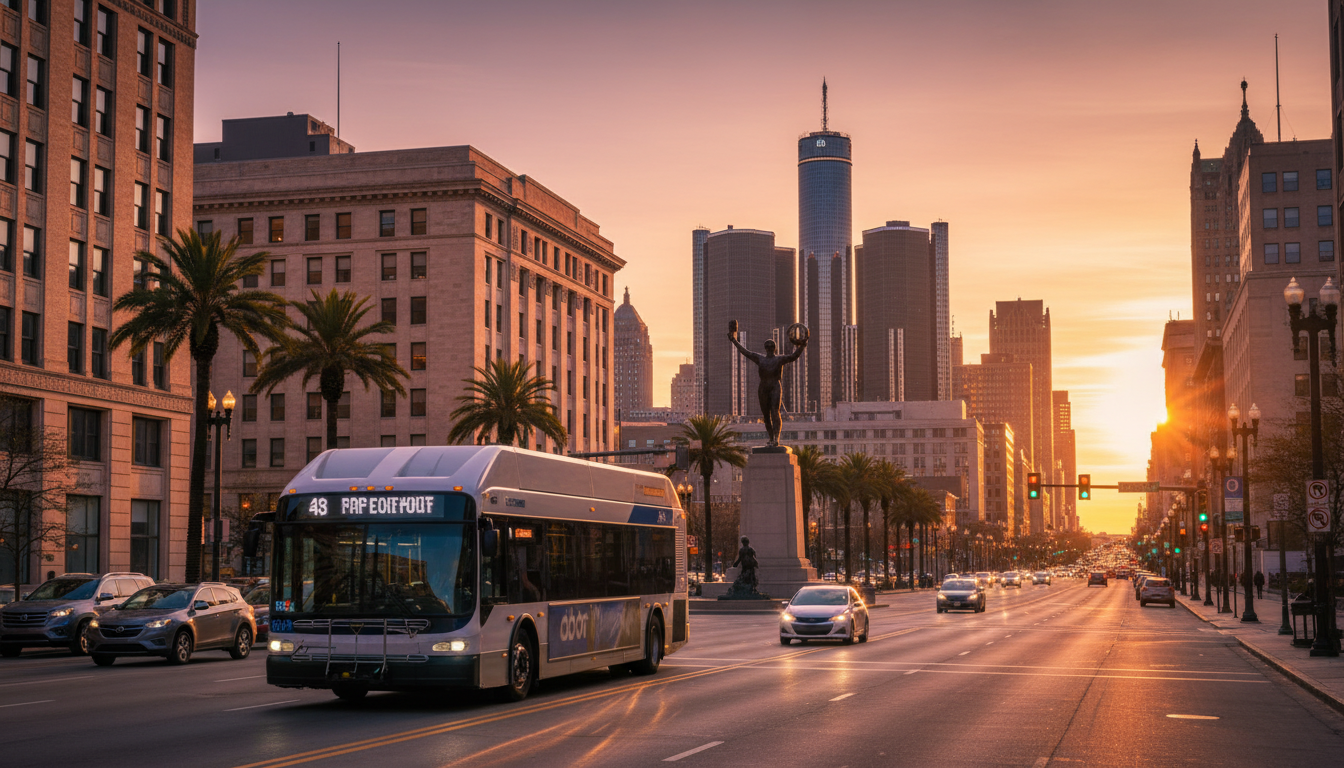
The backbone of the city’s mobility remains the buses Detroit residents rely on for daily commutes. By mid-2026, DDOT aims to have transitioned 25% of its fleet to zero-emission electric buses, supported by grants from the Federal Transit Administration. These upgrades are not merely environmental; the new fleet includes advanced real-time tracking technology that integrates with the Dart app, providing commuters with precise arrival data to mitigate the effects of Detroit’s unpredictable winter weather.
Internal reports from DetroitCityNews.com regarding local economy trends suggest that increased transit reliability is a top demand for the city’s burgeoning workforce. In response, the City of Detroit has proposed a 15% increase in driver wages to combat the chronic operator shortages that have plagued the system since 2021. This investment in human capital is seen as essential to meeting the 2026 goal of 24-hour service on all primary routes.
How This Impacts Local Residents
The proposed improvements to Detroit public transport are expected to have a profound impact on economic equity. Data from the Southeast Michigan Council of Governments (SEMCOG) indicates that approximately 24% of Detroit households do not have access to a personal vehicle, nearly triple the national average. For these residents, a more robust Detroit transit system isn’t a luxury—it is a lifeline to employment, healthcare, and education.
“For too long, the lack of reliable transportation in Detroit has acted as a barrier to professional growth for our residents,” noted a representative from a local community development organization. By increasing the frequency of buses Detroit provides in underserved neighborhoods like Brightmoor and the East Side, the city aims to reduce the “transit gap” that currently forces some workers into two-hour commutes for jobs located less than ten miles away.
Impact on Small Businesses and Real Estate
Improved mobility also correlates with rising property values and increased foot traffic for small businesses. Areas surrounding the new Bus Rapid Transit (BRT) stations are already seeing an uptick in mixed-use development applications. As we have previously covered in our reports on neighborhood development, transit-oriented development is becoming a primary driver for investment in the city’s outer districts, not just the downtown core.
Background & Data: The Road to 2026
The funding for these improvements stems largely from the Infrastructure Investment and Jobs Act (IIJA), which allocated billions to Michigan’s transit infrastructure. According to U.S. Census Bureau data, Detroit’s population has shown signs of stabilization, but the geographic spread of employment centers across Metro Detroit continues to necessitate a regional approach to mobility.
Key metrics being tracked for the 2026 rollout include:
- On-time performance targets of 85% or higher across all DDOT routes.
- The installation of 200 new solar-powered bus shelters with digital information displays.
- Expansion of the “Connect Detroit” micro-transit pilot, which provides on-demand shuttle services in areas where full-sized buses are inefficient.
What Happens Next
As 2025 progresses, residents can expect a series of public hearings hosted by the RTA to finalize the 2026 route adjustments. These meetings are intended to ensure that the voices of daily riders are prioritized over top-down planning. The transition to a more efficient Detroit public transport network is not without challenges, particularly regarding long-term operational funding, but the momentum heading into 2026 is undeniable.
City officials have signaled that by the end of 2026, the goal is for Detroit to no longer be a city where a car is a prerequisite for success, but rather a city where the Detroit transit system is the preferred choice for all residents, regardless of their zip code.