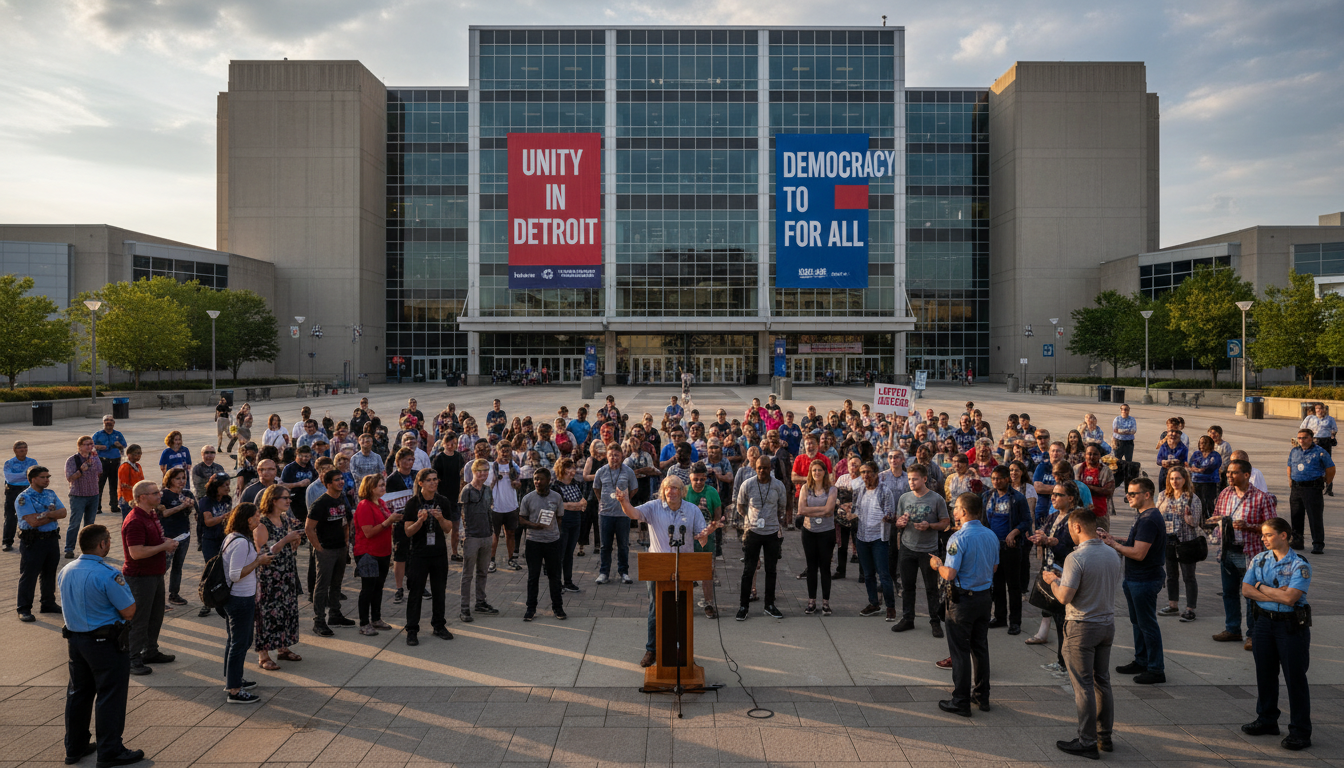
DETROIT — The intersection of local activism and national electoral strategy reached a boiling point this weekend at Huntington Place, as a significant Detroit controversy unfolded during the Michigan Democratic Party’s state convention. What was intended to be a routine gathering to formalize delegate procedures and unify the party base instead became a focal point of national scrutiny, highlighting deep-seated divisions within the Democratic coalition in one of the country’s most pivotal swing states.
As Detroit politics often serves as a bellwether for national trends, the tensions witnessed on the convention floor reflect broader debates over foreign policy, labor rights, and the representation of urban interests within the national platform. The events have prompted responses from high-ranking party officials and local community leaders alike, as they navigate the complexities of maintaining a unified front heading into a high-stakes election season.
Tensions Flare at Huntington Place
The controversy began during the credentialing process, where several delegates representing the ‘Uncommitted’ movement—a faction that gained significant traction during the Michigan primary—raised objections to the proposed platform language. According to reporting from the Detroit Free Press, the disagreements centered on the party’s refusal to include specific language regarding a permanent ceasefire in the Middle East and a reassessment of military aid. The friction escalated when several local organizers were reportedly denied access to the main floor, leading to a vocal protest that disrupted the keynote addresses.
Local observers noted that the discord is not merely about international issues but is deeply rooted in the historical dynamics of Detroit politics. For decades, Detroit has served as the powerhouse of the Michigan Democratic Party, yet many local activists feel that the city’s grassroots needs are often overshadowed by the strategic requirements of statewide and national campaigns. The sense of marginalization among some Detroit-based delegates contributed to the intensity of the weekend’s standoff.
Impact on Detroit Residents
For the average resident of Detroit, the political theater at Huntington Place may seem distant, yet the implications of this Detroit controversy are significant. Political instability within the majority party can lead to a fragmentation of resources and a lack of clear messaging on issues that directly affect the city, such as neighborhood development and infrastructure funding. When the party’s focus is consumed by internal disputes, the momentum for local legislative priorities can stall.
Furthermore, the controversy risks dampening voter enthusiasm in a city where turnout is crucial. If Detroit voters perceive that their delegates’ voices are being suppressed or that the party is unresponsive to their core concerns, it may impact engagement in the upcoming general election. Community leaders are now working to bridge the gap between the disgruntled factions and the party leadership to ensure that the energy seen at the convention is channeled into constructive civic participation rather than disillusionment.
Background and Data: The Significance of the Detroit Vote
To understand the weight of this controversy, one must look at the data surrounding Michigan’s electoral landscape. Data from the Michigan Secretary of State indicates that Detroit remains the single largest source of Democratic votes in the state. In previous election cycles, the city has provided the necessary margins to overcome losses in more conservative rural areas. Any internal rift that threatens this base is viewed with extreme concern by national strategists.
Historically, Detroit politics has been defined by a strong alliance between labor unions and the Democratic establishment. However, recent trends show a shifting demographic. According to the U.S. Census Bureau, Detroit’s evolving economic landscape has introduced new stakeholders who may not feel the same allegiance to traditional party structures. The ‘Uncommitted’ movement, which secured over 100,000 votes statewide in the primary, represents a significant portion of the electorate that is demanding more direct accountability from party leaders.
The current dispute is not the first time a Michigan Democratic convention has faced such challenges. Similar tensions were noted in 2016 and 2020, yet the current geopolitical climate has amplified the stakes. The Huntington Place event served as a reminder that the party’s path to victory runs directly through the heart of Detroit, and that path is increasingly complicated by diverse ideological demands.
What Happens Next
In the wake of the convention, the Michigan Democratic Party leadership has issued statements emphasizing a commitment to inclusivity. ‘We hear the voices of all our delegates and are working toward a platform that reflects our shared values,’ said a party spokesperson in a recent press release. However, many activists remain skeptical, calling for concrete policy shifts rather than just rhetorical concessions. For more on how these shifts influence local policy, see our recent report on voter turnout trends in Michigan.
National Democratic leaders are expected to increase their presence in the city over the coming months, attempting to mend fences and solidify the base. The Detroit controversy has forced a re-evaluation of how the national campaign interacts with local movements. Whether the party can successfully integrate these dissenting voices or if the rift will widen remains the critical question for the remainder of the year. For further analysis on the state of the race, residents can visit the Detroit News for ongoing updates. The eyes of the nation remain on Detroit, as the city continues to navigate its role as a pivotal battleground in American politics.