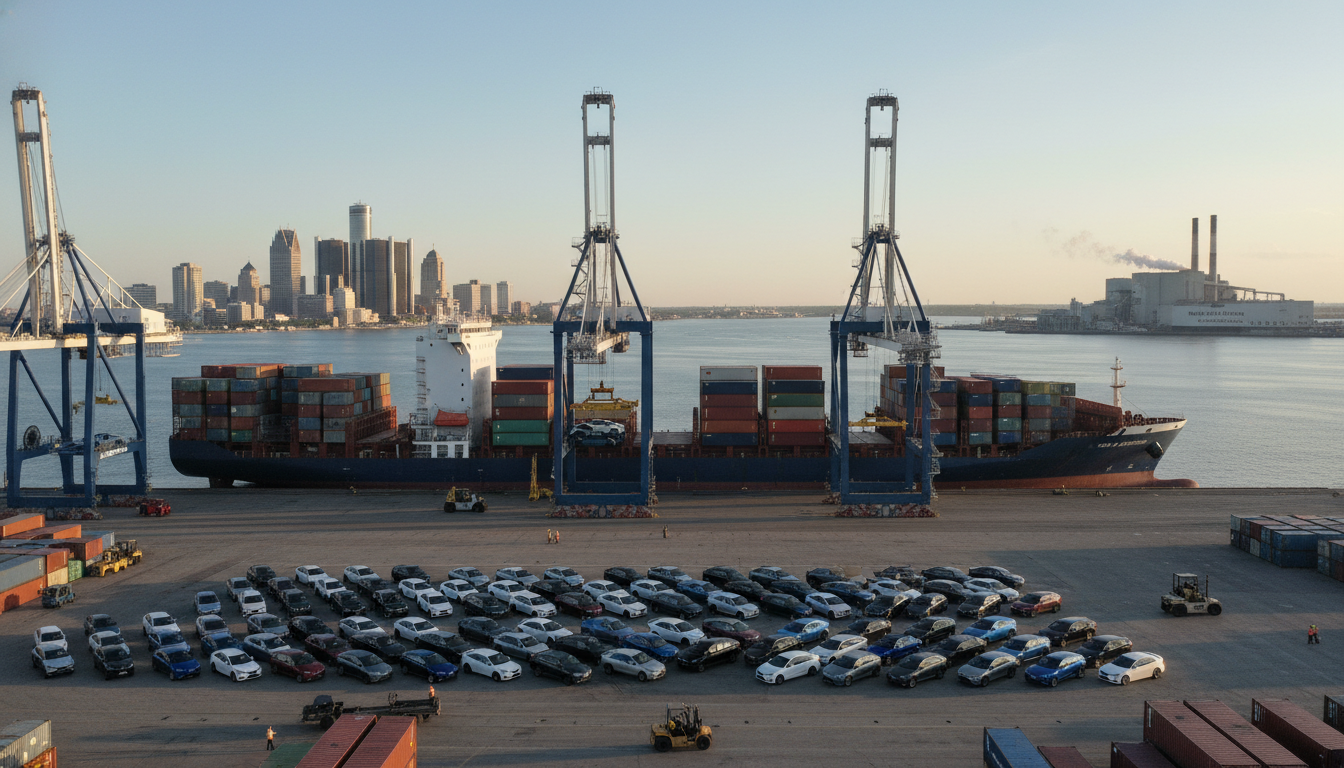
For decades, the executive suites of Detroit’s Big Three—Ford Motor Company, General Motors, and Stellantis—have kept a watchful eye on international competition. Today, that focus has shifted sharply toward the East. While the Chinese car industry has dominated global headlines with rapid production growth and cutting-edge battery technology, a new reality is emerging: many of these manufacturers are struggling to turn a profit despite their massive global footprint.
The rapid rise of brands like BYD, Geely, and NIO has been fueled by a combination of domestic subsidies and a ruthless price war within the Chinese domestic market. However, as these companies attempt to bypass slowing domestic demand by exporting millions of vehicles to Europe, Southeast Asia, and South America, the costs of logistics, compliance, and geopolitical friction are beginning to erode their bottom lines.
The Profitability Gap in the Chinese Car Industry
Despite the high volume of exports, the financial health of many Chinese manufacturers remains precarious. According to data from the Center for Automotive Research (CAR) in Ann Arbor, while Chinese EV makers benefit from a vertical supply chain, the overhead of global expansion is significantly higher than initially projected. The costs of establishing dealership networks, meeting international safety standards, and navigating shifting trade policies have made the ‘low-cost’ advantage difficult to maintain outside of China.
Reports from the International Energy Agency (IEA) indicate that while China accounts for over 60% of global electric vehicle sales, the average profit margin per vehicle for many domestic manufacturers remains in the low single digits. In contrast, legacy automakers in Detroit have historically relied on high-margin internal combustion engine (ICE) trucks and SUVs to fund their own transitions to electrification. The current climate creates a paradox: the Chinese car industry is winning the race for volume but losing the battle for sustainable profitability.
Impact on Detroit Residents and Labor
The financial struggles of Chinese automakers may seem like a distant corporate issue, but they have immediate implications for the local manufacturing sector here in Michigan. As Chinese firms face thinning margins at home, they are increasingly incentivized to dump excess inventory into global markets at prices that are difficult for American-made vehicles to match.
For Detroit residents, this translates to heightened pressure on local assembly plants. If global prices are driven down by unprofitable Chinese exports, the Big Three may be forced to accelerate cost-cutting measures. This could impact everything from profit-sharing checks for UAW members to future investments in Southeast Michigan facilities. Local analysts suggest that the ability of Detroit to remain the ‘Automotive Capital’ depends heavily on how the U.S. government manages trade relations with the Chinese car industry.
The Role of Tariffs and Trade Policy
The Biden administration’s recent decision to implement 100% tariffs on Chinese-made electric vehicles serves as a defensive wall for the American market. This policy is designed to prevent the ‘profitability crisis’ of Chinese firms from spreading to the U.S. shore. By making it financially unviable for Chinese manufacturers to sell at a loss in the United States, the federal government aims to protect the billions of dollars currently being poured into Michigan’s transition to electric mobility.
Market Trends and Global Headwinds
Global automotive news has recently focused on the slowing demand for EVs in Western markets, further complicating the expansion plans for Chinese firms. In Europe, several countries have rolled back consumer subsidies, leading to a glut of unsold Chinese inventory at major ports. According to a report by the Center for Automotive Research, the ‘brute force’ approach to market entry—characterized by high volume and low prices—is reaching its limit as interest rates remain high and consumer sentiment cools.
Furthermore, the Chinese car industry is facing an internal reckoning. Of the dozens of EV startups that launched in the last decade, only a handful have achieved positive cash flow. The rest are burning through capital at a rate that is unsustainable without continued state intervention, which itself is coming under fire from international trade regulators.
What Happens Next for Detroit
The long-term outlook for the global automotive market remains volatile. For Detroit, the struggle of Chinese competitors to find profitability provides a critical window of opportunity. It allows Ford and GM more time to refine their battery chemistries and scale up domestic production without being immediately undercut by subsidized competition. However, the pressure to innovate has never been higher.
In the coming years, industry experts expect a consolidation within the Chinese car industry, with only the most financially robust firms surviving. For the residents of Detroit and the broader Michigan economy, the health of the local auto industry will depend on whether American manufacturers can achieve the same scale as their Chinese counterparts while maintaining the profitability necessary to sustain high-wage union jobs. The competition is no longer just about who can build the most cars, but who can build them profitably in a fragmented global market.