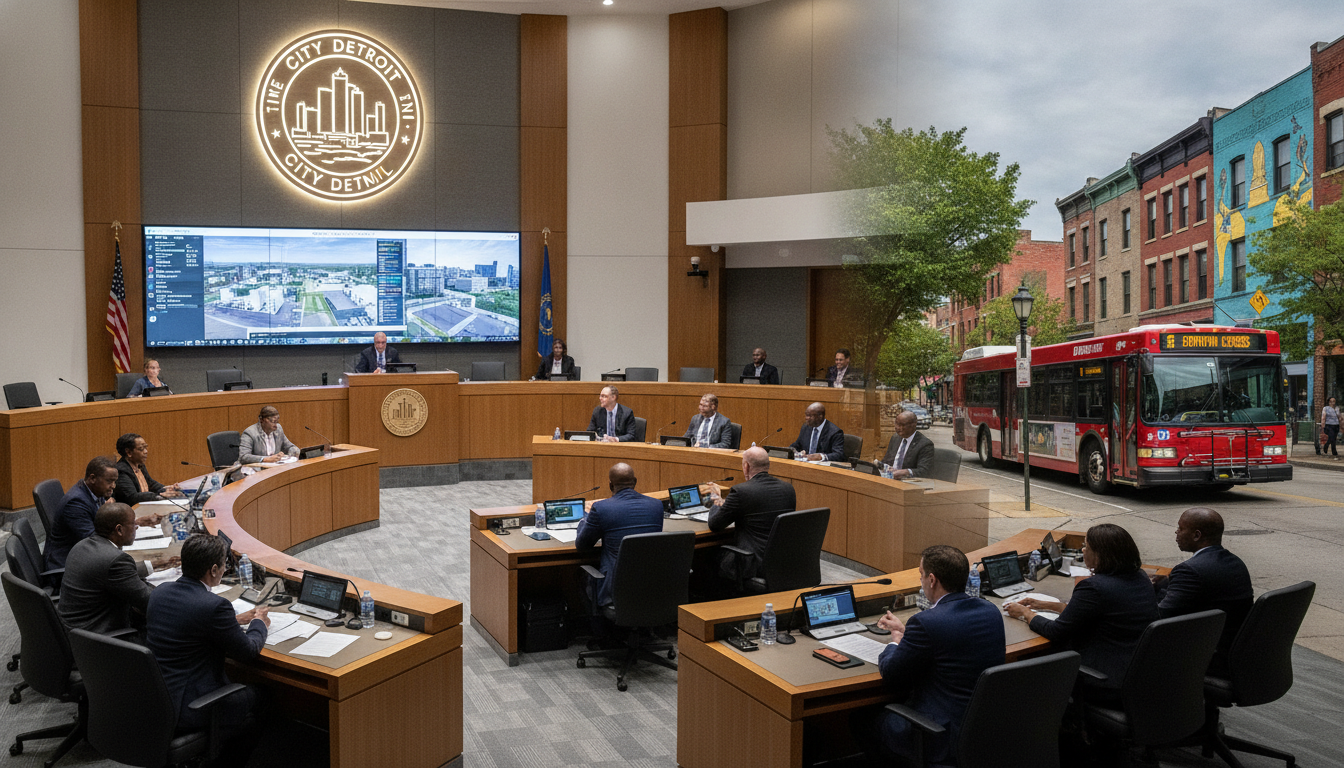
The Detroit City Council is entering a pivotal phase of legislative activity, prioritizing a dual-track strategy aimed at aggressive poverty reduction and the modernization of public transit. As the city continues its post-bankruptcy evolution, local leaders are increasingly vocal about ensuring that Detroit’s economic recovery reaches every neighborhood, not just the burgeoning downtown and Midtown corridors. This renewed focus comes at a time when federal pandemic relief funds are tapering off, forcing the city government to find sustainable, long-term solutions to systemic challenges.
Strategic Priorities for the Detroit City Council
In recent sessions, the Detroit City Council has underscored the necessity of a holistic approach to urban development. Council members have argued that for Detroit to maintain its momentum, the city must address the underlying factors that keep nearly 30 percent of its population below the federal poverty line. According to the City of Detroit’s latest budget reports, there is a concerted effort to align department spending with the ‘People’s Budget’—a framework advocated by community groups to prioritize human services, affordable housing, and mobility.
Council President Mary Sheffield and other members have frequently highlighted that poverty reduction is not a single-issue challenge but a multifaceted struggle involving housing stability, education, and access to living-wage jobs. The city government is currently exploring expanded property tax exemptions for low-income homeowners and increased funding for the Detroit Promise, which provides tuition-free college paths for city residents. By focusing on these pillars, the Detroit City Council aims to create a more resilient middle class within the city limits.
Improving Connectivity through Public Transit
A central component of the council’s urban development strategy is the overhaul of the Detroit Department of Transportation (DDOT). For many Detroiters, public transit is not a luxury but a lifeline. Statistics from the U.S. Census Bureau’s American Community Survey indicate that approximately one-quarter of Detroit households do not have access to a personal vehicle, making the reliability of the bus system a critical factor in workforce participation.
The city government has recently moved to address chronic issues within DDOT, including driver shortages and aging infrastructure. Recent council approvals have paved the way for increased wages for bus drivers and the procurement of cleaner, more modern vehicles. However, council members emphasize that infrastructure improvements must go beyond just more buses. There is a growing push for ‘transit-oriented development,’ which encourages high-density housing and commercial projects near major transit hubs. This approach aims to make the city more walkable and reduce the ‘transportation desert’ effect seen in several outlying neighborhoods. For more information on how these changes affect specific areas, residents can read about Detroit neighborhood revitalization efforts currently underway.
Impact on Detroit Residents
For the average resident, the Detroit City Council’s focus on poverty reduction and public transit translates to tangible changes in daily life. Improved transit frequency means shorter commute times for workers who rely on the bus to reach employers in the suburbs or at the city’s large medical and educational campuses. When transit is reliable, job retention rates improve, which is a direct contributor to long-term poverty reduction.
Furthermore, the council’s emphasis on urban development that includes affordable housing protections ensures that long-term residents are not displaced by rising property values. The ‘Right to Counsel’ ordinance, supported by city leaders, provides legal assistance to low-income tenants facing eviction, serving as a critical safety net. These initiatives, combined with expanded Detroit workforce development programs, provide a pathway for residents to transition from social safety nets to stable, high-paying careers.
Background and Data
The urgency of these measures is supported by sobering data. While Detroit has seen a 20 percent increase in its median household income over the last five years, it remains one of the poorest large cities in the United States. Data from the U.S. Census Bureau highlights that the poverty rate in Detroit, while declining from its 2014 peak, remains significantly higher than the national average. This disparity is what the Detroit City Council seeks to bridge through targeted policy interventions.
On the transportation front, DDOT currently handles millions of rides annually, yet satisfaction surveys have historically pointed to wait times as a primary grievance. The City of Detroit official government portal notes that recent investments in the ‘Transit Excellence’ plan are designed to bring 15-minute peak service to the city’s busiest routes, a move that urban planners say is essential for any modern metropolis. These data-driven decisions reflect a shift toward evidence-based policymaking within the city government.
What Happens Next
Looking ahead, the Detroit City Council is expected to deliberate on the next fiscal year’s capital improvement plan, which will likely include more significant allocations for transit-related urban development. There is also ongoing discussion regarding the ‘Land Value Tax’ proposal, which aims to incentivize the development of vacant lots and reduce the tax burden on homeowners, further aiding poverty reduction efforts.
As Detroit prepares for several high-profile development projects in the coming years, the role of the city government will be to ensure that growth is inclusive. The success of these initiatives will be measured not by the height of new skyscrapers, but by the reduction in the city’s poverty rate and the efficiency of its buses. The ongoing dialogue between the Detroit City Council and the residents they serve will remain the most critical factor in shaping the city’s future. For now, the focus remains clear: building a city that moves efficiently and provides every citizen with a fair shot at economic stability.