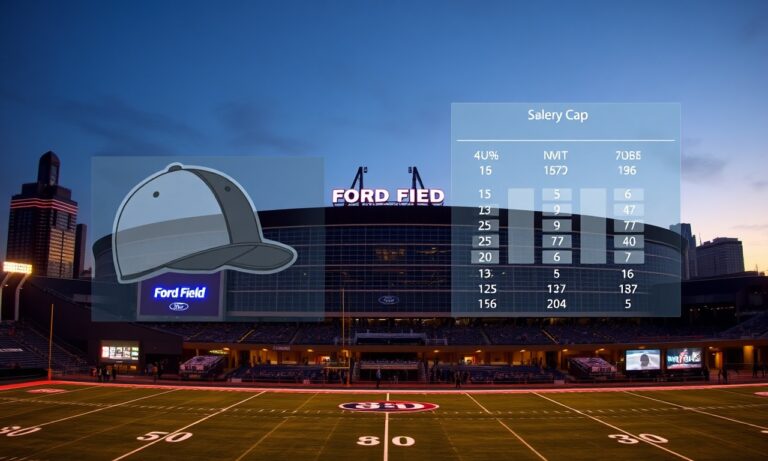
Detroit Lions fans are watching a key offseason storyline closely after NFL insiders floated the idea of a record-setting contract for running back Jahmyr Gibbs—a figure that could reshape how Detroit structures player value as the team builds its offense around its most explosive weapon.
Recent reporting and commentary from NFL insiders points to a potential record-setting deal that would reflect how teams increasingly pay premium prices for dynamic, multi-dimensional backs who can run between the tackles and impact the passing game. For Detroit, any major new contract would not only influence roster decisions on the field, but also affect the team’s cap-management strategy and the broader business outlook for a club that competes within a fast-spending NFL market.
What the NFL insiders are saying about a Gibbs contract update
According to multiple industry reports and the type of contract modeling often discussed in NFL circles, a contract prediction scenario for Gibbs is being framed around the question of whether his combination of speed, pass-catching, and game-breaking ability pushes his value into the top tier of running back contracts.
While specific contract figures and final terms depend on negotiations, the essential takeaway for Detroit is that the conversation is shifting from “what should Gibbs be paid” to “what would a record-setting deal look like in today’s market?” That matters because the Lions’ approach to extending core players has become a major part of their identity—balancing aggressive talent acquisition with careful salary-cap planning.
As the NFL and team salary-cap environment evolves, agents and teams commonly benchmark new deals against recent signings across the league. That means any “record-setting deal” talk tends to be less about one isolated player and more about the competitive pressure that comes when other clubs pay for difference-makers at the same position.
Why Detroit could value Gibbs at an elite level
From a football standpoint, Gibbs offers the kind of versatility that modern offenses prioritize. In Detroit, he’s not just an interior runner; he’s a threat in space and a reliable option in play-action and passing packages. That makes him difficult to replace and increases the cost of waiting to address his contract.
There’s also a practical team-building element: when a player is central to both run and pass game plans, it’s harder to “plug in” a different skill set. A Lions offense built around spacing, timing, and explosive runs relies heavily on how quickly Gibbs can create chunk plays—often on minimal yardage opportunities.
Detroit news context: player value and the local business lens
Detroit is a city where sports are tied to civic pride and local economic activity, from employment tied to game day operations to spending by visiting fans. Although individual NFL contracts don’t directly determine day-to-day wages in the city, they can influence how a club invests in its wider roster—coaching, training, scouting, and supporting personnel—which ultimately shapes team performance and fan engagement.
When teams perform, demand around local events tends to rise. And when teams spend strategically, they often sustain competitiveness longer, which helps keep fan interest steady throughout the season.
Impact on Detroit residents: jobs, consumer spending, and city-level “team spillover”
Detroit’s relationship with the Lions extends beyond Sundays. According to data from the U.S. Census Bureau, consumer spending patterns and employment figures are influenced by broader economic activity and household demand. In practical terms for residents, the Lions season can be a meaningful driver of discretionary spending—tickets, food, transportation, and local retail—especially in neighborhoods with strong game-day traffic.
Even so, a record-setting contract for a star player is best understood as part of the team’s long-term budgeting and roster management. If the Lions allocate more money to retain Gibbs, that can reduce flexibility in other areas of the roster—meaning Detroit could see different priorities when it comes to retaining depth players, improving special teams, or adding complementary offensive talent.
From a fan perspective, that can mean a sharper focus on “fit” around Gibbs: offensive line consistency, play-calling that leverages his strengths, and scheme adjustments that protect him from predictability. From a business perspective, it can mean stability or churn depending on how the cap is handled.
Detroit residents also feel the cultural effect of elite performers. Players who become local favorites can strengthen community engagement initiatives, youth football programming, and charitable efforts tied to the franchise. Record-setting contract chatter can amplify attention around those off-field activities.
Background & data: why contract predictions have changed recently
Running back contracts have historically been volatile, but the market has evolved. Several factors are changing how “contract prediction” conversations are framed: pass-catching backs, more diversified usage, and the league’s emphasis on explosive efficiency. That evolution helps explain why NFL insiders increasingly discuss large numbers for players at the position.
According to the NFL’s collective bargaining framework and the way salary-cap rules function, teams must translate market value into cap structures that work over multiple years. While the exact numbers in any “record-setting deal” scenario are speculative until negotiations are completed, the mechanics are consistent: teams weigh signing a player now versus the cost of possible replacement later, factoring in injury risk, performance trends, and age curves.
For Detroit, this is complicated by the broader reality that NFL cap space can shift quickly based on other contract decisions. That means a Gibbs contract update—especially one described as record-setting—would likely prompt related moves in the roster, including reworks, extensions, or strategic departures depending on how the Lions protect their competitive window.
What happens next for the Lions and Jahmyr Gibbs
If Detroit proceeds toward a major extension, fans can expect a sequence of developments typical of high-profile negotiations: internal cap planning, discussions with representatives, and timing choices that balance leverage with roster readiness. Even if a “contract prediction” report is already circulating, formalizing terms usually takes place through a negotiation process that accounts for timing relative to training camp and the broader free-agent market.
In the immediate term, Detroit should also continue to evaluate how Gibbs is used in different game scripts. If the team can demonstrate he remains a reliable driver of efficiency and explosiveness, it strengthens the rationale for a long-term commitment. If the Lions want to protect roster flexibility, they might also explore cap structures that spread impact across years.
For residents in Detroit, the practical impact of the Gibbs contract update will show up indirectly—through what the Lions choose to keep or pursue next. If a record-setting deal limits certain options, it could affect depth at other offensive positions or defensive matchups. If structured well, it can keep the offense loaded while sustaining the ability to address other needs.
Bottom line
Detroit Lions insider predictions about a record-setting contract for Jahmyr Gibbs signal how the league is pricing rare, versatile skill sets. For Detroit residents, the story is about more than football hype: major player contracts shape roster decisions, which influences team performance—and in turn affects the rhythms of fan life and local spending that come with a competitive season.