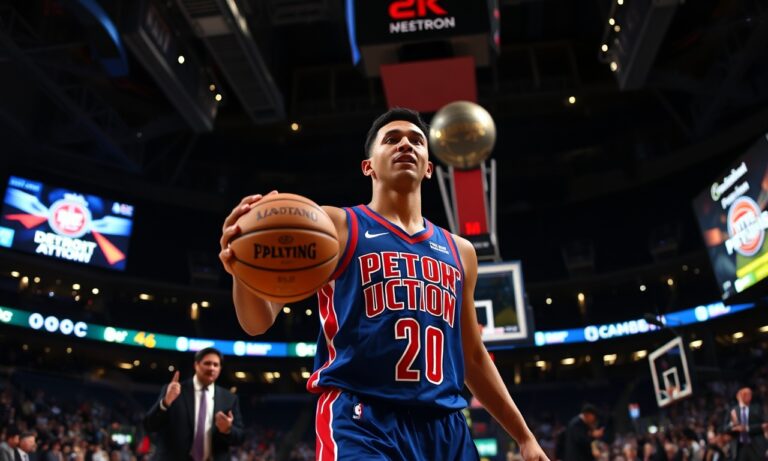
As the NBA offseason conversation heats up, a Detroit Pistons rumor involving possible roster movement has spilled into broader speculation about a LeBron James trade and a potential Kawhi Leonard scenario, prompting fresh chatter about how Detroit could reposition itself in pursuit of relevance beyond next season.
While no official team announcements have been made, the Pistons’ recent front-office activity—and the leaguewide market created by player options, contract dynamics and team needs—has given fans and analysts a reason to connect the dots between Detroit, the Los Angeles Lakers and the Los Angeles Clippers. The discussion is now largely dependent on what becomes available in NBA free agency rumors and how teams decide to handle salary-cap constraints.
How the Detroit Pistons rumor is fueling a bigger LeBron-Kawhi conversation
The latest chatter started as Pistons supporters began tracking draft-asset positioning, expiring contracts, and the kind of “trade window” teams typically consider when they believe they can accelerate their timeline. In Detroit’s case, the core question is whether the Pistons can leverage flexibility to acquire a higher-impact player, or instead maintain flexibility to avoid being boxed into a long rebuilding runway.
“Teams don’t always show their hand early, but Detroit’s roster construction and salary commitments will shape what trade options are realistic,” said Erik Slater, a sports-salary analyst who follows cap mechanics and team payroll planning. “The public conversation often gets broader than a single rumored deal—especially when names like LeBron James or Kawhi Leonard surface in the broader market.”
That “broader market” is where the conversation shifts from Detroit to Los Angeles. The LeBron James trade angle is often discussed in connection with the Lakers’ pursuit of championship-level depth, while the Kawhi Leonard scenario is frequently treated as a shorthand for whether a contender might alter its roster around health, load management and fit.
However, it’s important to separate rumor-driven hypotheticals from confirmed negotiating positions. According to the NBA’s collective bargaining framework, teams’ ability to trade is tied to contract eligibility, trade restrictions and salary matching, all of which can narrow the range of plausible outcomes even when multiple high-profile names are circulating in the same rumor cycle.
What Detroit basketball fans should understand: rumors aren’t plans
For Detroit residents following Detroit basketball news, the most practical takeaway is that rumor cycles often move faster than what teams can actually execute. A player being mentioned in offseason speculation does not mean that a trade is available, feasible, or likely.
As explained by Brad Townsend, an NBA reporter with extensive coverage of roster strategy, “Fans see a list of names and assume the league is picking from that list. In reality, teams are constrained by contracts, medical history, roster needs and the timing of negotiations. A rumor can be a reflection of interest, not necessarily a path to completion.”
That distinction matters because Detroit’s fan base has become especially attuned to roster decisions following years of rebuilding and experimentation. The Pistons’ ability to build credibility depends on whether any moves align with long-term development while also creating short-term competitiveness.
Impact on Detroit residents: beyond the scoreboard
Even when a transaction doesn’t happen, Detroit’s sports decisions can still ripple into the local economy and community sentiment. Home games draw visitors and spending across downtown and nearby neighborhoods, and offseason expectations can influence ticket demand, merchandise activity, and local business foot traffic.
According to data compiled by the U.S. Census Bureau, consumer spending patterns vary by season and local event calendars, and large events can temporarily shift retail and hospitality demand. While the Census Bureau does not track NBA rumors, it does provide a lens for understanding how audiences behave around peak-season activity and major local draws.
On the civic side, Detroit’s sports identity continues to intersect with broader community goals. The Pistons organization and other major local franchises have long supported community programming tied to youth development and education. If Detroit’s offseason culminates in meaningful roster upgrades, supporters often view that as an opportunity to sustain attention and participation in local initiatives—especially when the team becomes more competitive and draws consistent engagement from younger fans.
Still, residents are right to ask whether any high-profile trade talk could distract from building a stable foundation. A move aimed at immediate impact can come with trade-offs: it may reduce flexibility, increase salary commitments, or shift development time away from emerging players. For a team still shaping its identity, the question is whether a Pistons move would improve outcomes now without compromising the next few years.
Background & data: why Detroit’s cap and roster math matters
NBA roster decisions are heavily affected by salary-cap rules, contract lengths and trade eligibility windows. Even when rumors involve star-caliber names such as LeBron James or Kawhi Leonard, the practical path to a deal typically involves multiple teams and careful salary matching. That’s why NBA free agency rumors often blend together: one player’s decision can change the market for others.
Local Detroit basketball stakeholders—team-affiliated beat writers, analysts and cap researchers—generally point to one underlying factor: roster flexibility. A team that retains flexibility can respond more quickly to injury-related needs, playoff-bound teams’ offseason moves, or surprise departures. For Detroit, flexibility can be a strategic tool both for trade-making and for negotiating with players who may become available during the offseason.
Detroit’s basketball ecosystem also has a local parallel: the city’s broader business and redevelopment efforts depend on timing and coordination. While sports are not governed by the same rules as public projects, the principle is similar—planning has to account for constraints and schedule realities.
Los Angeles angle: how Lakers and Clippers fit the speculation
The connection to the Los Angeles Lakers and Los Angeles Clippers is largely rooted in how fans interpret market incentives. The Lakers are often framed as a destination for star-level talent when they pursue roster upgrades, while the Clippers are frequently discussed in relation to health management and roster fit around their stars.
Yet any LeBron James trade discussion, or any Kawhi Leonard scenario that involves Detroit, would require alignment among multiple parties: player willingness, contractual structure, team timing, and what each club is trying to accomplish in the short and long term.
Put simply, even if Detroit’s internal interest appears plausible, the path to a transaction would still depend on broader league conditions—exactly why rumor cycles can expand beyond the Pistons’ immediate needs.
What happens next for the Detroit Pistons rumor cycle
For now, the Pistons’ offseason remains a watch-and-wait situation. Most meaningful movement in the NBA calendar tends to cluster around formal free agency windows, deadline-related strategic conversations and confirmation of player plans (including option decisions and negotiations).
Detroit residents can expect three major checkpoints: developments around the Pistons’ near-term roster commitments, confirmed market moves by teams connected to the stars mentioned in the chatter, and any official Detroit announcements that narrow the range of possibilities.
When the next stage arrives, the value for fans will be in separating noise from what is actually actionable. A rumor can suggest Detroit is looking at certain player profiles, but only confirmed negotiations—and the resulting roster changes—will show whether the Pistons are moving toward a new competitive posture.
Bottom line for Detroit
The Detroit Pistons rumor now fueling talk of a LeBron James trade and a Kawhi Leonard scenario is part of a wider offseason ecosystem where names circulate quickly and teams respond slowly. Detroit fans should treat it as a signal worth monitoring rather than a promise worth counting on—especially as offseason decisions ultimately hinge on salary-cap realities and verified negotiating paths.