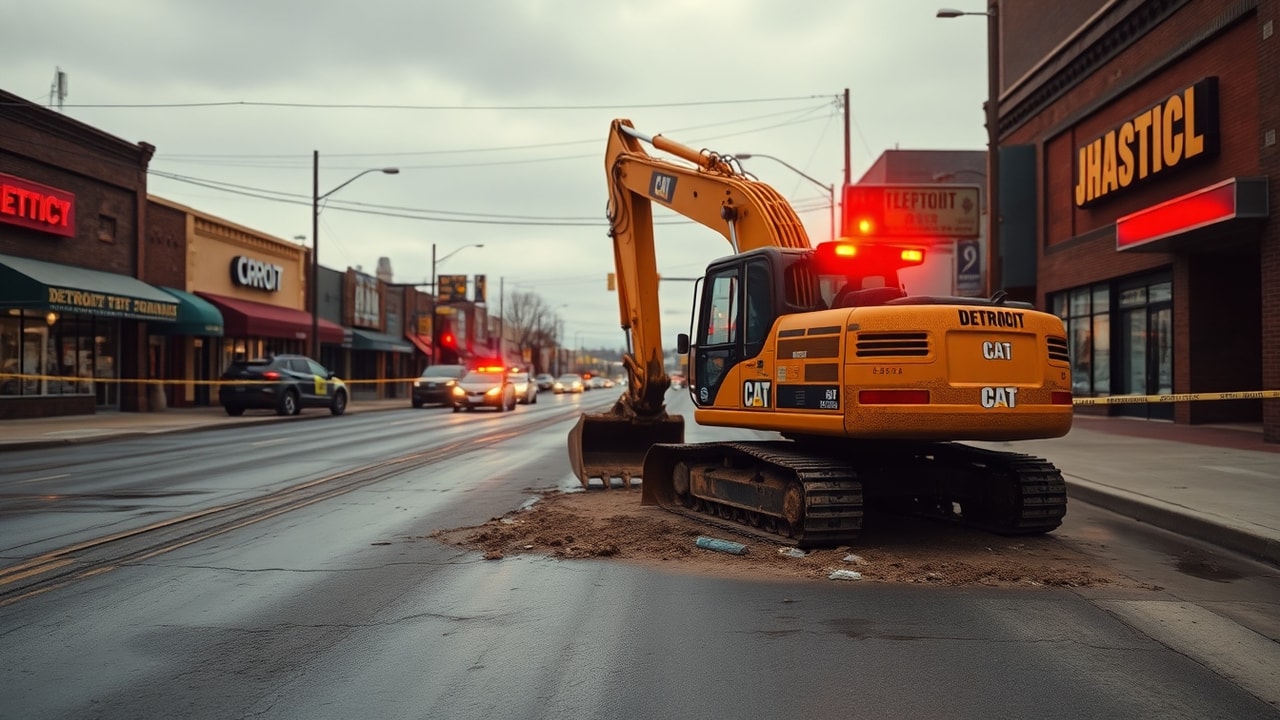
A suspect accused of stealing an excavator and using it to damage nearby businesses in Detroit was arrested following a drunk driving investigation, police said, highlighting the risks local construction equipment can pose when removed from job sites and used recklessly.
Detroit police said the incident involved stolen construction equipment that was taken from a work area and later connected to property damage affecting multiple businesses in the city. Officers then obtained probable cause for an arrest tied to impaired driving, according to the department.
Excavator theft led to business damage, police say
According to Detroit Police, officers responded after reports that an excavator had been stolen and that the vehicle was involved in wrecking or damaging business property in the area. Investigators worked to identify how the equipment was taken and where it was driven before the damage occurred.
Police said the case ultimately resulted in a drunk driving arrest connected to the suspect. The department did not immediately release all details about specific companies that were damaged, but officers described the damage as significant and disruptive to local operations.
Local business owners and workers often rely on stable street access and secure construction staging areas. When heavy equipment is stolen and operated improperly, the impact can extend beyond the site where it was taken—affecting adjacent lots, storefronts, entrances, and sidewalks.
Impact on Detroit residents
For Detroit residents, incidents like this can translate into immediate economic and safety concerns. When businesses are damaged, they may face repairs, temporary closures, and higher insurance and operating costs. Those costs can ripple into local hiring, payroll, and the availability of goods and services in neighborhoods.
Detroit has thousands of parcels that host small contractors, landscaping crews, and light industrial operations. Heavy equipment theft and misuse can create delays for legitimate work—because even after repairs, sites may remain unsafe until inspections and structural assessments are completed.
“When construction equipment is stolen, it’s not just a property crime—it’s an infrastructure and safety issue,” said an expert quoted by a Detroit-area trade group in previous reporting on equipment theft trends. While the quote was not specific to this case, it reflects how investigators and industry professionals view stolen equipment as a threat to public safety and business continuity.
Residents also feel the effects through traffic disruptions and increased police presence. Damage to storefronts or public walkways can change pedestrian access, and cleanup efforts can affect nearby parking and transit stops.
Background & data on construction equipment theft
Detroit police have previously emphasized that stolen construction equipment can be difficult to trace because many machines are moved quickly and may be transported to other jurisdictions. In the broader U.S. market, equipment theft can involve everything from compact tractors to excavators, often targeting parts and resale value.
According to data compiled by the National Insurance Crime Bureau (NICB), theft of heavy equipment and other vehicles remains a persistent problem nationwide, with thieves often exploiting gaps in secure storage and monitoring. The NICB notes that serial numbers, documentation, and location records can be key in recovering stolen property and establishing ownership.
For Detroit property owners, the risk is compounded by the city’s mix of active development projects and aging structures. Construction work in multiple neighborhoods continues to attract contractors, and job sites frequently rely on barriers and locks rather than permanent fencing.
In this case, police said the excavator was stolen and then used in a manner that led to business damage. The alleged impaired driving component underscores a separate but related hazard: when heavy equipment is operated by an intoxicated driver, the likelihood of crashes and uncontrolled impacts increases sharply.
Minnesota police case similarities raise questions about equipment security
Authorities in other states have addressed comparable patterns—stolen heavy equipment connected to impaired driving or reckless operation. In one Minnesota police case involving a suspected drunk driving arrest, officers described how alcohol impairment and vehicle misuse contributed to property and public safety risk, according to local reporting by Minnesota news outlets.
While that Minnesota incident is separate from Detroit, it points to a broader law-enforcement concern: impaired driving charges can surface when stolen vehicles or equipment are later discovered being driven or transported. For Detroit contractors, the lesson is that equipment theft can quickly turn into a multi-jurisdiction investigation if the machine is moved far from the original site.
What happens next in Detroit
Police said the suspect was arrested following the investigation. The next steps typically include vehicle and scene reconstruction, verification of equipment ownership, and documentation of property damage for insurance and prosecution.
Legal outcomes depend on charges filed by the Detroit City Prosecutor or the Wayne County court system, and on whether additional counts are added based on the extent of the demolition or damage at the businesses involved. Investigators also commonly pursue evidence such as security footage, GPS or tracking records associated with construction equipment, and witness statements from the time period when the excavator was taken.
For impacted businesses, officials may also recommend prompt reporting to insurers and coordination with engineering and demolition contractors if structural assessments are required. Even where damage appears limited, safety checks can be necessary before reopening.
How Detroit businesses can reduce stolen equipment risk
Experts who track theft trends say prevention measures can matter as much as response. Common recommendations include using hardened locks, alarms, and visible anti-theft measures; ensuring equipment is stored in secured areas; and keeping serial numbers and purchase documentation readily accessible. For equipment that has tracking capabilities, enabling alerts and regularly checking location history can improve recovery chances.
Detroit business operators can also benefit from coordinating with contractors on site access protocols—such as controlled deliveries, staff check-in procedures, and photographing equipment before and after shifts. These steps can help investigators connect stolen construction equipment to specific job sites and establish accountability.
As Detroit police continue their investigation into the stolen excavator and the resulting Detroit property damage, the case is expected to remain under review for additional evidence and possible charges.