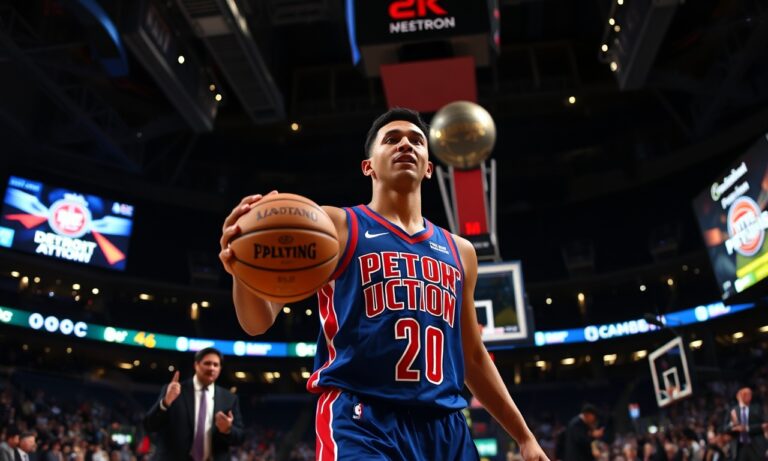
The Detroit Pistons’ offseason is entering a sharper phase as NBA front office leader Trajan Langdon and the team’s decision-makers weigh roster moves, contract timing, and the direction of Detroit basketball. With the Pistons preparing for another critical stretch of roster building, local questions are increasingly centered on how the organization balances long-term development with the realities of competing in the Eastern Conference.
While the Pistons have already begun resetting expectations after several seasons of rebuilding, this offseason challenge is less about one headline transaction and more about a set of interconnected choices: whether to create flexibility for future years, how to integrate younger pieces, and what kind of basketball identity Detroit sports fans will see once the next regular season begins.
Langdon’s next test: roster balance in a competitive market
Trajan Langdon, hired as the Pistons’ president of basketball operations, has described rebuilding as a process of aligning talent with a system that can sustain growth. That framework is likely to guide the Pistons’ offseason decisions—especially as Detroit evaluates which players fit the team’s defensive needs and half-court execution, and which positions must be prioritized to reduce inconsistency.
According to Basketball-Reference, NBA roster and salary trends can quickly limit a team’s options once player salaries and years remaining are accounted for, making timing a key factor in offseason planning. In practice, that means the Pistons’ offseason moves will be judged not only by who they add, but by whether those additions preserve enough flexibility to respond if player development outperforms—or underwhelms—expectations.
Any roster overhaul in Detroit basketball also lands with extra scrutiny because the city has tied its identity to professional sports for generations. Pistons fans have long expected competitiveness, and Detroit sports news coverage frequently reflects that tension between patience and urgency.
What Detroit residents will notice
Beyond the X’s and O’s, Pistons offseason decisions have ripple effects across Detroit. The most immediate impact is attendance and local engagement. When a team’s on-court product looks coherent—clear roles, competitive games, measurable improvement—season-ticket holders and casual fans are more likely to return, which affects revenue streams tied to game nights.
There is also an indirect economic effect through local spending near Little Caesars Arena. Neighborhood businesses—restaurants, bars, and rideshare drivers—tend to benefit from higher foot traffic on game days. A prolonged period of losing can dampen demand, but sustained improvement can lift it, creating a cycle that becomes visible to residents even if they never follow the Pistons’ front office minutiae.
According to a report from the Michigan Department of Treasury on tourism and visitor spending patterns, major league events contribute to regional economic activity by driving short-term spending. For Detroit, that means NBA positioning can influence not just the arena experience but also how busy nearby corridors feel during the season.
Community sentiment and the question of “progress”
In Detroit, “progress” is not only measured in wins and losses. Fans also look for whether young players are receiving enough opportunities, whether the coaching staff has a clear plan, and whether the front office is building toward a defined style of play. Those signals matter because many residents are evaluating the Pistons alongside other local sports realities, including how quickly other franchises have pivoted in recent years.
As a result, Langdon and the Pistons’ NBA front office will likely be judged on decision-making transparency, the consistency of playing time for developing talent, and the team’s ability to demonstrate a credible long-term trajectory rather than a series of short-term experiments.
Background & data: why offseason timing matters
The Pistons’ current challenge sits within a broader league dynamic: teams are often constrained by salary structures, trade protections, and roster-building timelines. According to NBA collective bargaining and salary-cap explanations widely summarized by NBA media outlets, the cap environment dictates what can be done in offseason negotiations and which moves become feasible only under certain financial conditions.
For Detroit basketball, that context matters because rebuilding efforts require patience with player growth while also protecting against long-term financial lock-ins that can slow future improvement. In other words, the Pistons can’t simply chase one fix; they need a plan that connects season-to-season development with roster flexibility.
There’s also a statistical component. Tracking lineup performance, shooting efficiency, and defensive rating trends can reveal whether a team’s personnel fits the system being asked. Data providers such as Synergy Sports and NBA.com frequently illustrate how spacing, rim pressure, and shot quality affect results. For a front office like Detroit’s, those indicators help determine whether a prospect or role player should remain in the rotation or be targeted for trade or waiver-style roster adjustments.
Pistons offseason: decisions that can define the next few years
Offseason challenges tend to cluster into several categories for teams in Detroit’s position:
- Draft and youth integration: how rookies and young players are used, including whether the team creates clear pathways to increased minutes.
- Contract management: whether Detroit adds salaries that raise the floor now but reduce flexibility later—or uses moves to preserve future options.
- Role definition: ensuring the lineup has enough spacing, defensive responsibility, and offensive structure to reduce volatility.
- Free-agent targeting: balancing immediate needs with fit, including defensive capabilities and willingness to buy into a team identity.
For Langdon, the challenge is to align those categories into one coherent plan that can withstand the reality that development takes time and performance can vary from preseason to midseason.
What happens next
In the near term, the Detroit Pistons’ offseason will likely feature a series of internal evaluations—player fit assessments, coaching feedback loops, and salary-cap scenario planning. While fans may focus on rumors, the real story for Detroit sports news will be how the team prioritizes needs and whether roster changes are built around a recognizable strategy.
As the NBA calendar advances, Detroit will also monitor how other teams’ rosters evolve. A rebuilding club’s best opportunities often arise when contenders adjust their own depth, or when teams with complex salary constraints become sellers rather than buyers.
For residents, the practical takeaway is simple: the Pistons’ next major decisions—whether through trades, contract extensions, or free-agent additions—will shape not only the on-court product but also how strongly the team draws interest across Detroit. If the front office’s moves translate into clearer roles and competitive games, the arena ecosystem and local spending patterns around game nights are likely to reflect it.
And if those choices fall short, the offseason will still be remembered—but for a different reason: as another chapter in how Detroit basketball tries to turn organizational planning into wins on the court.
Local impact to watch: from the arena to neighborhood business
For Detroit residents following these developments, a few indicators will offer early signals about whether the offseason challenge is turning into momentum. Watch for whether younger players receive consistent minutes, whether new additions fit into a defined style, and whether Detroit’s home games show improved competitive intensity.
Detroit’s sports economy is built on routine—regular season attendance, repeat visits, and community engagement. The Pistons’ front office decisions will ultimately influence how often residents choose to go out, where they spend, and how the city’s game-night energy feels from one month to the next.