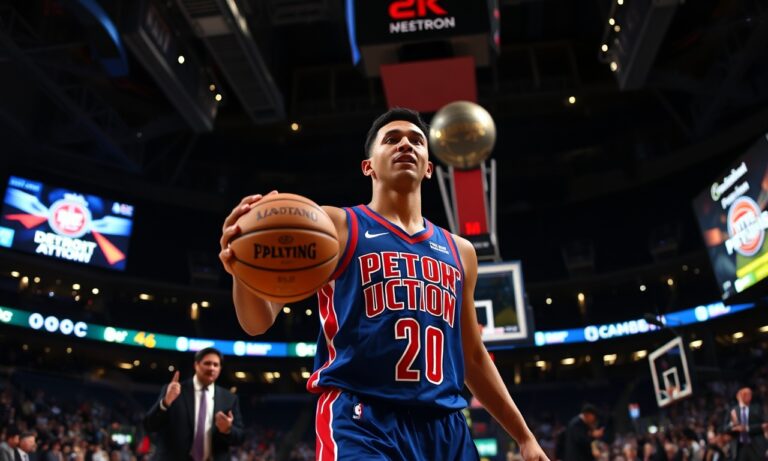
Detroit Pistons front-office conversations about Kawhi Leonard are now pivoting after the veteran forward opted out of his contract, reshaping expectations around the NBA offseason. While the Pistons remain focused on building a competitive team roster, the decision underscores how quickly player targets can change once major stars alter their free-agency status.
For Detroit sports fans, the latest development arrives at a sensitive moment. The Pistons’ offseason priorities—fitting lineup needs, managing roster construction, and preparing for potential free agency impact—are often influenced by marquee names. When those names move to the open market, it can affect not only what Detroit might do, but also how other teams behave in the same window.
“Opt-outs can change the market in a hurry because they give clubs clarity that wasn’t there before,” a Detroit-area NBA operations consultant said. “The biggest teams typically don’t wait as long once the options become clearer.”
How Kawhi Leonard’s decision reverberates through Pistons planning
In practical terms, Leonard’s opt-out introduces uncertainty—then opportunity—for clubs assessing their player targets. If a star becomes available, even briefly, it can tighten the competitive landscape for contracts, trade discussions, and the timing of negotiations across the league.
According to NBA.com, the league’s collective bargaining and transaction rules allow players to opt out of certain deals and later pursue new contracts once the window opens. That process can influence when teams are willing to push money toward specific roster slots.
For Detroit, the Pistons must also balance short-term competitiveness with longer-term roster construction. The team’s front office has been working within the NBA’s constraints of salary, roster building, and the reality that multiple teams can chase the same premium free-agent archetypes—whether it’s perimeter creation, two-way wings, or playoff-caliber forward depth.
“Even if a team isn’t directly in the running for a specific player, the ripple effects matter,” said a former NBA cap analyst who follows Detroit sports news coverage. “If one contender moves first, it can change what’s left for everyone else—especially at the role-player level.”
Impact on Detroit Residents: more than just roster talk
Detroit sports reporting often treats offseason speculation as entertainment, but it also intersects with local consumer behavior. The Pistons are a major brand in a city where entertainment budgets and household spending can be sensitive to economic conditions.
Data from the U.S. Census Bureau shows that household spending patterns can vary meaningfully across economic cycles, which affects discretionary purchases such as tickets, apparel, and game-day spending. While sports franchises don’t publish direct “opt-out” sales dashboards, the broader relationship is clear: higher expectations can amplify demand, and shifting expectations can reshape how fans plan around the season.
Local media and community stakeholders also note that team performance influences engagement. When players and storylines generate buzz, it can drive more attention to game nights, sponsor activations, and youth basketball programming associated with NBA teams.
“The Pistons’ season arc affects our planning,” said a representative from a Detroit youth sports organization that collaborates with athletics programming. “Parents ask about opportunities, and interest spikes when fans are excited. Offseason changes can impact that momentum.”
What Detroit can still do in the NBA offseason
With the opt-out now a reality, Detroit’s options for the NBA offseason are likely to involve a mix of internal roster evaluation and external market activity. That typically includes:
1) Clarifying player targets based on market timing. If Leonard’s availability alters which teams spend early, Detroit can adjust its negotiation posture. Rather than competing immediately, the Pistons can evaluate which contracts become more or less feasible as teams set priorities.
2) Targeting roster fit over star-only outcomes. When elite names move, teams often pivot to combinations of wings, defenders, and secondary creators. That can matter for Detroit’s lineup balance, especially as the team seeks consistent offensive spacing and reliable defense.
3) Planning for free agency impact on roles. Free agency can change not only starters’ minutes, but also the availability of specific role players. Teams can fill needs quickly once they learn who is staying, leaving, or remaining undecided.
Those steps are particularly important for teams operating with realistic leverage in a league where marquee targets draw competition. Detroit’s goal is to keep roster building flexible enough to absorb market swings—while still moving decisively when the right opportunity appears.
Background & Data: why opt-outs matter
The NBA offseason often feels like a chain reaction. Player opt-outs are one of the catalysts because they reduce uncertainty about a player’s intent and create new decision points for clubs. According to collective bargaining materials summarized by the National Basketball Players Association (NBPA) and league transaction guidance, the opt-out process is tied to contractual terms and subsequent negotiation windows.
For fans, it’s tempting to treat star decisions as isolated events. But across the league, one opt-out can reshape timing: contenders may reallocate budgets, non-contending teams may alter trade willingness, and mid-tier clubs may adjust how they pursue free agents at key positions.
Detroit also has to account for the practical constraints of an NBA roster. Even when a team likes a player, the final fit depends on minutes, defensive assignments, salary structure, and how a roster complements its existing core.
In recent seasons, NBA observers have emphasized that team building increasingly requires depth and flexibility—particularly for defending in transition and sustaining offense across matchups. That trend influences how front offices interpret star availability and how they select alternative player targets.
What Happens Next for Detroit Pistons
The immediate next steps for the Pistons likely hinge on the early market phase of the NBA offseason. As teams begin formal contact and negotiations move beyond general interest, Detroit’s leadership will need to determine whether to pursue direct opportunities, focus on role-player value, or look for trade possibilities that address specific gaps.
For Detroit residents, the coming weeks may look like two parallel storylines: the broader league narrative around Leonard’s next move, and Detroit’s own effort to translate offseason plans into roster-ready decisions. That includes assessing draft positioning, contract flexibility, and potential free agency impact on the depth chart.
While the opt-out removes one layer of certainty for fans tracking Kawhi Leonard’s status, it doesn’t change the Pistons’ core responsibility: building a team roster capable of competing consistently. In the NBA, the teams that benefit from offseason volatility are often the ones prepared to adjust quickly.
As Detroit continues monitoring league-wide negotiations, the Pistons’ front office will likely emphasize the same principle NBA franchises rely on every summer—evaluate the market, protect flexibility, and act decisively when a path to improvement becomes realistic.