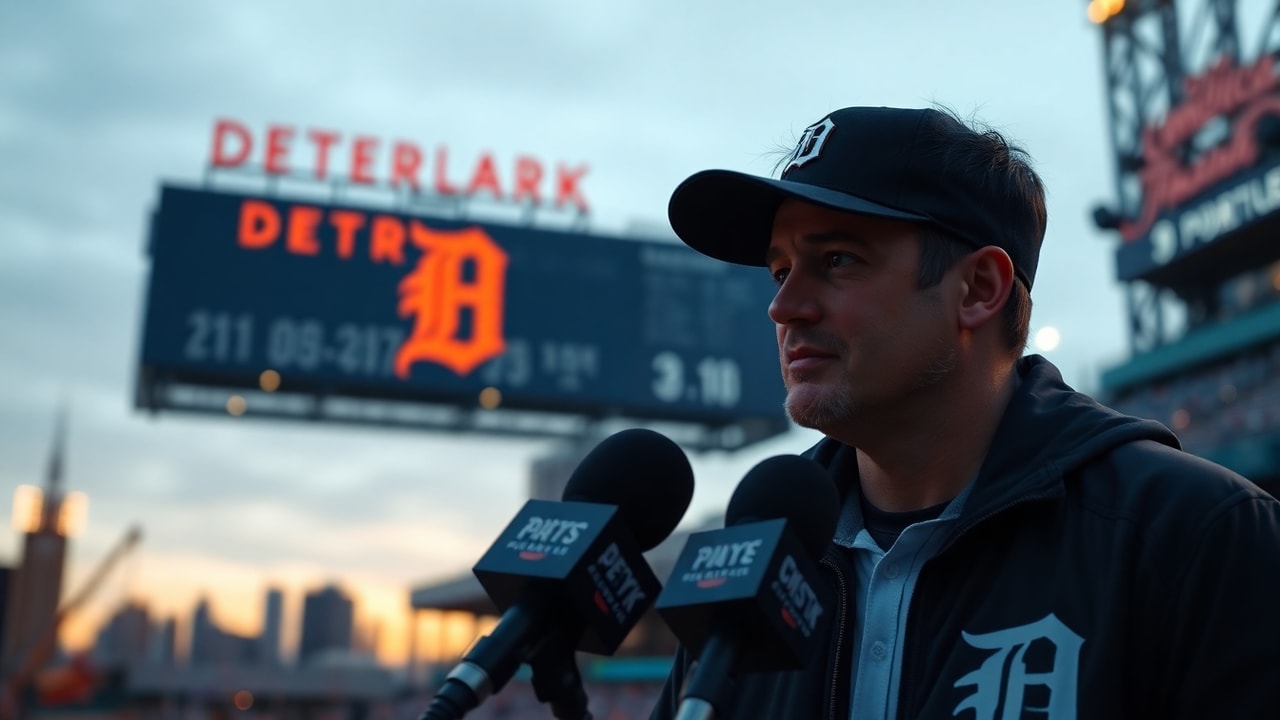
The latest Detroit Tigers news centers on a familiar name: former ace Justin Verlander. In a brief, low-profile exchange that has fueled speculation across baseball circles, Verlander offered a measured look at where things stand as he weighs his immediate future—prompting attention not only from fans, but also from the Tigers organization and the broader Detroit sports business community.
While Verlander did not announce a definitive destination or timetable in public remarks, his comments—shared through mainstream MLB coverage and relayed in part by familiar team and league reporting—were notable for their restraint. For Tigers supporters, the takeaway is less about a headline-making decision and more about the kind of process that often comes with major-career transitions: careful deliberation, ongoing evaluation, and a reluctance to turn private discussions into public spectacle.
As of this week’s reporting, Verlander’s tone has been consistent with a “wait and see” posture rather than a full, formal announcement. That quiet approach is drawing attention in Detroit because Verlander remains a high-recognition figure locally—one whose presence, even at the fringes, can influence fan interest, media cycles, and the off-season narrative surrounding the Detroit Tigers roster.
Main Section
According to coverage referenced by MLB.com, Verlander’s remarks signaled ongoing assessment of his next chapter. The same reporting framing emphasizes that he is not rushing to finalize a path in a way that would immediately reshape the Tigers’ immediate plans.
In Detroit, that distinction matters. The Tigers’ off-season decision-making is shaped by a variety of factors—roster flexibility, player development timelines, payroll considerations, and the need to balance short-term competitiveness with longer-term roster building. When a high-profile figure like Verlander remains in a “quiet update” phase, it can create a window of uncertainty that affects how fans interpret other moves.
At the same time, the Tigers have continued to operate within their own roster planning framework. MLB updates over the course of the off-season have repeatedly shown that front offices rarely build entire plans around a single decision, particularly when it involves a veteran with options beyond one team. Instead, organizations typically hedge: they explore multiple roster pathways while maintaining internal benchmarks for pitching depth, innings management, and readiness of prospects.
What Verlander’s silence can mean
Verlander’s approach aligns with how many established players manage public expectations. A “quiet announcement,” even when no definitive news is delivered, can still signal where a player stands—such as an intention to remain involved in the game, a desire to preserve leverage, or a preference for making decisions in a low-noise environment.
For Detroit residents, it also affects the emotional rhythm around the franchise. When a player closely associated with the Tigers enters a waiting period, it can amplify the sense that the organization’s pitching identity—built through both veteran guidance and player development—may be at a crossroads.
Impact on Detroit Residents
Even without a formal announcement, the ripple effects of Justin Verlander update chatter are tangible in Detroit. The Tigers are a major driver of sports-related spending across the city—game-day travel, hospitality revenue near stadium-adjacent corridors, and local media engagement that extends well beyond the ballpark.
According to a regional analysis cited by the Detroit Economic Growth Corporation in prior coverage of sports and event impacts, major league teams can contribute to local economic activity through visitor spending and business visibility. While specific effects tied to a single offseason storyline are difficult to isolate, the broader point remains: heightened attention can translate to increased consumption among fans and tourists during marquee periods.
Additionally, roster speculation influences how local communities plan their own schedules. Ticket demand, promotions, and community partnerships often respond to perceived momentum. If the Tigers’ pitching narrative appears more compelling due to Verlander’s continued relevance, that can affect local engagement—especially for families and casual fans who follow team headlines rather than day-to-day transaction details.
There’s also a civic dimension. Detroit’s sports culture is interwoven with neighborhood identity and pride. When a figure like Verlander remains part of the national conversation, it keeps Detroit’s baseball brand in the spotlight, which can indirectly support local youth baseball participation and community programming through increased awareness and sponsorship interest.
Background & Data
To understand why a quiet player update can carry weight for the Detroit Tigers roster, it helps to look at how MLB teams structure pitching and roster strategy. Pitching depth is typically built as a pipeline: immediate contributors are paired with organizational arms who can be promoted based on readiness, health, and workload planning.
Data from the Baseball-Reference database (widely used by MLB media and analysts) underscores how veteran pitchers can differ sharply from each other in workload outcomes and recovery cycles from season to season. That variability often drives cautious decision-making by both the player and the team.
Meanwhile, the Tigers’ offseason planning sits within broader league trends: teams increasingly prioritize pitching durability, bullpen flexibility, and defensive run support—areas that can be addressed through a mix of free-agent targeting, trade exploration, and internal development. As a result, Verlander-related headlines tend to land against a backdrop of ongoing roster evaluation rather than a single, decisive domino.
Finally, it’s important to distinguish between a “status update” and a formal commitment. Many fans interpret muted remarks as a sign of imminent return or departure, but in professional sports, the most consequential events usually occur when teams and players align on terms, timing, and roster fit. Until then, public communication can remain deliberately non-specific.
What Happens Next
For Detroit’s Tigers fandom, the next step is watching how two parallel timelines evolve: Verlander’s personal decision-making and the Tigers’ roster movement in response to league opportunities.
First, fans should expect further MLB updates through established sports outlets as offseason activity progresses. If Verlander signals greater clarity—whether that means a new role, a return to the Tigers’ orbit, or a different direction—Detroit-area coverage will likely intensify quickly.
Second, the Tigers front office will continue filling roster needs without waiting for one player to resolve everything. That means additional moves could be announced even as Verlander remains in a quiet phase. The most meaningful indicator for Detroit residents will be whether the Tigers’ pitching depth chart solidifies around a clear plan: starters with defined innings roles, a bullpen with stable matchups, and a development pipeline that doesn’t overburden young arms.
Third, watch the timing of spring training reporting and internal roster deadlines. MLB off-season decisions often accelerate as clubs approach workload planning windows and the need to finalize rotation and bullpen assignments becomes less abstract.
For now, the Justin Verlander update functions as a reminder that major baseball careers rarely pivot on a single press moment. In Detroit, where sports narratives are tightly connected to local attention and economic rhythm, even a quiet announcement can keep the Tigers’ offseason conversation focused—setting the stage for the next wave of real roster decisions.