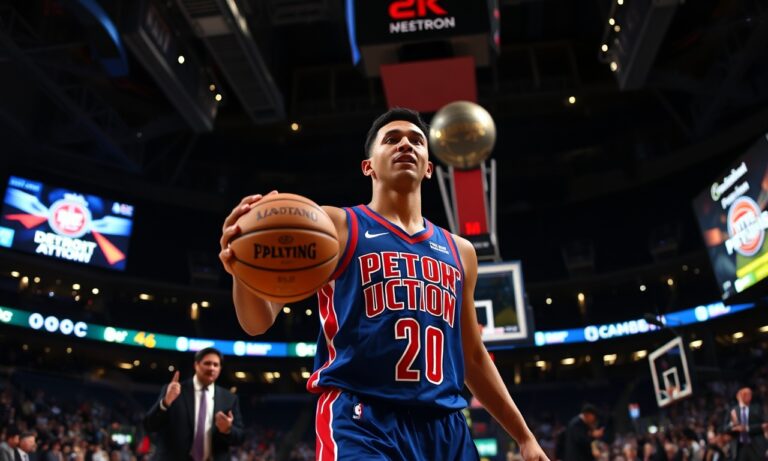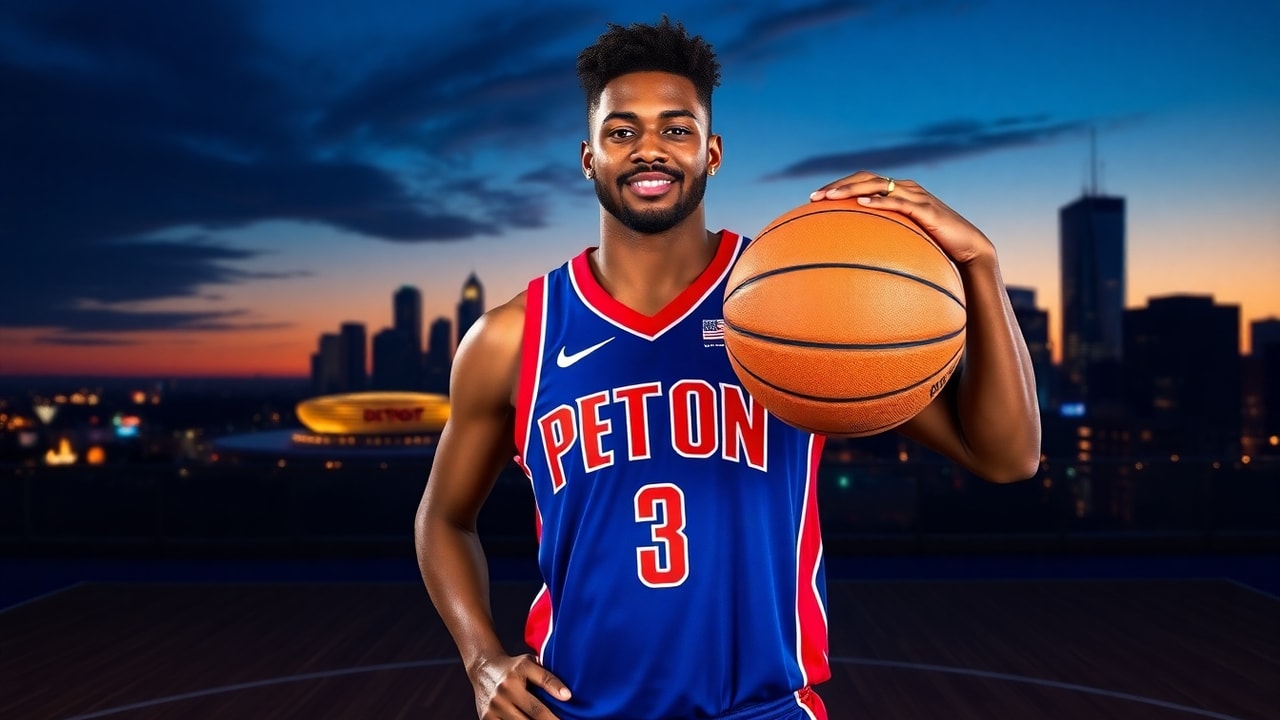
The Detroit Pistons have acquired guard Isaiah Joe in a trade that adds shooting depth and floor-spacing to a young roster, according to multiple NBA transaction reports. The move, completed as part of the latest slate of NBA roster moves, brings a former Arkansas guard with a reputation for perimeter scoring to Detroit.
For Detroit basketball fans, the acquisition arrives at a moment when the Pistons are continuing to refine their rotation and evaluate players who can contribute meaningful minutes while developing long-term chemistry. While the details of the full exchange were reported across league beat coverage, Detroit’s immediate focus is on how Joe’s skill set fits into its offensive identity and end-of-game decision-making.
Main Section: What the Isaiah Joe Pistons trade signals
The Isaiah Joe trade underscores Detroit’s interest in reliable outside shooting and spacing. Joe has built his NBA profile on jump-shot consistency and off-ball movement—qualities that can stretch defenses and create passing lanes for teammates who operate closer to the basket.
According to NBA.com’s player profile information, Joe is listed as a guard and has been used primarily as a shooting-oriented perimeter option during his pro career. That matters for the Pistons’ coaching staff because teams often struggle to generate efficient looks when defenses can crowd the paint; a credible threat from the perimeter can change how opponents defend pick-and-rolls and drive-and-kick sequences.
Detroit basketball news coverage has focused on roster construction this season, including the need to balance youth with proven role players. Joe’s arrival gives the Pistons an option who can be deployed in multiple lineups—especially those featuring younger guards who benefit from spacing around them.
Impact on Detroit Residents
From a fan perspective, the trade could translate into tangible changes during the week-to-week rhythm of Pistons home games. Seating in Detroit’s major sports venues includes audiences that follow both team performance and player storylines, and a player with a notable college background tends to draw additional attention. Joe’s connection to Arkansas adds a recognizable chapter for college basketball followers as well.
For Detroit residents who attend Pistons games or watch in local broadcasts, Joe’s shooting role may be most visible in the first and third quarters, when coaches typically look for early momentum. A guard who can punish closeouts also affects how quickly opponents rotate on Detroit’s drives—potentially opening driving lanes for guards and creating opportunities for cutters near the rim.
There is also a broader community angle. According to a report published by the U.S. Department of Education’s Institute of Education Sciences on sports participation and youth development, athletics can support engagement and skill-building for young people. Professional teams are not the same as youth programs, but player acquisitions often reflect how franchises pursue performance with an eye toward local visibility—something organizations in Detroit frequently emphasize when they connect athletes with community initiatives.
While the trade itself does not directly change Detroit’s economy in the way major industrial investments do, it can influence household spending around games—parking, concessions, and local travel—especially on nights when a high-profile player debut brings larger crowds. That kind of spillover is a recurring theme for metro Detroit sports and entertainment districts.
Background & Data: From Arkansas to the NBA
Isaiah Joe’s path to the NBA runs through college basketball at Arkansas, where he developed the fundamentals that translated to his pro role. His reputation as a perimeter scorer aligns with the evolving demands of modern NBA offenses, where teams increasingly rely on spacing to reduce the effectiveness of interior-focused defenses.
Basketball analysts often describe this trend as the “spacing” shift that followed league-wide emphasis on three-point shooting and playmaking off drives. In practical terms, acquiring a guard who can convert catch-and-shoot opportunities and generate gravity for teammates can help a team create easier shot attempts across a full possession.
For the Pistons, the timing also matters. Roster stability affects practice continuity, defensive chemistry, and how quickly a new player learns a team’s scouting requirements. Detroit’s coaching staff will likely evaluate Joe’s fit through film sessions that focus on defensive communication, transition decision-making, and how his movement interacts with Detroit’s on-ball coverage schemes.
According to Basketball-Reference’s compiled NBA statistical records, Joe’s career has included seasons where he contributed as a perimeter shooter—an attribute teams frequently look for when adjusting lineups. Detroit’s front office, in pursuing this Isaiah Joe Pistons acquisition, appears to be betting that his shooting profile can be integrated into its offensive system without sacrificing too much in defensive alignment.
Why shooting depth matters for Detroit
In Detroit’s context, perimeter spacing is more than a box-score category. When a defense respects shooters, it changes the angles available to ball handlers, the help defenders can provide, and the speed at which opponents can recover. That can affect everything from late-clock possessions to how frequently Detroit’s guards can attack mismatches.
Joe’s role—assuming he is used in familiar guard rotations—may also influence Detroit’s lineup flexibility. If he is available for standard second-unit shooting sequences, the Pistons can maintain spacing even when their primary ball handlers rest.
What Happens Next
After the Detroit Pistons finalize this transaction in the standings and official game-night roster, Joe’s next steps will be tied to integration: practice reps, learning defensive calls, and building timing with Detroit’s ball handlers. Detroit’s staff will monitor whether Joe’s shot selection and movement sync with the Pistons’ spacing patterns.
For fans, the clearest early indicators will come in how often Joe gets attempts on set plays, how frequently he runs in transition, and whether he can quickly deliver in late-clock situations where teams rely on reliable shooting. Detroit’s next stretch of games will also reveal whether his minutes increase gradually or if he is immediately inserted into higher-leverage lineups.
In the longer view, the acquisition of a former Arkansas guard positions the Pistons to test new offensive combinations while continuing roster evaluation. If the trade proves to be a strong fit, it may also affect how Detroit targets future roster needs—especially if the team identifies other areas to strengthen beyond shooting.
For now, the focus remains straightforward: how quickly Isaiah Joe becomes an effective part of the Pistons’ rotation, and whether Detroit can translate that perimeter threat into consistent scoring and improved game-to-game execution.