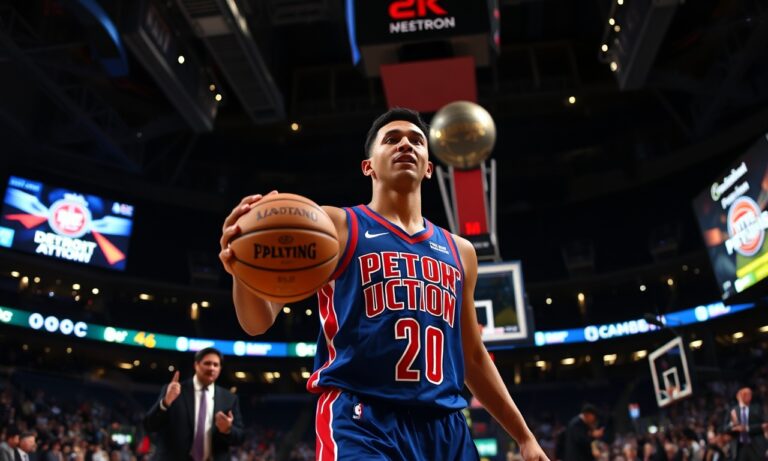
Detroit Pistons officials are exploring sign-and-trade pathways involving Jalen Duren as NBA contract talks continue to take shape, according to multiple reports on league discussions. While no agreement has been finalized, the developing scenario is already drawing attention from Pistons observers because Duren’s next-contract structure could have ripple effects across Detroit’s roster flexibility, salary-cap planning, and future trade ideas.
The possible maneuver comes at a time when teams around the NBA are using sign-and-trade mechanisms to address timing constraints and roster construction challenges. For Detroit fans, the significance is simple: Duren’s contract outcome could shape what the organization can realistically pursue with surrounding players, including potential offseason moves that influence the competitiveness of the club.
4 sign-and-trade options reportedly in discussion
Multiple league reporting outlets have described several trade ideas under consideration, each built around how a new agreement could be executed and then matched to a partner team’s cap needs. Based on the reported structure of the discussions, the Pistons’ brainstorming appears to include the following four framework options:
- Option 1: In-conference partner alignment — A sign-and-trade agreement with a team that has projected cap room or trade flexibility, allowing Detroit to receive matching value while the receiving club integrates Duren on a timeline consistent with its roster planning.
- Option 2: Draft asset compensation focus — A scenario where Detroit emphasizes future value (such as pick or selection rights) rather than immediate short-term roster turnover, aiming to strengthen its long-range flexibility.
- Option 3: Salary matching and rotation player return — A structure designed to bring back a player or players with salaries that line up more cleanly, potentially reducing the amount of additional maneuvering Detroit would need to complete.
- Option 4: Multi-step trade planning — A pathway that anticipates further transactions after the initial sign-and-trade, using Duren’s contract as a coordinating point for additional roster moves.
Because sign-and-trades require careful adherence to league rules, the exact trade details depend on the Pistons’ final target outcomes—whether Detroit’s primary objective is maximizing near-term roster fit, improving future flexibility, or both.
What this means for Pistons roster-building
Detroit’s front office has typically approached roster construction with a combination of player development priorities and cap-management discipline. If a Jalen Duren sign-and-trade is executed, the Pistons would likely weigh how the incoming players (or future assets) affect lineup construction, minutes distribution, and the team’s ability to compete in the Eastern Conference.
According to Spotrac, an independent salary-cap and contract tracking service commonly referenced in NBA coverage, NBA contract and cap mechanisms can significantly affect the timing and feasibility of offseason moves. While Spotrac doesn’t make decisions for teams, its contract databases underscore that sign-and-trade situations often hinge on the fine print of salary matching and the team’s available cap space or exceptions.
That cap reality matters to Detroit because the organization’s broader strategy—developing young talent while adding the right veteran support—depends on how much flexibility remains after any major transaction. Even if Detroit’s goal is to remain competitive quickly, the organization could still consider future flexibility if the trade returns are structured toward long-term planning.
Impact on Detroit residents and local sports economy
Although contract negotiations may feel distant, they can influence how local fans experience the season. Pistons games remain a major driver of downtown activity, including restaurant demand, game-night retail traffic, and event staffing connected to the Detroit sports ecosystem. That link between teams and local spending is part of why major Detroit outlets track sports business outcomes alongside the on-court product.
According to a 2019 research brief from the University of Michigan’s Center for Local, State, and Urban Policy, sports and entertainment can contribute to broader economic activity through attendance and ancillary spending. While the brief focuses on the general role of sports within urban economies, it highlights how major events generate demand for local services—an effect that can rise or fall when a team’s offseason messaging and roster direction changes.
For Detroit NBA residents, a Duren-focused outcome could also shape season expectations. If the sign-and-trade results in immediate roster upgrades, fans may see a faster path to contention. If the structure emphasizes future assets or roster changes, expectations could shift toward development and longer arcs of rebuilding.
Background & data: why sign-and-trade matters in NBA contract talks
In the NBA, a sign-and-trade is typically used when teams want to sign a player and then trade them—often to achieve salary alignment or roster planning objectives. These transactions are governed by league rules and depend on the timing of signings, the cap implications for both teams, and how the receiving side values the player’s projected fit.
As ESPN’s NBA coverage has noted in past seasons, the practical reason teams explore sign-and-trade pathways is flexibility: it can allow a player’s agreement to occur while still enabling a team to receive something in return that helps with cap and roster planning. That’s why these discussions can become part of wider league-wide bargaining—especially when multiple teams are trying to reshape their cores at the same time.
For Detroit, the focus on Jalen Duren suggests that the team sees the center position as a key piece in its identity. Duren’s standing in the organization’s long-term plans—whether as a foundational talent to retain or as a contract centerpiece that enables other moves—appears to be driving the reported NBA contract talks.
What happens next
In the near term, the Pistons’ next steps will depend on how quickly partner teams finalize their own offseason priorities and how cap scenarios stabilize across the league. League sources often describe such negotiations as fluid until the latest possible moment, particularly when multiple teams are weighing options concurrently.
Fans can watch for several signals as developments proceed: team statements from Detroit’s basketball operations, changes in local media reporting about credible partner teams, and any movement that clarifies whether Detroit is aiming for rotation help, future draft compensation, or a combination of both.
For Detroit residents, the bottom line is that the Detroit Pistons decision will reflect a balance between immediate competitiveness and long-term flexibility—two priorities that frequently define how major NBA teams in big-market cities like Detroit manage roster construction.
More Detroit NBA news to follow
As these sign-and-trade options take clearer shape, Detroit sports coverage will likely focus not just on whether Duren is involved, but on the full chain reaction—what Detroit receives in return, how quickly the Pistons can integrate new pieces, and what the changes ultimately mean for the next stretch of Detroit NBA news.