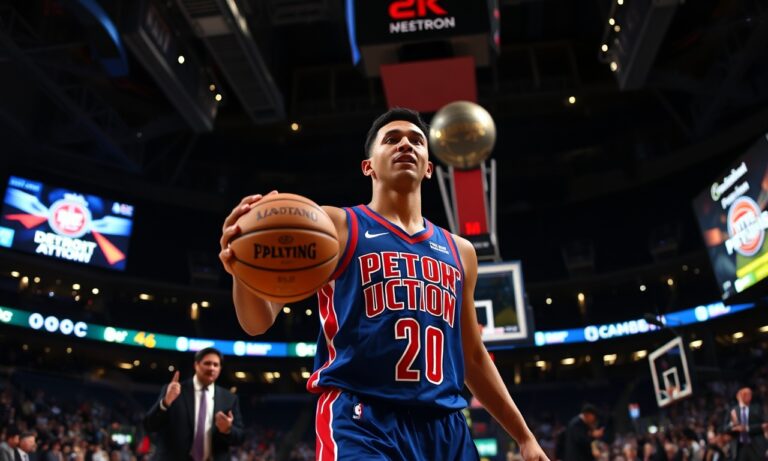
Detroit basketball fans are again zeroing in on the NBA rumor mill as the Detroit Pistons consider potential trade scenarios involving Boston wing Jaylen Brown. While no deal is confirmed, the renewed chatter around a “Pistons blockbuster trade” reflects how Detroit’s front office continues to weigh major roster moves during the Detroit NBA offseason.
Brown, a two-way perimeter star for the Boston Celtics rumors that repeatedly surface in trade discussions, would represent the kind of high-end talent that can change the trajectory of a rebuilding franchise. For Detroit, the question isn’t only whether Brown is available, but what Detroit could realistically pay—in salary, assets, and flexibility—should negotiations progress.
Detroit Pistons trade rumors point to a star-level target
According to reporting from ESPN, the Celtics have explored roster options around their core as they manage salary constraints and long-term planning. Separately, The Athletic has discussed how teams tend to evaluate “star” trade requests based on cost and timing rather than urgency alone. Together, that broader context helps explain why Brown is appearing in conversation as Detroit searches for an impact player who can elevate both offense and defense.
Any Jaylen Brown trade rumor involving the Pistons would immediately run into the league’s trade rules. NBA teams can negotiate trades involving players and salaries that must be matched under the collective bargaining agreement. That means Detroit would likely need to assemble a package combining at least one meaningful salary plus additional players and/or draft considerations to make the numbers work.
In short: a deal centered on Brown would not be a simple one-for-one exchange. Detroit’s cost could involve multiple rotation players and future assets—raising the stakes for a franchise that has to balance competitiveness with development.
What Detroit could pay: the likely components of a Jaylen Brown deal cost
Because the NBA’s trade mechanism depends on salary matching, the “Jaylen Brown deal cost” is best understood as a set of required trade ingredients rather than a single number. While the specific package would depend on Brown’s current contract figure and the Pistons’ roster status at the time of negotiation, Detroit typically would have to offer at least one of the following categories:
- Rotational-level salary players on expiring or multi-year deals
- Additional matching contracts to meet salary thresholds
- Second-round picks and possibly first-round considerations, depending on the Celtics’ leverage and the Pistons’ willingness to trade future value
- Young players with upside or defined roles, if Detroit believes it can sustain depth loss
Brown’s value to a contending team like Boston also affects price. As described in coverage and analysis by major outlets such as ESPN, star players tend to command packages that include both near-term help and long-term assets. For Detroit, that could mean the Pistons blockbuster trade would be less about one magic swing and more about a carefully constructed trade blueprint.
Detroit’s offseason planning also matters. If the Pistons are targeting additional free agency acquisitions, committing too many assets to one move could restrict later flexibility. However, if Detroit believes it can compete sooner with a Brown-type wing, it might accept a short-term asset drawdown.
Impact on Detroit Residents: what a star trade would mean locally
When NBA franchises make high-profile moves, the effects don’t stay on the court—Detroit fans, local businesses, and even seasonal spending patterns can feel the change. While there’s no direct economic guarantee tied to a single player trade, major roster upgrades tend to influence attendance, merchandise demand, and local game-day activity.
Data from the U.S. Census Bureau shows that household spending patterns can shift with major economic and community events, and the Detroit area’s hospitality sector often experiences predictable fluctuations around major sports weekends. A stronger on-court product can also translate into higher interest from corporate partners and sponsors, which can affect how teams market events and community programming.
From a fan perspective, a Jaylen Brown addition would likely refocus expectations for the Pistons, especially if Detroit’s roster construction emphasizes spacing, wing defense, and shot creation. That could also change how local media covers the team’s development timeline—potentially shortening the period fans spend waiting for growth from younger players.
However, there’s a tradeoff. Giving up multiple young contributors or draft flexibility can limit Detroit’s ability to recover if the move doesn’t produce immediate results. For residents who follow both player development and longer-term team building, this is the core tension of any star trade rumor.
Background & data: why rumors intensify during the offseason
NBA trade talk accelerates during the Detroit NBA offseason because front offices have clearer visibility into roster construction needs: who fits, who regresses, and which contract structures create opportunities. The NBA also has a “moving parts” reality—injuries, lineup experiments, and playoff evaluations influence what teams believe they must add or subtract.
According to Basketball-Reference and broader NBA reporting that tracks player value and team salary patterns, contenders often use trades to refine matchups rather than rebuild from scratch. For a franchise like Detroit, that dynamic creates a potential path: acquire a star to pair with existing building blocks. But the cost can be steep, particularly when the target plays an important role for a team with championship-level standards.
Boston’s status in recent seasons has made the Celtics a frequent reference point in trade analysis. As Reuters and other major outlets commonly note across the league, front offices with stable cores may still field discussions when salary planning, age curves, or roster fit issues surface.
What happens next: monitoring negotiations and Detroit’s roster priorities
At this stage, Detroit doesn’t appear to have an agreed-to framework publicly confirmed for a Brown trade. Still, the presence of the Jaylen Brown trade rumor signals that Detroit’s decision-makers could be testing the market—gauging what the Celtics would require and what Detroit is prepared to sacrifice.
For fans and local observers, the practical next steps to watch include:
- Detroit’s offseason moves—if the Pistons pursue one or two complementary veterans, they may be signaling they can absorb a major trade cost.
- Roster minutes and roles—changes to wing usage and defensive assignments can hint at how the organization values current personnel.
- Availability signals—trade rumors often intensify when teams become more motivated to act or when contract timelines create leverage.
Ultimately, the most important question may not be whether the Pistons can afford Brown in the abstract, but whether the full package aligns with Detroit’s competitive plan—and whether Detroit’s leadership believes the Detroit basketball news headlines translate into sustained wins rather than temporary momentum.
For now, residents can treat this as an evolving storyline: star-level trade rumors are fluid, but they still reveal how teams assess their windows to contend. If talks progress, Detroit fans will find out quickly how serious the Pistons are about chasing the kind of difference-maker that can reset expectations for years.