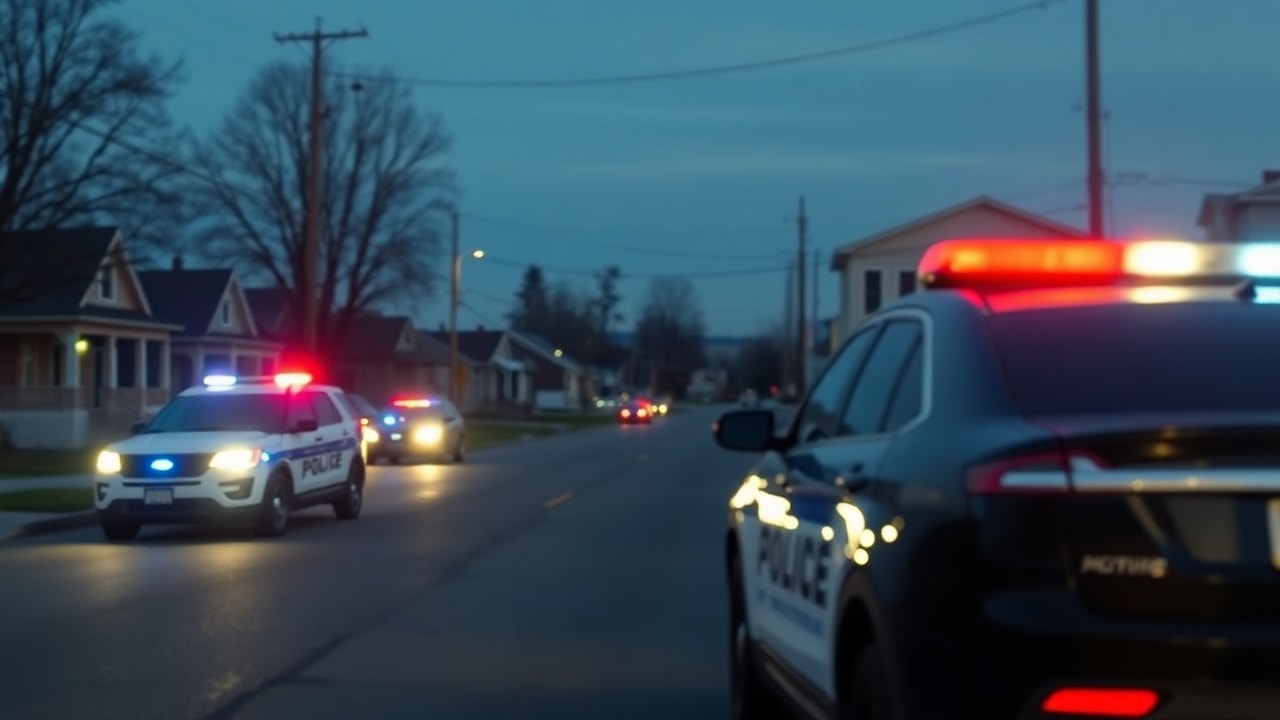
Detroit police fatally shot a man during an operation tied to a search warrant on the city’s Northwest Side, according to authorities, in a law enforcement incident that is now headed toward review under Michigan’s public-safety and use-of-force processes.
The incident occurred during the execution of a search warrant in the Northwest Side area, Detroit police said. The man died at the scene, and investigators from the department were assigned to develop the facts as the case moves through official documentation and oversight.
Because the shooting took place during a warrant operation, the circumstances surrounding the encounter—what was found, who was present, and how officers made contact with the suspect—are expected to be closely scrutinized. Detroit court records and related filings can also shed light on the warrant’s basis and scope, as prosecutors determine next steps.
Detroit police shooting: what authorities say
Detroit police said officers were executing a search warrant in the Northwest Side area when the fatal shooting occurred. A department statement described the incident as part of an active investigation and indicated that officers followed procedures consistent with warrant execution.
“This is an ongoing investigation,” said a spokesperson for the Detroit Police Department, according to the department’s public updates. The spokesperson said investigators are working to document officer actions, the timeline of events, and any evidence that may be relevant to determining whether the use of deadly force was justified.
Police also indicated that the man’s next of kin were being notified, which is standard practice in fatal incidents. Officers on scene were expected to submit reports, and the department’s internal processes for reviewing serious uses of force are triggered in cases involving death.
Michigan police and public-safety officials have stressed the importance of thorough documentation in these cases. Data and guidance around use-of-force reviews often point to the role of body-worn video, incident reports, and independent inquiry. In Detroit, those materials are typically considered alongside the warrant application and any court findings connected to the search.
How a search warrant operation connects to the Northwest Side
Search warrants are issued by courts when law enforcement demonstrates probable cause that evidence of a crime may be located at a particular place. In Detroit, the warrant process is carried out through Michigan courts, with judges reviewing sworn testimony and supporting documentation before authorizing a search.
According to the Michigan Courts system’s general guidance on warrant procedures, warrants must be supported by probable cause and are limited in how searches may be conducted. That legal framework matters for residents because it defines what officers are legally permitted to search for and where officers are allowed to go during an operation.
For neighborhood residents on the Northwest Side, warrant executions can feel abrupt and disruptive. Community members sometimes describe the sound of emergency lighting, increased patrol activity, and heightened concern for safety—especially when an operation ends in a fatal shooting.
Michigan State Police and other oversight bodies have previously underscored that deadly-force reviews consider not only whether a threat existed at the moment force was used, but also whether officers’ actions complied with policy and training. Those review steps are especially relevant when a fatal shooting occurs during a search warrant, because officers may be entering a private space under a specific legal authorization.
Impact on Detroit residents
Detroit residents watching the unfolding law enforcement incident may ask several practical questions: what triggered the warrant, how the search was conducted, whether the suspect posed a threat during contact, and what evidence—if any—was recovered.
Families and neighbors often focus on immediate safety. In the days after fatal shootings, residents may experience increased police presence, concern about additional searches or follow-up investigations, and uncertainty about how long the area could remain affected by ongoing evidence collection.
There is also a broader community impact. Detroit has a long-running public conversation about police accountability and the standard of review for uses of deadly force. Nationally, policy organizations have called for transparent documentation and independent oversight in deadly-force cases, and Detroit’s residents frequently expect clear timelines for when body-camera footage and official findings are made available.
For people living near where the Detroit police shooting occurred, the incident may also raise questions about trust. When a search warrant is executed and a death results, residents can interpret the operation as either a targeted action against wrongdoing or an event that reflects gaps in communication and safeguards. In either view, the court and investigative steps that follow are key to how the community understands what happened.
Background & data: what reviews typically examine
In Michigan, fatal law enforcement incidents commonly trigger multiple review streams, including internal affairs investigations and, in some cases, referral to prosecutors. A separate but related focus often includes documentation tied to the underlying court order—meaning the search warrant itself and the probable-cause information presented to a judge.
According to the National Law Enforcement Officers Memorial Fund, officer-involved shootings tend to be handled with a process that emphasizes incident reconstruction, review of officer training, and examination of whether policy was followed. While organizations can’t determine legality in an individual case, their general descriptions of how investigations proceed reflect the standard components of many reviews.
At the Detroit level, residents may be able to follow certain developments through Detroit court records if filings are posted or made public in the course of related criminal or forfeiture proceedings. Those records can include docket information tied to the warrant application, charging decisions, and any later hearings.
It’s important to note that public access to footage and specific investigative details can vary. Early stages of an investigation may restrict certain information to preserve evidence integrity, protect witnesses, and avoid contaminating potential legal proceedings.
What happens next
As investigators continue to reconstruct the scene and compile evidence, the case will likely involve a combination of internal review, administrative reporting, and possible prosecutorial consideration depending on what investigators determine.
Residents may see updates through official Detroit Police Department releases and, depending on the situation, through filings tied to the search warrant. For people tracking how warrant authority and evidence collection were handled, Detroit court records may be the most direct way to understand the procedural timeline.
In Michigan, prosecutors evaluate whether a case should proceed and what charges—if any—are appropriate based on evidence and legal standards. If the death triggers additional review steps, timelines can stretch as investigators wait for lab results, medical determinations, and video or communications analysis.
For now, the most immediate next step is the completion of the investigation into the Detroit police shooting during the Northwest Side search warrant operation. Residents may also look for public clarification on whether the suspect’s identity has been released, what evidence officers recovered, and how the department will communicate review outcomes.
The City of Detroit, through its ongoing public-safety messaging, typically encourages residents to rely on verified updates as investigations proceed. Community members may also continue to call for transparency around body-worn camera footage and the final determination in fatal-force reviews.