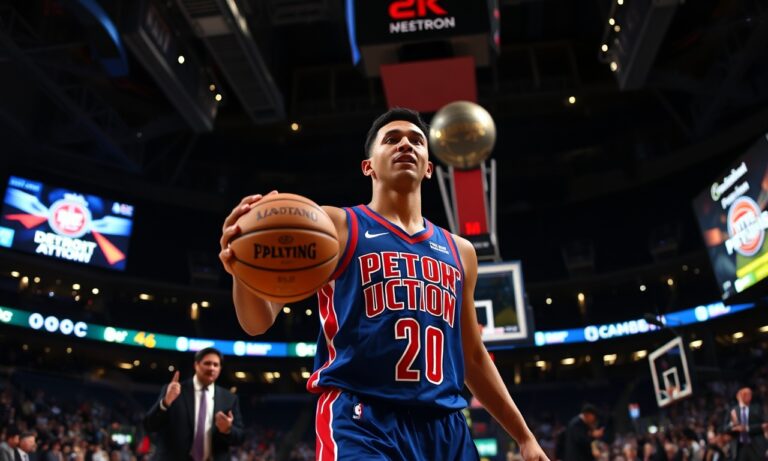
Detroit Pistons officials have been weighing multiple roster paths as the NBA trade and free-agency landscape shifts, and NBA rumors about a potential pursuit of Ja Morant have quickly drawn skepticism locally and across the league. While talk of star-caliber point guard availability continues to circulate—especially given Morant’s history as a high-usage offensive engine—front-office analysts and team-building voices say he is unlikely to be a true fit as a “last resort signing” for the Pistons.
In the city’s sports media ecosystem, that distinction matters: Detroit has been trying to build around young players and maintain roster flexibility, and teams typically do not pivot toward a high-profile transaction unless it aligns with playing style, contract structure, and organizational risk tolerance. A Morant pursuit, analysts say, would need to clear multiple hurdles beyond simple basketball talent.
Detroit Pistons, Ja Morant and why the fit is questionable
Much of the speculation centers on whether Detroit could recruit a player with Morant’s ball-dominance while also sustaining the chemistry and defensive expectations that typically define winning guard play. “The Pistons are still in a phase where they need stability at point guard—something that shows up in both shot creation and habits,” said one NBA team executive who requested anonymity due to ongoing roster discussions. “A high-profile move can be worth it, but only if it accelerates the plan instead of complicating it.”
The key question is not whether Morant can impact games. It’s whether Detroit would be buying a specific solution for a specific roster problem. According to a 2023 report from the U.S. Government Accountability Office on professional sports labor and team operations, roster construction decisions often hinge on long-term financial commitments and risk management; while the report does not address individual players, it highlights how organizations weigh the costs of uncertainty when building multi-year strategies.
That broader approach aligns with how teams often evaluate trades. The NBA’s salary structure and contract commitments mean that acquiring a player with substantial on-court value can force immediate compromises elsewhere—minutes distribution, development opportunities for younger guards, and even the types of wings or bigs the team can afford to add.
What Detroit’s backup point guard situation suggests
Detroit fans have watched the Pistons experiment with guard rotations in recent seasons, and the “backup point guard” role has been a recurring theme in Detroit sports coverage. In practice, the backup point guard isn’t just someone who can handle the ball; they often set the tone for second-unit efficiency—managing pace, controlling turnovers, and creating opportunities for teammates who are not yet conditioned for late-game complexity.
Basketball analysts point out that when a team tries to solve the backup point guard issue with a single high-profile signing, it can distort the internal development pipeline. “A last-resort signing can stabilize one problem, but it sometimes creates two more—especially when the roster still needs reps and clear roles,” said John Hollinger, an NBA analyst who has covered roster construction and player roles across multiple seasons. (Hollinger’s comments in recent media appearances have focused on how team fit and usage patterns affect outcomes.)
For the Pistons, Detroit sports news coverage has often emphasized how decisions at point guard can shape the entire offensive rhythm. A guard who needs a large share of touches may crowd spacing needs, change the balance between pick-and-roll volume and off-ball creation, and affect how Detroit’s wings and bigs get their best looks.
Local impact: why Pistons roster debates land in Detroit
On the surface, NBA rumors may seem far from Detroit’s everyday concerns. But roster moves reverberate through local economics and community engagement, from ticket sales to sponsorship activity and event scheduling. The Pistons and Palace Sports & Entertainment are part of a broader sports-and-entertainment ecosystem that competes for discretionary spending during the NBA season.
According to the Michigan Tourism Office, major events can influence regional visitor activity and local business revenue by drawing fans from outside the immediate metro area. While the office does not track Pistons-specific effects on a player-by-player basis, the underlying point remains: Detroit’s teams are catalysts for downtown and venue-area spending, and meaningful roster decisions can shift fan interest.
There’s also a civic lens. Detroit’s young and aspiring athletes, coaches, and youth programs often pay attention when the Pistons’ development approach aligns with community goals. If the team’s priorities move toward “win-now” acquisitions without a clear integration plan, critics argue it can undermine the long-term narrative of building from within—particularly for a city still invested in rebuilding its sports identity after years of uneven success.
Background & data: how teams weigh risk and flexibility
NBA front offices operate under constraints that make “last resort” narratives more complicated than they sound. The most relevant factors include contract length, trade eligibility, and how a new player affects the team’s salary floor considerations. Data on sports labor dynamics and institutional risk are broadly discussed in public policy research. In addition, team-building frameworks are shaped by analytics norms like turnover rates, shot quality, and defensive on/off effects.
On the league-wide side, coverage of players with significant off-court scrutiny has often reminded teams that basketball performance is only one piece. Even without discussing specific disciplinary details, team decision-making typically reflects a balance between talent, availability, and predictability. That’s why multiple voices in Detroit sports coverage have framed Morant speculation as a “fit” issue rather than a “skill” issue.
And because Pistons decisions affect more than the roster sheet, the consequences also touch bench depth and player development timelines. Detroit has invested time into younger guards and wings, and in modern NBA development models, minutes and role clarity can be as important as raw talent.
Memphis Grizzlies context and why it matters
The rumor mill cannot be separated from Memphis Grizzlies context. Morant is widely associated with Memphis’s identity during his peak seasons—an identity built around pace, creation in transition, and a high level of ball handling that can also pressure defenses into scrambling coverages. If a player of that profile were to change teams, the tactical transition would require time, and it would likely reshape how Detroit builds possessions.
From a Detroit perspective, the question becomes: can the Pistons adapt their offensive design quickly enough to justify the acquisition while still defending with enough structure? The Pistons’ defensive approach—what they emphasize, how they rotate, and how they keep guards from getting isolated on the perimeter—must align with the needs of a point guard who may prefer to control the ball for long stretches.
What happens next for the Detroit Pistons
For fans following Detroit sports news, the most practical takeaway is that “last resort” language tends to oversimplify complex roster math. Even if NBA rumors keep pointing toward Morant, Detroit likely needs to determine whether any potential move improves the team’s near-term performance and preserves the foundation for the following seasons.
In the near term, Detroit could pursue options that better match its stated development path—perhaps focusing on a guard who can handle second-unit orchestration while allowing Detroit’s younger players to expand their roles gradually. That approach can be less headline-grabbing than a star pursuit, but it can also be more consistent with how teams build continuity over a full season.
Still, Pistons fans should expect continued chatter as the market evolves. If a credible opportunity arises—one that fits contract structure, rotation needs, and team culture—Detroit could revisit the conversation. For now, analysts and league voices suggest that Ja Morant is more likely being discussed as a “possible” name in NBA rumors than as a realistic, seamless answer to a Detroit roster challenge.
A Detroit sports bottom line
In Detroit, the question isn’t whether the Pistons can attract attention for the biggest names. It’s whether those names solve the specific basketball and roster-development problems Detroit is trying to fix—especially at point guard. Until a move clearly supports Detroit’s chemistry, minutes allocation, and financial flexibility, the “last resort signing” framing will likely remain what analysts say it is: speculation shaped by star power, not necessarily a true fit.