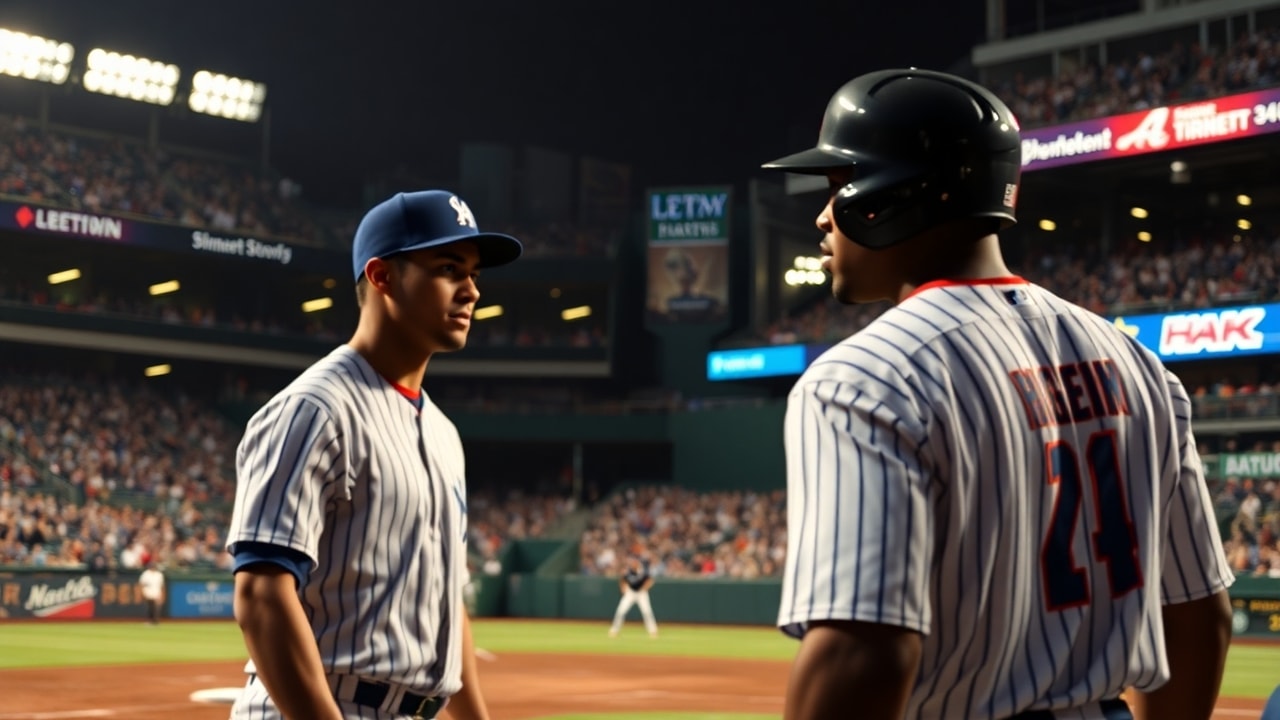
Anthony Rizzo fired back at Jazz Chisholm Jr. after an ejection during a Yankees–Red Sox game, escalating a moment that quickly moved beyond the diamond and into the wider national conversation. For Detroit baseball fans following the sport from Motown, the incident is another reminder of how quickly MLB storylines can turn into headline fuel—and how quickly players’ public reactions can reverberate far from the ballpark.
Rizzo’s sharp response came after MLB officials sent Chisholm off the field following a confrontation that drew attention from both dugouts and broadcast cameras. The flare-up drew the kind of instant reaction that modern series—played under national lights and streamed widely—can produce in a matter of minutes. While the league’s disciplinary process remains the official channel for accountability, what Rizzo said publicly afterward has already fed a broader narrative: a growing Rizzo Chisholm Jr. feud that Detroit residents are likely to hear about in sports bars, on local radio, and across social media feeds.
Main Section: From Yankees–Red Sox ejection to Rizzo Chisholm Jr. feud
According to MLB’s official game policies, ejections are generally issued for conduct that violates the rules of fair play or for aggressive behavior toward players, umpires, or team personnel. In this case, the Yankees–Red Sox ejection became the focal point of postgame commentary—especially because the exchange involved players who are accustomed to high-leverage roles and media scrutiny.
Rizzo, a veteran known for strong on-field leadership, responded with comments that positioned him and his teammate-side perspective against Chisholm’s actions. Chisholm, a high-energy presence, has often played with intensity that can border on risk in the eyes of opponents and officials. Detroit fans watching from the stands or via TV saw the clash as the kind of edge-of-the-seat moment that defines rivalry baseball—until it turned into something more: a verbal push that continued after the ejections.
“MLB has long treated altercations and heated exchanges as situations that can carry consequences beyond the inning,” MLB has indicated in communications about conduct enforcement and game review, including potential supplementary discipline depending on the incident’s severity and context. That framework matters for Detroit residents because it shapes how quickly controversies fade—or, instead, how long they stay in the league’s spotlight.
Impact on Detroit Residents: Why Yankees–Red Sox drama lands in Detroit
Even though the incident occurred in a Yankees–Red Sox matchup, it has a real local footprint for Detroit residents who follow MLB nationally. Baseball is deeply embedded in the city’s sports identity, and Detroit’s fan base watches rival games closely—whether to gauge stars, track playoff implications, or simply keep up with league-wide narratives.
In Detroit, those narratives also show up in everyday settings: sports talk programming at commuter-friendly hours, bar conversations during weekend series, and social media debates among fans who may not otherwise pay attention to a Yankees–Red Sox game until something “big” happens. A MLB hot mic incident—such as this one’s immediate aftermath and the way broadcasts amplify player responses—can turn even a single pitch sequence into a multi-day storyline.
For communities that already spend money and time on sports entertainment, heightened attention can have minor but noticeable effects: ticketing conversations intensify, sponsorship messaging shifts, and local media coverage tends to broaden beyond the Detroit Tigers. Data from the U.S. Bureau of Labor Statistics shows that Americans spend a significant share of discretionary time on entertainment and sports, reinforcing why national leagues’ controversies can dominate local attention even when Detroit teams aren’t playing that night. (The BLS provides general context on time use and consumer spending categories, though it does not track specific MLB incidents.)
Local Detroit angle: baseball attention, identity, and media ripple
Detroit baseball audiences have seen how quickly league moments can shape broader fan sentiment. When a player like Rizzo—now a familiar name to Detroit viewers through past MLB coverage—responds in a way that appears confrontational, it creates a familiar storyline structure: veteran respect versus youthful intensity. That framing often travels quickly into Detroit discourse, where fans evaluate not just what happened, but what it means for sportsmanship standards.
In that sense, the Rizzo Chisholm Jr. feud isn’t just about two players. It becomes a proxy conversation about tone in professional sports, officiating expectations, and how public reactions should be handled after tempers flare.
Background & Data: How MLB handles ejections and postgame conduct
Major League Baseball typically reviews incidents through official reports generated at the ballpark, with league personnel assessing whether an ejection should be followed by additional discipline such as suspensions or fines. The process is not always immediate, and the timeline can vary by incident severity and whether MLB needs further review.
According to the MLB rule framework summarized in coverage from established sports journalism outlets, ejections can stem from a wide range of actions—arguing balls and strikes to the point of misconduct, throwing equipment, or engaging in conduct that escalates conflict. What distinguishes incidents that persist in the news cycle is often not only the ejection itself, but the post-ejection statements that become clip-worthy for broadcasts and highlight packages.
Detroit fans are also paying attention to the way modern media captures reactions. A MLB hot mic incident doesn’t necessarily require official confirmation to be influential; the existence of audio—captured by stadium equipment or broadcast cameras—can change how viewers interpret intent and tone. While viewers may interpret audio differently, the key point for Detroit residents is that public perception forms quickly and can pressure both teams and MLB to respond more directly.
What makes this matchup stand out
The Yankees–Red Sox rivalry already carries a heavy historical weight and is routinely among MLB’s most-watched games. When incidents occur in that setting, they get broader distribution, more camera angles, and heavier editorial attention. That’s why an argument involving Anthony Rizzo and Jazz Chisholm Jr. can become national news within hours—and why Detroit listeners are likely to hear it as a leading sports segment.
What Happens Next: Potential discipline, media coverage, and fan fallout
In the near term, MLB’s review process will determine whether the ejection triggers supplemental discipline. League announcements, if any, can arrive after further review and may include suspension lengths or fines—though the specific outcome depends on official findings.
Regardless of whether additional penalties occur, the personal tone is already set. A feud storyline often intensifies when teams meet again, when players cross paths in later games, or when both sides continue to reference the incident in interviews. For Detroit fans following MLB—especially those who enjoy rivalry baseball as part of the broader sports calendar—the next Yankees–Red Sox matchup could be treated as a continuation of the argument, not merely a continuation of the schedule.
Local Detroit coverage is likely to stay focused on three questions: whether MLB issues supplemental discipline, how Rizzo’s response affects relationships in the dugout, and whether Chisholm responds in kind in subsequent games. Detroit residents will also watch for how broadcast partners and sports journalists frame the narrative—whether it’s treated as a one-off escalation or as the next chapter in a developing Rizzo Chisholm Jr. feud.
For fans, the biggest takeaway is practical: in MLB, moments can move from the field to the national conversation almost instantly. One ejection can become a multi-day story, and one veteran response can define how the incident is remembered.