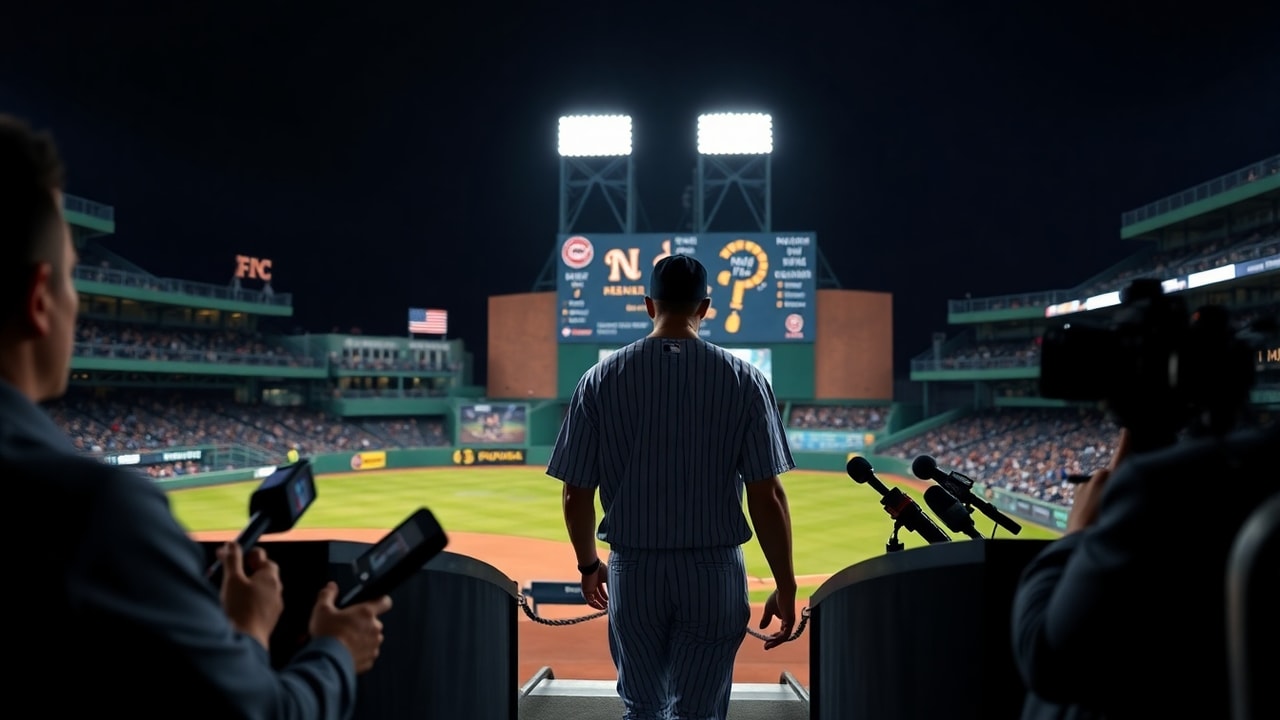
A New York Yankees star with Detroit ties left Fenway Park without speaking to reporters after the Yankees’ game against the Boston Red Sox, a move that set off chatter among local and visiting beat writers as postgame coverage shifted elsewhere. The decision came at the end of a high-profile matchup that drew attention from baseball fans across the region, including Detroit where Yankees followings remain strong.
For Detroit sports fans, the episode is a reminder that postgame access can vary by day and by player, and that coverage often depends on what happens in the final moments after the final out. While players are typically available for brief comments, situations sometimes change due to scheduling, health, or team protocols—factors that can be difficult to confirm in real time.
What reporters witnessed after the game at Fenway Park
Several reporters covering the Yankees vs Red Sox exchange said they waited for postgame comments, only to find the player leaving the area promptly. In many cases, when players do not address the media, it affects how quickly local outlets can publish quotes that fans expect in the hours right after a night game.
According to a written media-policy summary provided by Major League Baseball’s official communications materials, clubs manage access through established protocols intended to balance competitive schedules and media needs. The summary notes that availability can be adjusted based on team decisions and game-day logistics, including travel timing and clubhouse procedures.
Separately, a representative for the Boston sports media relations office said access details can vary and are coordinated through the league’s game-time communications process. The statement emphasized that credentials grant access to designated media areas, while individual player participation is handled through team schedules and coach or clubhouse direction.
Detroit sports news angle: why it resonated locally
The Yankees star at the center of the moment is closely followed by Detroit fans, not only because of his New York Yankees platform, but also due to his Detroit-area connections that have sustained interest among Michigan sports audiences. Detroit’s Yankees fan base has long treated interleague games as regional events—especially when the Yankees come to the spotlight on a national stage.
Detroit sports news audiences typically look for postgame comments to understand everything from pitch selection and lineup strategy to recovery status. When a player doesn’t provide postgame comments, local coverage often pivots toward what’s available: managerial quotes, beat observations from the field, and game notes compiled after the fact.
How the absence of quotes can change the story
When a New York Yankees star does not speak to reporters after leaving Fenway Park, the immediate impact is informational. Reporters may still report the game’s statistical outcomes, but the “why” behind decisions—such as bullpen management, in-game adjustments, or a player’s physical status—can become harder to confirm without direct responses.
That gap can influence fan conversation in Detroit and beyond. Local fans may turn to social media threads, highlights, and interviews from other players, then interpret what’s missing as meaning something. In reality, “no comment” can stem from practical reasons that are not always visible from the press viewing areas.
Background on Yankees vs Red Sox coverage and access
Baseball media coverage in the modern era is shaped by centralized rules, ballpark logistics, and team policies. Fenway Park is a unique environment—compact sight lines and multiple access corridors can make end-of-game movement quickly complicated when schedules tighten.
“Beat writing relies on the timing of access,” said a local sports editor familiar with MLB coverage workflows, speaking generally about how postgame availability affects turnaround. The editor said that while beat reporters are trained to adapt, a sudden departure can reduce the number of firsthand explanations that typically anchor a postgame recap.
In addition, data from the U.S. Bureau of Labor Statistics (BLS) on employment trends for media and communication occupations underscores that newsroom workflows often depend on predictable production rhythms. While that data is not about baseball specifically, it reflects the broader reality that outlets operating under deadlines must build stories using whatever information is reliably obtainable at the time.
Impact on Detroit Residents
For Detroit residents following the Detroit Yankees connection, the lack of postgame statements may have a more tangible effect than fans realize. Detroit audiences tend to consume sports content via morning and evening news cycles, and the first wave of coverage often determines the narrative for the day—particularly on busy weeks when Detroit sports teams (including the Lions, Pistons, and Tigers) also compete for attention.
Without direct remarks from the New York Yankees star, local sports desks frequently look to alternative sources. That can mean focusing on:
- Manager and teammate quotes from the interview areas
- Official box scores and pitch-by-pitch summaries published after the game
- Team updates issued through official channels later the same day
- Injury and availability notes, when released
Even when the game itself doesn’t produce controversy, the access element can become the headline for those who watch the way coverage is built. For some residents, this is part of what makes sports fandom feel local—Detroit fans interpret national games through Michigan’s sports lens, turning media habits into storylines of their own.
Why access matters beyond one player
Access rules can shape public perception. When a player doesn’t provide postgame comments, fans may see uncertainty that otherwise wouldn’t exist. For Detroit residents, who often follow baseball through both national broadcasts and local reporting, it can lead to more speculation than information.
However, it’s also important to avoid assuming intent. The press process is influenced by travel schedules, training staff decisions, and clubhouse priorities. In many cases, what looks like a communication issue is simply a logistics issue that doesn’t make headlines—until it happens during a high-visibility matchup at Fenway Park.
Background & Data
Interleague games between the New York Yankees and Boston Red Sox are among the most-watched events in the MLB calendar, with the Yankees’ national profile carrying strong resonance in Detroit due to long-standing fandom and player pipelines across decades. When Detroit-based sports audiences track Yankees performances, they typically do so alongside an understanding that these matchups often come with increased media intensity.
MLB schedules also influence how quickly players reach mixed zones or press areas. When the timeline compresses—due to night-game travel or additional team commitments—availability for reporters can narrow. Fenway Park’s media setup is designed to manage flow, but it cannot fully eliminate the effects of late-game delays and postseason-level attention that sometimes surrounds Yankees vs Red Sox series.
As a general reference point for how industries handle public-facing roles and reporting infrastructure, BLS reporting on media and communication employment highlights the ongoing need for structured access and efficient information transfer in deadline-driven environments.
What happens next
In the immediate aftermath, Detroit outlets and visiting beat writers will likely update game recaps with what can be verified: performance metrics, lineup notes, and any subsequent team statements. If the player later addresses the media in a different setting—such as a day-after availability or a scheduled interview window—Detroit sports news coverage may shift again to include those postgame comments retroactively.
Fans should also watch for official Yankees communications regarding availability, workload management, or any health-related updates. Clubs often reserve details for later press windows, especially when day-to-day decisions are involved.
For now, the takeaway for Detroit fans is practical: during the Yankees vs Red Sox swing, a New York Yankees star’s movement through Fenway Park’s end-of-game corridors can determine whether Detroit audiences get the usual direct explanations. While the game continues to be analyzed through statistics, the missing comments leave some questions open—exactly the kind of uncertainty that keeps baseball fandom active long after the final out.