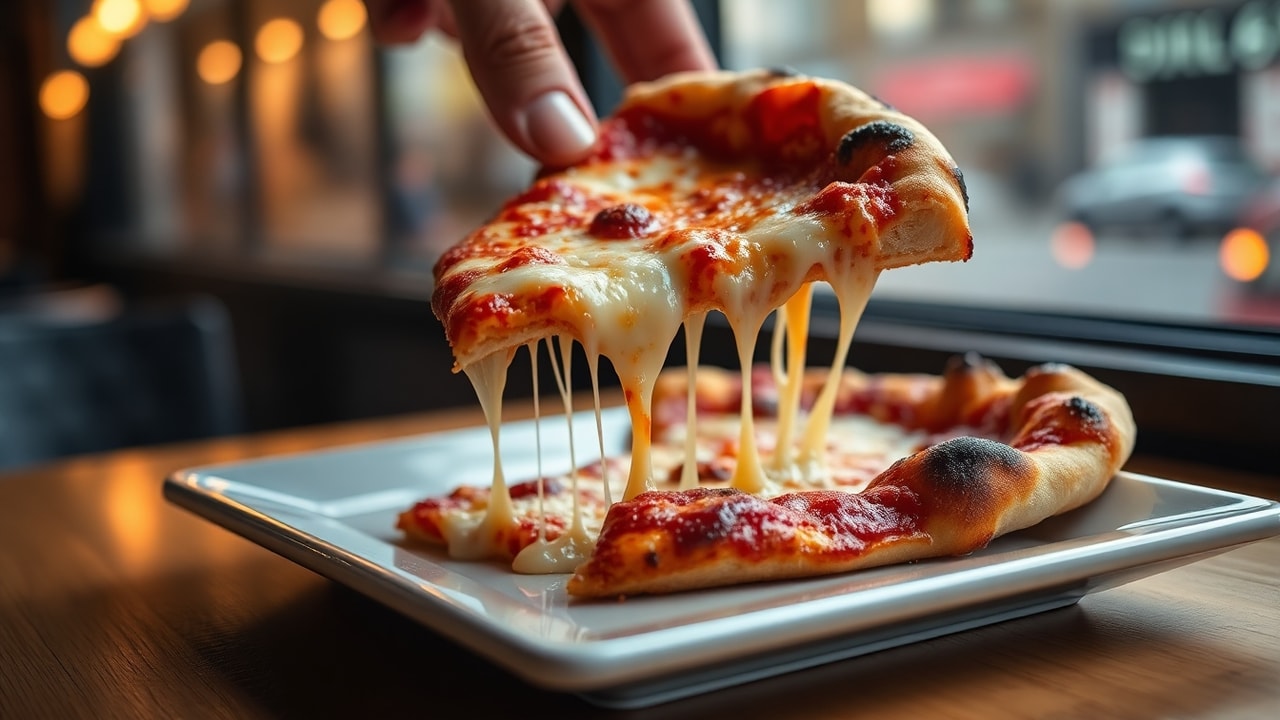
A new wave of Detroit-style pizza has arrived in west London with the opening of Sarv’s Slice on Ealing Broadway, bringing a caramelized, cheese-forward square pie to a busy shopping and transit hub known for its global food scene. For Detroit observers and UK pizza fans alike, the menu’s promise is straightforward: a Detroit-inspired cooking method, a crisp edges-and-bubbled-cheese finish, and toppings built for a high-heat, oven-driven crust.
In this pizza review, Sarv’s Slice stands out less for novelty and more for execution—especially in how it reproduces the signature textures that define the style: a crunchy perimeter, a chewy interior, and cheese that reaches the corners. The question for local diners isn’t whether the restaurant references Detroit’s culinary culture. It’s whether it delivers it consistently, day after day, on a storefront street where other restaurants compete for attention with familiar UK options.
What Sarv’s Slice gets right about Detroit-style pizza
Detroit-style pizza is built around a specific technique: it’s typically baked in a square, well-oiled pan so cheese melts to the sides and forms a lacy, browned edge when the pie is finished. That physical geometry matters as much as the ingredients. At Sarv’s Slice, the square pies are served hot and sectioned for sharing, with the cheese’s browned corners clearly visible before the first slice.
According to the U.S. Bureau of Labor Statistics, food-away-from-home prices have continued to move with wider inflation dynamics in recent years, shaping how consumers weigh “treat” purchases against cost. In London, that same pricing pressure plays out in a different currency. A Detroit-inspired pizza has to justify itself in both taste and value, not just branding. Diners at Ealing Broadway—where rental costs and foot traffic vary by street and block—are increasingly selective.
On the day of this review, the crust’s perimeter delivered the most distinctive characteristic of Detroit-style: a crisp edge that fractures cleanly, followed by a softer chew that holds up to sauces and heavier toppings. The cheese profile also leans into the style’s identity: the top remains molten and cohesive, while the bottom browning adds a subtle sweetness and toastiness when the slice is lifted.
Menu focus and the “UK pizza” reality check
For diners accustomed to round pies, thick-crust UK options, or standard hand-stretched Neapolitan styles, the experience at Sarv’s Slice is immediately different. Detroit-style pizza is not trying to replace every other category; it’s carving a niche. The cooking process, portion shape, and texture create a distinct eating rhythm: the first bites emphasize crackle and browning, while later bites bring the melty balance of cheese, sauce, and toppings.
In an interview-focused corner of London’s food press, the growth of “regional” pizza styles has been framed as a sign of consumer curiosity. Yet pizza is also logistics: ovens, pans, ingredient supply, and training all matter. Detroit-style is unforgiving. Overproof or underbake changes the crust. Too much sauce can steam the texture that makes the style memorable. Sarv’s Slice appears to be prioritizing repeatable technique, which is critical for any UK pizza restaurant attempting a style strongly associated with a specific U.S. city.
To be clear, the menu’s Detroit inspiration does not require diners to know Detroit’s streets or neighborhoods to enjoy the food. But for those with a deeper interest—whether Michigan transplant communities, motorsport fans, or Detroit-curious visitors—the details become a cultural signal. Detroit-style cuisine has long been tied to the city’s working-class comfort-food tradition: hearty portions, bold flavors, and no-frills emphasis on the way the crust and cheese behave after baking.
Impact on Detroit residents and Detroit’s culinary footprint
Detroit-style pizza may be outside Michigan, but Detroit residents are still part of the story—especially as culinary identity becomes portable. When a new restaurant in London chooses that style as its anchor, it effectively markets a piece of Detroit’s food culture to an international audience.
That matters economically in subtle ways. For local Michigan businesses and recipe communities, global visibility can support demand for training content, specialty ingredients, cookware, and franchising partnerships. For Detroit consumers, it also raises questions about authenticity and adaptation: what happens when a style developed for one supply chain is translated to another? In practice, adaptation is inevitable—UK ingredient availability, oven characteristics, and even customer preferences influence outcomes. The best conversions keep the core technique intact while tuning the final flavor balance.
Detroit’s relationship to food is also intertwined with civic narratives about revitalization and place-making. In Detroit, local cooking isn’t just hospitality; it’s branding and community identity. When that identity travels, the impact can be positive even when the restaurant is not owned locally—because Detroit’s culinary reputation becomes another reason the city is remembered.
Still, critics should keep expectations grounded. A London storefront is not Detroit, and a single Sarv’s Slice visit cannot settle debates about the style’s “true” version everywhere. But it can help diners understand what makes Detroit-style pizza recognizable—and why the best examples are defined by structure, not marketing.
Background & data: why Detroit-style pizza is spreading
The wider pizza market in both the U.S. and the UK has been reshaped by two forces: price sensitivity and a hunger for experience. Data from the U.S. Census Bureau’s Business Dynamics Statistics shows that the U.S. restaurant sector sees high rates of churn, which often rewards concepts that build strong repeat demand. In a global market, that principle translates into a simple rule: a new style has to deliver a consistent experience quickly, or it fades.
Detroit-style pizza offers an advantage in that regard. It’s visually distinctive, structurally consistent, and easy to photograph—crisp edges, caramelized cheese, and square slices have immediate recognizability. But visual appeal doesn’t guarantee quality. Sarv’s Slice appears to have aligned its process with the technique’s key requirements: pan-based baking, intentional browning, and toppings that don’t overwhelm the crust.
There’s also a cultural dynamic. Detroit’s food identity has been reinforced over the years through documentaries, restaurant features, and community-driven recipe sharing. When that attention reaches international audiences, it creates a “proof of concept” moment—customers want to see whether a city’s reputation translates to the table.
What happens next for Sarv’s Slice at Ealing Broadway
Ealing Broadway is a competitive location where new openings are tested daily by commuter schedules, weekend shoppers, and the area’s already deep lineup of restaurants. The next phase for Sarv’s Slice will likely depend on three factors: speed and reliability during peak times, how the restaurant maintains texture across repeat orders, and whether it sustains customer interest beyond the initial novelty.
Expect the restaurant to refine its workflow as demand grows—especially for takeout and delivery, where heat retention and crust crispness are harder to preserve. If the restaurant can keep the signature edge-to-center balance intact, it will earn repeat customers who return not just for the novelty of Detroit-style pizza in Ealing Broadway, but for the predictable quality that defines the best versions of the style.
For Detroit readers watching a piece of their culinary identity appear overseas, Sarv’s Slice offers a useful signal. Detroit-style pizza, when handled correctly, travels well because its defining elements are method-based rather than purely ingredient-based. The real measure won’t be one review or one opening day; it will be the consistency that earns a new neighborhood tradition in London.