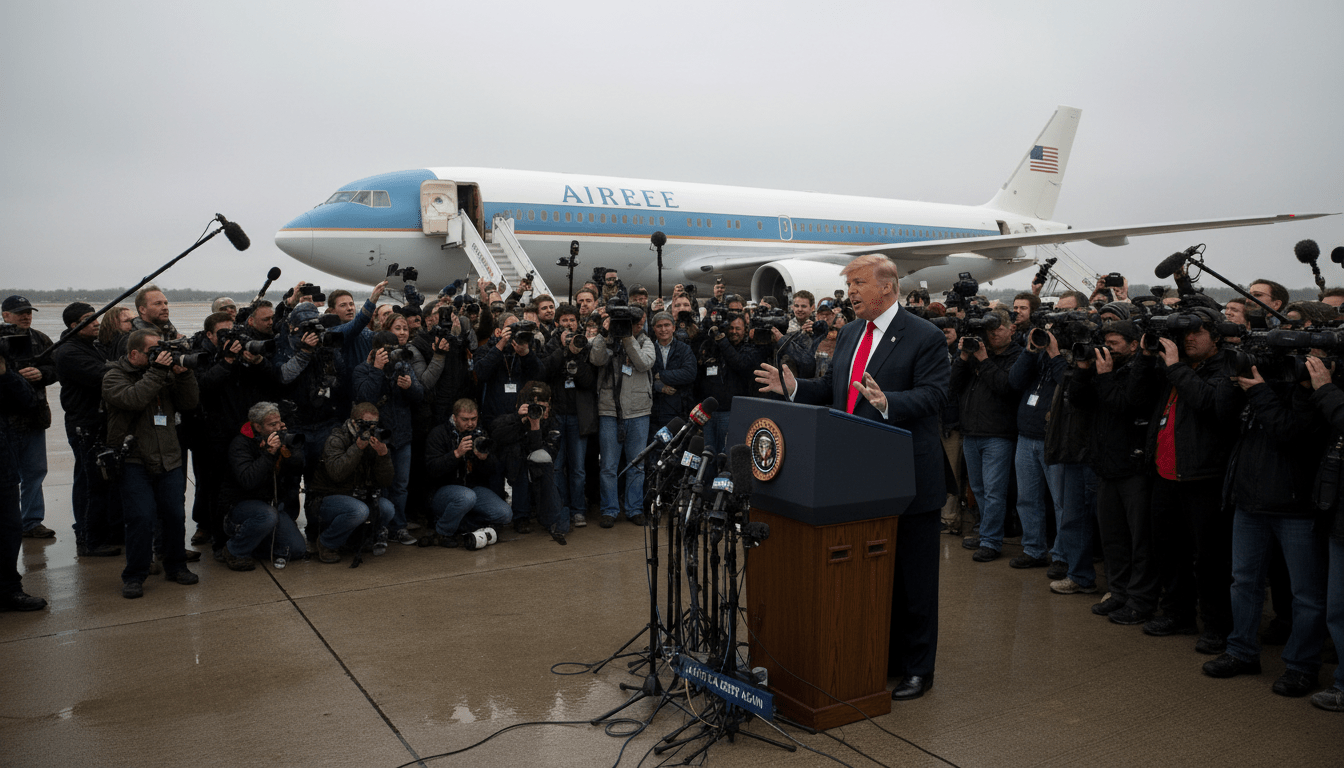
President Donald Trump concluded a high-stakes trip to Michigan this week, stopping to speak with a gathering of reporters on the tarmac at Detroit Metropolitan Airport before his departure. The visit, which centered on the region’s critical role in American manufacturing, culminated in a series of impromptu remarks where the former president doubled down on his promises to revitalize the domestic automotive industry through aggressive trade policies.
Standing against the backdrop of Air Force One, Trump fielded questions regarding the future of union jobs, the transition to electric vehicles (EVs), and the broader economic trajectory of the Motor City. His rhetoric remained consistent with his campaign platform, emphasizing a return to protectionist trade measures designed to insulate Detroit automakers from foreign competition.
“We are going to bring the car business back to Detroit, and we are going to do it fast,” Trump told the press pool. He cited the need for stricter tariffs on vehicles imported from Mexico and China, arguing that current trade loopholes are draining the lifeblood of Michigan’s economy. The remarks signal a potential shift in federal policy that could have profound implications for the state’s largest employers.
Focusing on Tariffs and Trade Protection
During the brief press conference, the core of Trump’s message revolved around the implementation of high tariffs. He specifically targeted automakers that utilize cross-border manufacturing strategies. According to the President, the United States-Mexico-Canada Agreement (USMCA)—which he signed into law during his first term—laid the groundwork, but he argues that more aggressive enforcement is now required.
“If they want to build cars in Mexico and sell them here, they’re going to pay a price,” Trump asserted. He floated the idea of tariffs as high as 100% or 200% on vehicles manufactured by Chinese companies in Mexico, a scenario that trade experts say would effectively ban those vehicles from the U.S. market.
Economic analysts suggest that while such moves could protect domestic manufacturing jobs, they may also lead to higher consumer prices. Data from the Bureau of Labor Statistics indicates that the automotive sector remains the backbone of the Detroit metropolitan area’s employment figures, yet the industry is highly sensitive to supply chain disruptions and trade wars.
The EV Mandate Controversy
A significant portion of the questioning focused on the federal push toward electric vehicles. Trump reiterated his skepticism regarding strict EV mandates, framing them as a threat to the traditional internal combustion engine jobs that have historically sustained Michigan’s middle class.
“The mandates are killing your business,” Trump said, addressing the local auto workers indirectly through the cameras. He argued that the market, not the government, should dictate the pace of transition. This stance resonates with a segment of the workforce concerned about the reduced labor requirements for assembling electric drivetrains compared to traditional engines.
For more context on how this transition is affecting local employment, readers can review our coverage on recent union negotiations and job security concerns within the city.
Impact on Detroit Residents
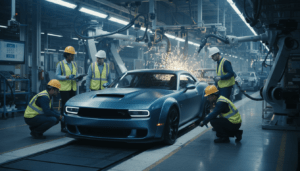
For the average Detroiter, the implications of these remarks are multifaceted. The promise of tariff-protected jobs offers hope to families reliant on the assembly plants of Ford, General Motors, and Stellantis. If successful, a policy that disincentivizes outsourcing could lead to increased hiring at facilities like the Jefferson North Assembly Plant or the Factory Zero assembly center.
However, local economists warn of potential inflationary pressure. If tariffs increase the cost of imported components, the price of new vehicles could rise, impacting local dealerships and consumer purchasing power. Furthermore, Detroit’s economy has diversified over the last decade.
Local business owners in the hospitality and service sectors, who rely on the spending power of auto workers, are watching these developments closely. “When the plants are running strong, our tables are full,” said a restaurant owner in Corktown who wished to remain anonymous. “But uncertainty makes people hold onto their wallets.”
Reactions from Local Leaders and Unions
The reception to the President’s Detroit visit has been mixed among local leadership. While some manufacturing advocates praise the focus on American-made goods, union leadership has historically had a contentious relationship with Trump regarding labor rights and National Labor Relations Board (NLRB) appointments.
The United Auto Workers (UAW) has not issued a formal response to the tarmac comments specifically, but recent statements from union officials have emphasized the need for a “just transition” to EVs that protects wages, regardless of who sits in the Oval Office. The tension between protecting legacy jobs and adapting to a global market shift remains a defining struggle for the region.
Conversely, the Detroit Regional Chamber has often advocated for stability in international trade, noting that Michigan exports billions of dollars in goods annually. Disruptions in trade relations with Canada and Mexico could have ripple effects across the state’s logistics and supply chain sectors.
Background & Data on Detroit Manufacturing
To understand the weight of Trump’s comments, it is essential to look at the numbers. Detroit has seen a slow but steady recovery in manufacturing since the Great Recession. According to recent state data, Michigan remains the top state for automotive production in the country. However, the market share of Detroit’s “Big Three” has faced immense pressure from foreign competitors and non-unionized plants in the American South.
The Detroit Economic Outlook for 2025 suggests that while the city is attracting new investment in technology and finance, manufacturing remains the primary driver of regional GDP. Any federal policy shift that alters the cost of production or import duties will be felt immediately in the 313 area code.
What Happens Next?
As President Trump departed, the questions lingering in the air concerned the timeline and execution of these proposals. Implementing sweeping tariffs would likely face legal challenges and require significant maneuvering within the Department of Commerce.
For now, Detroit remains in the national spotlight. With the auto industry at a crossroads between combustion and electrification, and the political landscape shifting, the promises made on the tarmac at Detroit Metro Airport will be scrutinized by workers, executives, and voters alike in the coming months.