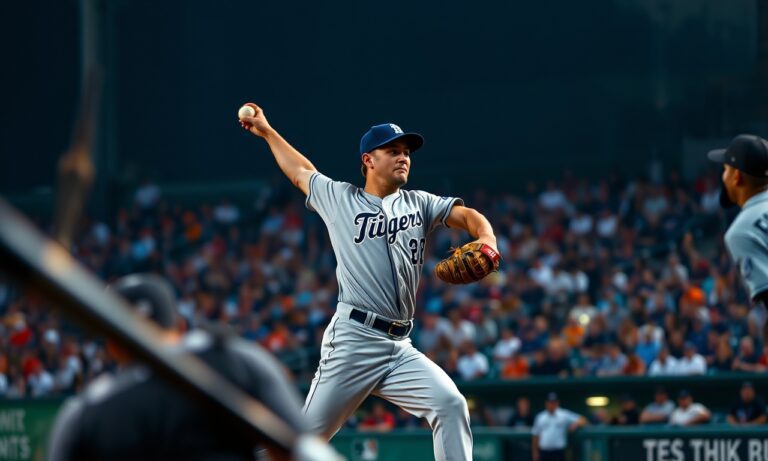
The Detroit Tigers have leaned heavily into power hitting in recent stretches, a strategy that has kept their offense moving even as overall results have lagged. With Detroit’s offense frequently struggling to generate consistent run production through hits, the Tigers’ ability to turn baserunners into home runs has stood out as a key differentiator—particularly during periods when their team’s deeper-contact approach hasn’t produced at the same rate.
For fans in MLB Detroit, the pattern has been easy to see: when the game slows down for the lineup, the Tigers have found another path. The club’s home run reliance has become a familiar storyline as team hitting trends swing from late rallies to quiet innings, often turning on whether the ball carries over the fence.
Main Section
Detroit’s home run reliance has not been a new concept in modern MLB, but the timing matters. As the Tigers have dealt with runs drying up in games where baserunners can’t score, the value of extra-base power has increased. A single homer can create a multi-run swing that would otherwise require several hits, walks, and sustained baserunning to assemble.
That is particularly relevant when the Tigers offensive approach runs into the kind of late-game leverage that exposes baseball’s margins. When contact doesn’t translate into rallies, the offense can stall—making the difference between scoring early and chasing later.
Baseball analysis outlets and team evaluators have long noted that home runs can stabilize output during stretches when batting average on balls in play and situational hitting are less favorable. The Tigers’ own performance in this area has become part of how they survive the ebbs and flows of a season.
According to data compiled by FanGraphs, team wOBA and slugging have been among the metrics that help describe how power production changes outcomes in real time. While the Tigers offense is affected by the full lineup’s consistency, the frequency and impact of power hitting HR offers one of the clearest explanations for how Detroit can still post crooked numbers even when other phases—such as turning singles into extra bases—haven’t clicked.
Why the Tigers’ offense looks different when HRs drop off
When home run production is present, the Detroit Tigers offense often plays with a different tempo. Walks that lead to pressure can become outcomes rather than opportunities. Meanwhile, pitchers who fall behind in the count must be more careful, especially in parks and weather conditions that can influence ball carry.
But when the HR reliance doesn’t materialize, the Tigers tend to revert to the harder version of their offensive challenge: stringing together hits, moving runners, and converting even well-hit balls into runs. In those games, a lineup can still put together quality at-bats while failing to score enough to change the scoreboard story. That’s where the term Tigers offensive struggles becomes more than a label—it reflects a sequence of at-bats where the margin is tight and execution must be perfect.
Detroit’s game-to-game fluctuations have also been shaped by opponent pitching. If opposing clubs can suppress exit velocity or reduce damage after contact, the Tigers’ blueprint shifts from scoring through extra-base hits to needing timing, discipline, and conversion—elements that can be inconsistent, especially for teams working through lineup variations.
Impact on Detroit Residents
The home run narrative matters beyond the scoreboard for Detroit residents, because it influences how families, local sports bars, and longtime fans experience the season. The Tigers are one of the city’s shared rituals—game nights that help define summer plans and keep neighborhoods buzzing. When the lineup is built around power hitting HR, it changes the emotional arc of each contest: fans are more likely to see momentum hinge on whether a hitter can break the game open with one swing.
In practice, that can affect everything from crowds to how often fans return to Comerica Park even during hard stretches. When the offense is generating long balls, even a slow start can feel survivable. When that disappears, the patience gap widens—especially for fans paying attention to the club’s team hitting trends and asking why baserunners aren’t turning into runs more consistently.
There’s also an economic angle to sustained performance. According to the Detroit Metro Convention & Visitors Bureau, major league events and local sports can support tourism and local spending by drawing visitors and keeping entertainment budgets active. While a single series won’t reshape citywide economic outcomes, consistent fan interest can influence revenue patterns for nearby businesses—especially those that depend on game-day traffic.
For Detroit residents, the Tigers’ HR reliance thus becomes part of a broader city rhythm: home runs produce immediate, visible excitement; longer scoring droughts can dampen the atmosphere. That feedback loop is one reason the Tigers’ ability to find consistent production is more than baseball analysis—it’s a community experience.
Background & Data
To understand why Detroit Tigers offense has leaned toward home runs, it helps to look at broader MLB trends. In recent seasons, league-wide emphasis on launch angles, exit velocity, and hard contact has made power more central to winning strategies. For clubs that can’t consistently dominate with contact and speed, home run swings can provide a more efficient pathway to runs.
Still, power alone doesn’t guarantee stability. The Tigers’ results depend on whether their hitters can create consistent damage across different pitchers and situations. When the offense is forced to settle for singles without follow-up, the Tigers’ ability to produce runs becomes more sensitive to late-game precision.
Baseball-reference-style evaluations also show that teams with similar batting averages can experience vastly different outcomes depending on slugging and the frequency of extra-base hits. That’s where team hitting trends become useful: looking at isolated performance is less informative than tracking how often the lineup converts at-bats into real scoring plays.
Beyond individual stats, the Tigers’ context includes roster health, lineup matchups, and how often starters and relievers allow damage. Detroit’s offense changes shape when the lineup tilts toward hitters with more pull power or more frequent home run profiles, and those tactical shifts can drive the observed reliance on homers.
While the current stretch highlights power as the clearest offensive lever, the longer season brings a familiar test: whether Detroit can balance that approach with additional run creation through doubles, walks, and productive contact. If the Tigers can diversify their scoring beyond home run reliance, their offensive struggles would be easier to manage in games where the ball doesn’t leave the park.
What Happens Next
For Tigers fans, the near-term question is straightforward: can Detroit keep generating enough long-ball damage to stay competitive without falling into extended low-scoring droughts?
Managerial decisions and lineup construction will matter, but so will the underlying outcomes of the team’s approach. The Tigers can’t control every opponent matchup, but they can continue adjusting—whether by encouraging more consistent extra-base opportunities, refining plate discipline, or improving how hits convert into runs when home runs aren’t available.
In the stands, the HR storyline will likely remain a focal point. But the best version of the Tigers’ offense in the long run is one where power hitting HR is a strength, not a requirement—a foundation that supports a more reliable path to scoring.
As Detroit’s season continues, those shifts will show up quickly in the way fans talk about each series: fewer “did they have one big swing?” moments, and more “they were driving runners in,” even when the fences don’t come into play.