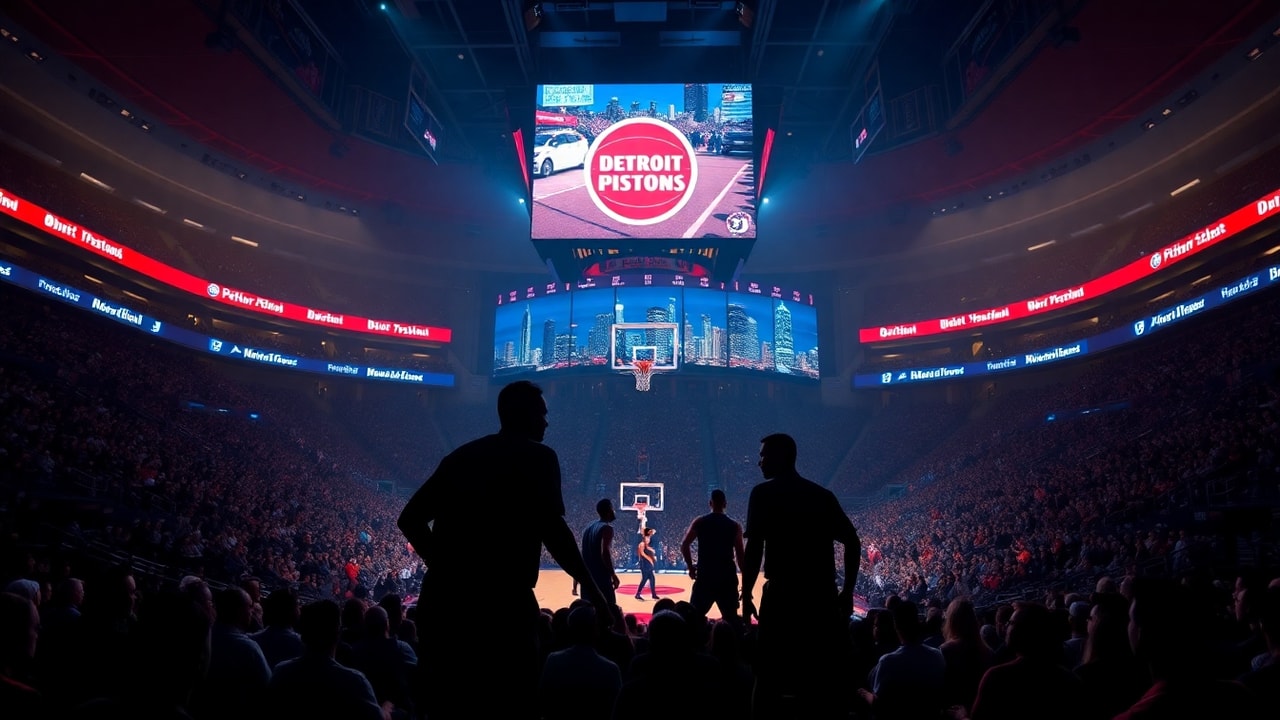
The Detroit Pistons have begun sharpening their message for fans and opponents alike as the team prepares for Pacers vs Pistons, with one name repeatedly surfacing in early scouting conversations: Domantas Sabonis. In what amounts to a brutally honest warning from the Pistons’ competitive priorities, Detroit’s approach to the upcoming matchup centers on a simple idea—if the Pacers’ offense can get Sabonis moving downhill with space, Detroit’s defensive margin shrinks quickly.
While the Pistons are careful not to overstate any one matchup in a league built on adjustments, multiple voices close to team operations have pointed to the same core issue: stopping Sabonis isn’t about a single defensive assignment. It’s about preventing an entire set of advantages—screen quality, offensive rebounding, and passing windows—that tend to materialize whenever Sabonis is comfortable operating from the high post and elbow.
Detroit Pistons: The warning is about pace, space, and second chances
According to a recent breakdown from The Athletic’s NBA coverage, Sabonis has been at his most damaging when defenses are forced to help without being able to recover to cutters and shooters, turning the first defensive reaction into a cycle of second actions. That theme lines up with what Detroit’s staff appears to be emphasizing as it prepares for Sabonis scouting report priorities: contest touches without surrendering easy reads, and contain the playmaking that comes after screens and seals.
“Our goal is to keep him from getting to the spots where the offense is already designed,” said one person with knowledge of Detroit’s preparation who spoke on background because internal scouting emphasis is not typically discussed publicly. “If he gets there and the next pass is already open, it forces everyone to be perfect—and that’s hard over 48 minutes.”
That “perfect over 48 minutes” standard is where the Pistons’ warning becomes most relevant to fans in Detroit—because it clarifies what this matchup likely depends on. Detroit is expected to rely on quicker physicality on initial seals and a disciplined approach to boxed-out positioning, especially in moments when games swing through offensive rebounds.
Why Detroit can’t treat Sabonis like a single big
Sabonis’ game often looks like post-up basketball, but the tactical effect is bigger than that label. Detroit’s defensive concerns include how quickly his presence forces help—then forces rotations to restart. The result can be fewer shot attempts at the rim for Detroit, more mid-range or corner opportunities for Indiana, and a higher likelihood of Pacers possessions extending through offensive rebounds.
In Detroit’s context, that’s not just strategy—it’s roster construction and identity. The Pistons have spent recent seasons developing depth and execution, and the staff generally tries to keep defensive principles consistent even when players rotate. So the “warning” reads as a reminder: if Detroit chooses the wrong reaction early, it will spend the rest of the game covering for it.
Impact on Detroit Residents: what Pistons fans should watch for
For Detroit residents, this matchup is more than a basketball storyline. Pistons games are an extension of neighborhood life—something families build routines around, and something local sports bars and community watch parties depend on. When the Pistons face a high-IQ offense led by a player like Sabonis, fans usually notice the difference in the way effort shows up on the defensive glass and in the spacing between help defenders.
Here are the practical ways this brutally honest warning is likely to show up on the court, and how residents can interpret what they see:
1) Defensive rebound discipline: If Detroit boxes out early and contests second shots instead of chasing, it can disrupt Indiana’s possessions. Sabonis thrives when rebounds become transition passes.
2) Screen coverage quality: Indiana’s actions often run through screens that create the first advantage. Detroit will be measured on whether defenders switch cleanly or recover quickly enough to deny the next read.
3) Passing-window denial: Sabonis tends to find teammates when defenders bite on seals or overcommit. Detroit’s “warning” suggests a focus on keeping the middle closed so the first reaction doesn’t become a second-pass layup.
These aren’t purely basketball details; they’re a gauge for how effectively the Pistons can translate preparation into consistent execution. In a city where sports culture can be both hopeful and demanding, that consistency is a real conversation—especially as the Pistons continue trying to establish a clearer identity on defense.
Background & Data: why Sabonis matters in Pacers vs Pistons
The broader statistical context helps explain the attention. The NBA’s official player tracking and play-by-play reporting consistently show that teams built around high-post and rim-proximity creation benefit when opponents struggle to deny offensive rebounds and secondary touches. Sabonis has repeatedly been a catalyst for Indiana’s ability to extend possessions and convert advantage into shot quality.
Separately, Sports Reference’s public data tables have, over multiple seasons, illustrated how Sabonis’ production correlates with team efficiency metrics that improve when opponents face difficulty defending passing sequences after screens and when big-man contests fail to prevent extra possessions.
Put simply: the Pistons can’t afford to treat Sabonis as only a scorer. In most matchups where he controls territory, his influence shows up in possession structure—how Indiana chooses to initiate plays, how long they can hold the ball, and how often they turn one miss into a second chance.
Sabonis scouting report: the most likely Pistons adjustments
Detroit’s preparation is expected to include a blend of coverage tactics rather than one magic scheme. A Sabonis scouting report lens points to three adjustments that often matter most when teams face a high-impact playmaking big:
• Early contact without fouls: Contesting seals and entries can disrupt timing, but defenders have to avoid reaching in ways that trigger free throws and easy reset opportunities.
• Help triggers tied to read discipline: Instead of collapsing automatically, defenders typically wait for the trigger—whether Sabonis has two hands on the ball, whether a cutter is already in motion, and whether the first pass would be open.
• Offensive rebounding as a defensive finish: Detroit can keep games close by controlling rebounds, limiting Indiana’s second-chance scoring, and starting the Pistons’ own transition game before the Pacers can set.
For fans, these are visible in the “one-second after” moments: what happens after Detroit contests a pass or after a screen is blown. The warning being discussed in preparation suggests Detroit believes those micro-sequences decide the macro outcome.
What happens next for Detroit
As Pacers vs Pistons approaches, Detroit’s staff will likely continue tightening its defensive communication—particularly around how players communicate during screens, how they rotate on reads, and how they handle offensive rebounds without collapsing the perimeter.
While Saturday-night outcomes are never predetermined, the “brutally honest warning” is still a useful guidepost: Detroit is acknowledging that Sabonis is not a matchup you can survive with effort alone. It requires disciplined positioning, consistent execution, and quick recovery—especially after the first defensive rotation breaks down.
For Detroit residents watching in arenas and living rooms, the question becomes straightforward: will the Pistons make Indiana work for every possession, or will Sabonis find enough space to turn Detroit’s early reactions into Pacers advantages?