Detroit sports fans are paying close attention to the latest NBA trade rumors swirling around Domantas Sabonis, after a 3-team trade proposal reportedly explored a path that could reshape the league’s frontcourt picture—while also raising the question of whether the Detroit Pistons would be involved.
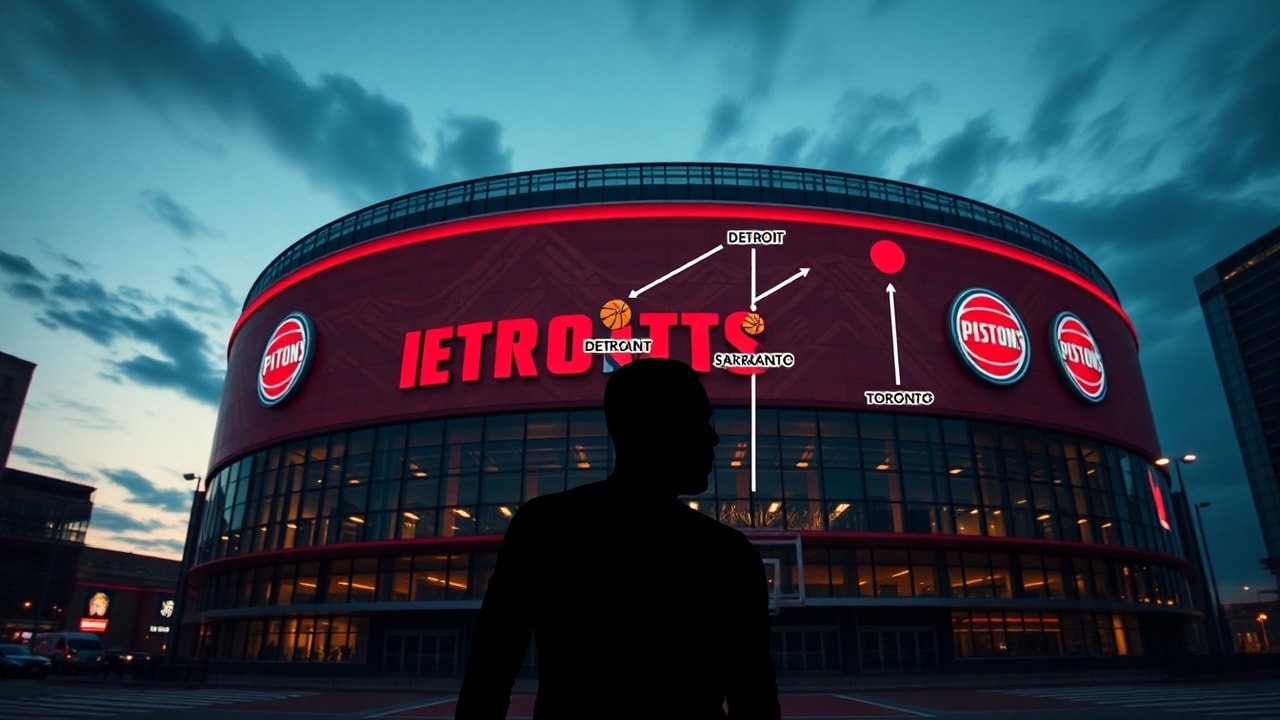
According to reporting from national NBA outlets that track roster movement and trade framework scenarios, the idea would involve the Sacramento Kings and Toronto Raptors alongside Detroit, using Sabonis’ skill set—elite rebounding, interior passing, and efficient scoring—to address needs across three franchises. While nothing is confirmed and trade talks at this stage often change quickly, the scenario has gained traction because it fits multiple teams’ competing priorities: Detroit’s development window, Sacramento’s bid to contend, and Toronto’s ongoing roster recalibration.
The Pistons’ involvement matters for Detroit residents not because fans will see Sabonis in preseason in the immediate future, but because trade decisions can alter team direction, affect local business activity tied to games and merchandise, and influence how quickly Detroit’s young core can build continuity. In a city where sports culture is a key part of the broader entertainment economy, roster movement can ripple beyond the arena.
Main Section
The reported Domantas Sabonis trade framework centers on a familiar balancing act in the modern NBA: contending teams often pursue high-impact, two-way offensive production, while rebuilding clubs seek players who fit their timeline or assets that preserve flexibility.
Sabonis, the Kings’ frontcourt centerpiece, would be the type of player general managers target when they want more consistent interior creation—particularly in playoffs, when physicality limits perimeter shots and rebounding can swing possessions. Sacramento’s interest aligns with the organization’s recent push to strengthen its half-court offense and protect the glass.
For Toronto, the logic is more about opportunity and inventory. National team-building patterns show that franchises trading established rotation players commonly look for younger assets, contract clarity, and future flexibility. In this sort of trade rumor, Raptors’ inclusion would likely be tied to how Toronto could convert roster needs into a package—either through acquiring pieces that fit a faster rebuild or by creating financial and lineup balance for the next phase.
Where Detroit enters the conversation is the trickiest part. The Pistons are often discussed as a team focused on long-term growth—developing lineups, finding consistent roles, and maintaining cap discipline. A Sabonis-type acquisition could signal an aggressive move to accelerate that timeline, while a less direct involvement could mean Detroit receiving a different combination of players and draft-related considerations rather than simply landing the superstar name driving the headlines.
Notably, the existence of a 3-team trade proposal does not guarantee the Pistons would be a buyer or seller in the final version. In many multi-team negotiations, teams may participate to improve the fit of salary matching or to adjust roster angles, which can make a “Detroit connection” appear in early reporting even if the ultimate transaction changes.
Why this rumor is getting attention in Detroit
Detroit’s relationship with basketball is deeply tied to civic identity and local entertainment. The Pistons’ competitiveness influences attendance, broadcast viewership, and even the day-to-day rhythm of nearby retail and hospitality during game nights.
As the Detroit Regional Convention Partnership and city-affiliated tourism efforts have repeatedly emphasized, major sporting events can bring incremental foot traffic to downtown businesses. While the impact of any single player acquisition is difficult to measure in isolation, roster buzz often affects fan engagement leading into the season—especially when trade speculation includes marquee names like Sabonis.
From a media standpoint, the rumor also highlights a broader trend: Detroit is being discussed not only as a development stop for prospects, but as a potential participant in substantive trade conversations. That shift matters to local fans because it suggests the organization’s leadership may be exploring multiple paths to improvement rather than relying on only internal progression.
Impact on Detroit Residents
If Detroit ultimately holds a role in a Domantas Sabonis trade, residents could feel the effects in several practical ways.
1) Game-night economy and entertainment spending: Downtown Detroit’s hospitality and retail ecosystem—restaurants, bars, and event-related services—tends to benefit when fan enthusiasm rises. A trade buzz involving a high-profile player can lift interest, and higher attendance can contribute to sales for nearby businesses.
2) Youth development and lineup stability: A veteran interior presence changes the team’s on-court spacing, practice focus, and mentorship dynamics. For Detroit residents who follow the franchise beyond box scores—families, students, and local basketball communities—lineup changes can affect how competitive the Pistons feel in home games and how quickly younger players see clearer roles.
3) Community conversations about investment: Detroit sports talk often overlaps with civic themes: how organizations invest in competitiveness, how leadership makes decisions under economic constraints, and how fans interpret rebuilding versus “win now” moves. The Pistons’ ability to attract and integrate star-level talent can influence those debates.
Even for residents who don’t follow the NBA daily, NBA offseason movement increasingly fits into the broader cultural calendar—competing with other headline-driven local issues for attention. In that context, a high-stakes trade rumor can become a proxy for the city’s larger expectations of progress.
Background & Data
To understand why Sabonis is so relevant to a multi-team trade discussion, it helps to look at what analytics-focused observers often highlight about his game: rebounding volume, passing from the high post and short roll, and efficient scoring that can reduce pressure on perimeter creation. While no single metric tells the whole story, these traits are exactly the kind that teams covet when constructing playoff-ready rotations.
On the league-wide side, salary matching rules and roster construction constraints shape nearly every trade. The NBA’s collective bargaining agreement establishes broad parameters for player compensation and transactions, which can influence how multi-team deals are structured—even when teams want different outcomes. As a result, the existence of a 3-team trade proposal often reflects an attempt to make the numbers work, not just a basketball fit.
Local economic context also matters. According to the U.S. Census Bureau, Detroit has worked through complex economic transitions over the past decade, with changes in population and household patterns affecting how local spending is distributed across sectors. For major sports franchises and arena-adjacent businesses, that backdrop makes consistent fan engagement more valuable than ever.
On the team narrative, it’s common for national reporting to treat trade rumors as part of a longer strategic timeline. As Basketball-Reference and other major statistical platforms continue to show through historical roster trends, teams that acquire interior playmakers often adjust their offensive sets significantly. Detroit residents should therefore expect that any involvement in a Sabonis trade would come with a clear basketball rationale—whether it’s changing offensive balance, improving rebounding, or creating a more reliable second unit.
Still, it’s important to emphasize the current uncertainty. Trade rumors typically evolve as teams explore alternative offers, injury histories, contract details, and roster fit. The only definitive signal will be official confirmation by teams and the NBA once agreements are finalized.
What Happens Next
For now, Detroit fans should treat this Domantas Sabonis trade storyline as a snapshot of what teams are considering—not a promise of what will happen.
In the coming days, national reporters may refine the details if additional sources confirm who would receive which pieces and how Detroit would be positioned in the final deal. Detroit’s role could become clearer through beat reporting on rotation needs, contract timing, and the organization’s stated priorities for player development and team building.
At the same time, Pistons supporters should watch for signals inside the organization: depth chart adjustments in practice, frontcourt usage patterns, and how Detroit’s coaching staff talks about roles for young players. If the team is quietly preparing to add a complementary interior presence, those details can appear in the way minutes are distributed and how lineups are tested.
Ultimately, whether Detroit is truly included in the final version of a 3-team trade proposal will hinge on negotiations between the Sacramento Kings and Toronto Raptors, Detroit’s appetite for a specific roster outcome, and the willingness of all parties to align on a final package. Until then, the rumor remains one of the more intriguing developments in this NBA offseason—especially for a city watching for concrete progress on the court.