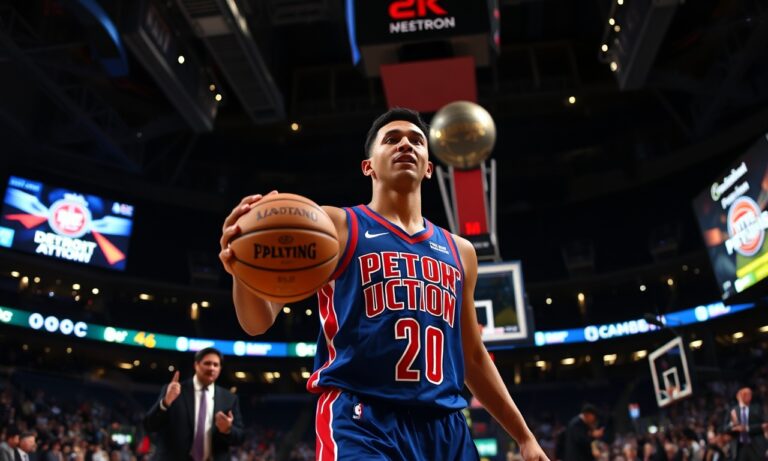
The Detroit Pistons have reached an agreement with forward John Collins on a 3-year contract, according to multiple reports ahead of the next stage of NBA free agency. The signing adds a versatile frontcourt presence for a Pistons team looking for steadier offensive production and a stronger inside-out identity as the season approaches.
While Collins’ role and minutes will ultimately depend on training camp evaluations and lineup fit, the move signals Detroit’s intent to pair youth with proven professional output in the paint and beyond. For Pistons fans and local observers, the decision also underscores how player market activity can quickly reshape the on-court product that drives ticket demand, local media attention, and broader sports-business activity tied to Little Caesars Arena.
Collins signing gives Detroit a new frontcourt option
Collins, listed as a power forward/center in many lineups, brings a combination of rim pressure and shooting that can expand Detroit’s half-court spacing. The Pistons’ reported Collins signing comes as the franchise continues to evaluate roster construction and how best to deploy its young core.
The details of Detroit’s financial commitment are expected to be clarified as the deal becomes fully official. In the modern NBA, contract structures can affect roster flexibility, including future cap room and the ability to make additional moves.
According to NBA transaction reporting and league-standard press processes, contract signings are typically confirmed through official team announcements and transactions systems. Detroit’s next roster steps will likely follow that timeline as the offseason moves into the later phases of NBA free agency.
Impact on Detroit Residents: from game nights to the local economy
For Detroit residents, the implications of a major Pistons signing are usually most visible on game days. A notable frontcourt addition can translate into increased interest from season ticket holders and more walk-up demand from casual fans—factors that ripple into surrounding hospitality and retail corridors.
City-level economic activity connected to major events is often assessed through data sources maintained by the U.S. Bureau of Labor Statistics. For example, the U.S. Bureau of Labor Statistics tracks employment and wage trends in industries that commonly see seasonal spikes around entertainment venues, including leisure and hospitality. While player signings don’t directly change those numbers overnight, a higher-profile roster can support higher event attendance and local spending.
Detroit’s sports economy also benefits from attention cycles: local media coverage, social content, and community programming can increase engagement with Little Caesars Arena and nearby businesses. Detroit-based organizations involved in youth sports and community initiatives often see more opportunities for partnerships when team relevance rises.
Why a 3-year contract matters for the Pistons’ timeline
A 3-year contract tends to balance two realities: immediate competitiveness and longer-term roster planning. For a franchise building around developing talent, multi-year deals can stabilize rotation roles while reducing the need for constant offseason resets.
However, the operational success of any signing depends on fit. Coaches typically seek players who can cover defensive matchups, communicate in the half court, and stay on the floor in crunch-time lineups. For the Pistons, the key question will be whether Collins’ skill set complements Detroit’s existing play style—particularly how the team generates offense at the elbow, in pick-and-roll sequences, and on second-chance chances.
Data from Basketball-Reference and other mainstream analytical databases frequently show how modern forwards contribute through shot quality and spacing rather than only traditional post scoring. Those broader performance frameworks help explain why teams pursue multi-dimensional bigs and wings during the offseason market.
Background & data: Detroit’s roster decisions in context
Detroit has spent several seasons navigating roster turnover and developing younger players, with management focused on improving on-court consistency while keeping an eye on salary cap realities. In that context, the reported Collins signing reflects the franchise’s willingness to bring in a recognizable NBA player to fill a clear team need.
Detroit’s offseason strategy also aligns with how many franchises handle roster building under the league’s salary cap and roster rules. The NBA’s collective bargaining environment makes timing crucial: teams must balance current spending with the flexibility needed to address injuries, draft outcomes, or midseason trade opportunities.
From a public information standpoint, teams typically provide contract confirmations through official announcements once details are finalized. Detroit fans can expect further updates in the coming days as league transaction filings and official team communications align on the final contract terms.
What happens next for the Pistons
The signing of John Collins doesn’t close the door on other offseason moves. After the initial wave of NBA free agency activity, teams usually re-check depth needs at multiple positions, including backup center options, perimeter shot creation, and defensive versatility.
For Detroit, the most immediate next steps include aligning Collins’ role with the coaching staff’s lineup preferences, determining who initiates offense alongside the ball-handler group, and integrating him into offensive sets that can keep defenders honest. In training camp and early preseason, the Pistons’ staff will likely prioritize chemistry—both on offense (spacing and timing) and defense (switching assignments and rebounding responsibilities).
As for Detroit residents, the practical payoff will be measurable during the regular season: lineup stability, improved spacing on offense, and potentially a more consistent product that supports attendance and local engagement.
Detroit news watch: how this signing could shape early-season storylines
In the short term, the biggest storylines to monitor include Collins’ integration into the starting lineup, whether Detroit uses him as a stretching forward in second-unit lineups, and how quickly the team adjusts to defensive matchups against top frontcourts in the Eastern Conference.
For fans looking for Detroit news updates and the latest from Pistons beat reporting, the next official confirmations—such as contract details and final roster sequencing—should clarify what to expect from the team’s rotation once the season begins.
Bottom line
The Detroit Pistons’ reported agreement with John Collins on a 3-year contract adds a veteran frontcourt option at a time when the franchise is still refining its identity. For Detroit residents, the move is more than roster management—it’s another signal that the Pistons are actively shaping a product that can keep fans engaged, sustain local game-night energy, and support the broader sports-business ecosystem around Little Caesars Arena.