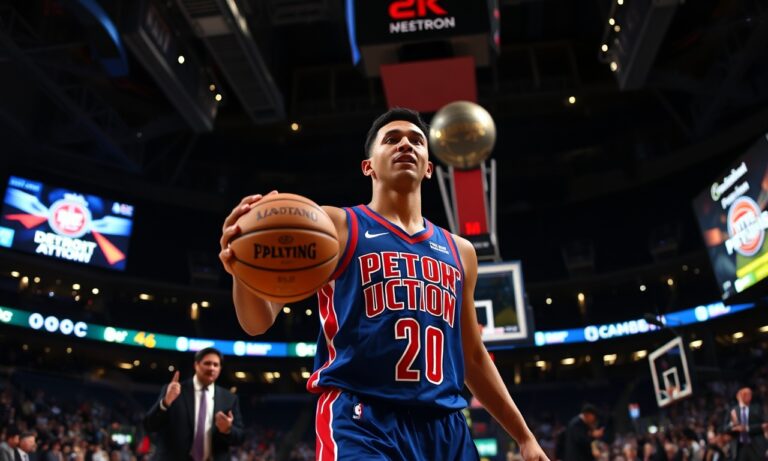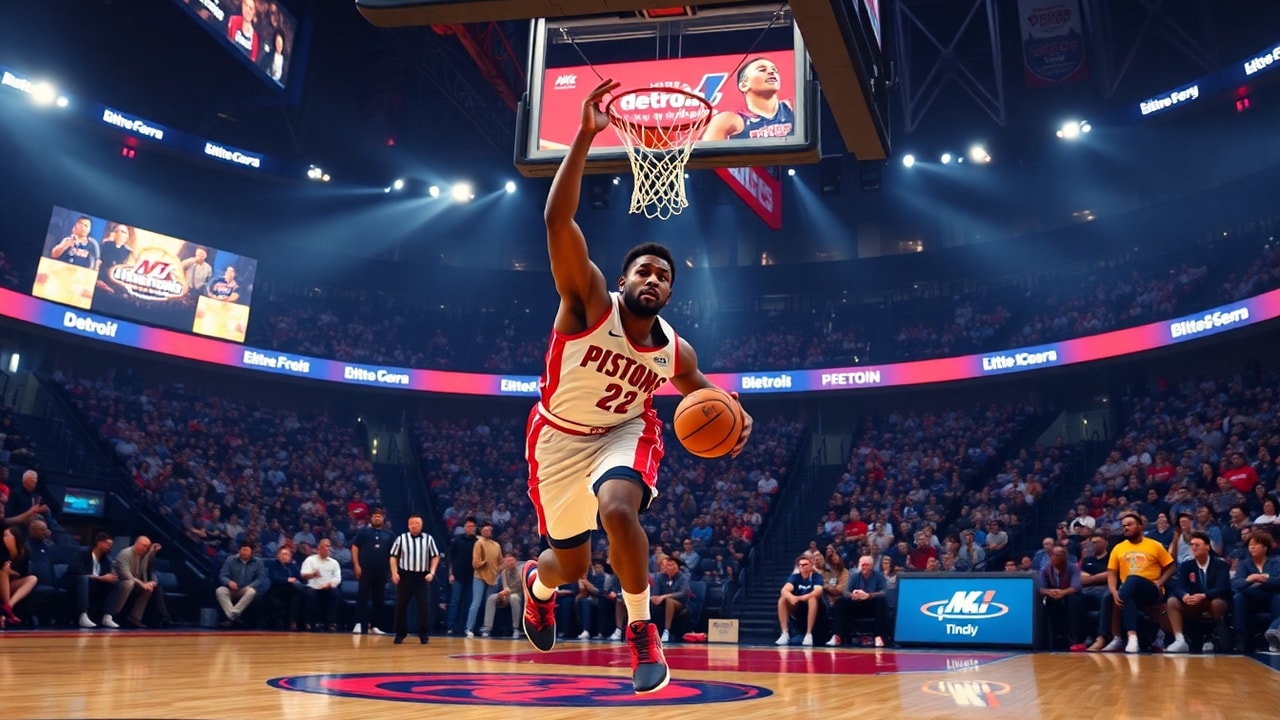
The Detroit Pistons have agreed to terms with John Collins on a 3-year contract, completing a pivotal offseason addition after the veteran forward’s departure from the Los Angeles Clippers, according to NBA and team reporting. Collins’ move to Detroit gives the Pistons a long-armed, high-production frontcourt option as the franchise looks to reshape its rotation and raise competitiveness in the Eastern Conference.
The signing, which arrives as part of the NBA offseason churn that has defined many roster decisions this summer, is expected to impact Detroit’s spacing, rebounding, and half-court scoring. For Pistons fans, it also signals that the team is continuing to invest in a younger core while adding proven playmaking and shot creation from the power forward and small-ball center roles.
What the 3-year contract means for the Pistons
Collins’ agreement provides Detroit with cost and roster stability that can be difficult to secure mid-rebuild. A multi-year pact typically allows teams to build offensive sets around a player’s strengths—screening, rolling to the rim, and attacking closeouts—while also planning defensive schemes that fit a specific skill profile.
According to Sports Reference, Collins has generally been most effective as a high-effort interior scorer who can punish teams on put-backs, second-chance opportunities, and pick-and-roll reads. His ability to play with pace—rather than solely stationing as a traditional post-up threat—has also made him valuable in modern lineups where teams demand movement and floor coverage from frontcourt players.
Detroit’s staff will likely look to integrate Collins into a broader ecosystem featuring perimeter spacing and offensive rebounding. That matters because offensive rebounds and free throw attempts often determine how efficiently a team converts possessions into points—an area the Pistons have been working to improve as the roster changes.
Local impact: Detroit’s on-court product and fan momentum
For Detroit residents, the significance of this move extends beyond highlight clips. Professional sports franchises operate as entertainment anchors that can influence local attention, ticket demand, and downtown activity on game nights.
According to the U.S. Census Bureau, the Detroit metropolitan area’s demographic profile includes a large share of adults who participate in sports and entertainment activities annually. When teams take steps that make the product more compelling, the downstream effects can include increased engagement across local media, sports bars, merchandise sales, and event foot traffic around venues.
Collins’ signing may also affect how the Pistons allocate playing time in a way that improves continuity. A forward with established habits can help younger teammates learn offensive timing and defensive positioning, especially in lineups designed for development as well as competitiveness. If Detroit leverages Collins for pick-and-roll spacing and rim pressure, it could translate into more late-game shotmaking—an outcome fans tend to notice quickly.
Power forward signing arrives after Los Angeles Clippers exit
Collins’ arrival in Detroit follows an offseason of roster turnover on the opposite sideline. The Los Angeles Clippers have reshaped their rotation during the summer, and Collins’ exit cleared the way for a new opportunity. For Detroit, the timing is important: the Pistons can pursue a clear role and use the preseason and early regular-season games to evaluate fit rather than starting from scratch.
Basketball analysts often frame this kind of move as a “context” decision. On a contender, a player may receive different shot opportunities and matchup expectations than on a rebuilding team. In Detroit, Collins is expected to provide tangible output while also offering a steadier identity for lineups—particularly against opponents who struggle with physicality in the paint.
Detroit also benefits from Collins’ experience in structured systems. Teams can adjust more quickly when a player understands spacing rules and can interpret defensive coverage without extensive individual coaching in the flow of a game.
Background & data: Why multi-year deals matter
In recent years, NBA roster management has been shaped by the balance between flexibility and continuity. Multi-year contracts can reduce the need for year-to-year retooling while giving players time to settle into coaching schemes.
From a league-wide perspective, teams track how player availability, workload, and role clarity influence performance. The NBA’s own reporting and team practices emphasize that offseason preparation and training camp integration can be crucial for performance stability. For Detroit, a 3-year contract with a forward who can contribute in multiple facets—scoring, rebounding, and rim pressure—offers a longer runway to build around.
While team needs vary by season, Detroit’s frontcourt direction has generally pointed toward adding players who can stretch the floor and compete on the glass. Collins fits that profile in a way that could complement lineup combinations Detroit has explored in recent rotations.
Impact on Detroit Residents
Beyond the arena, improved competitiveness can ripple into the local economy. When games become more competitive, the metro region can see greater demand for nearby dining, rideshare trips, and retail activity. Sports venues also draw broader civic attention, which can boost staffing needs for hospitality workers and event-related vendors.
For young athletes and community programs, a higher-profile signing can also strengthen recruitment for clinics and youth engagement events. Detroit organizations that collaborate with major sports franchises often time programming to coincide with high-visibility moments—training camp announcements, jersey unveilings, and early-season home stands.
Still, the immediate measure for residents will be straightforward: how Collins’ presence translates into wins, offensive efficiency, and defensive consistency. Fans will look for visible improvements, particularly in half-court production and second-chance opportunities.
What happens next for John Collins and the Pistons
Following the agreement, Detroit’s next steps will focus on role assignment and lineup fit. Coaches will likely test combinations in preseason that maximize Collins’ ability to attack closeouts and create advantages on interior matchups. The Pistons also need to evaluate how his minutes align with the development plan for the rest of the frontcourt.
Key questions for the early part of the season include whether Detroit can build a consistent offensive rhythm around ball movement and spacing, and whether Collins can anchor defensive efforts against teams that attack the paint with physical bigs.
As Detroit moves through the NBA offseason calendar into training camp, fans can expect additional roster decisions that clarify backup roles and bench scoring responsibilities. For now, the Collins signing stands out as a clear signal of intent: Detroit is aiming to couple youth development with a veteran frontcourt presence capable of immediate impact.
For Pistons supporters watching from Detroit’s neighborhoods—whether through local broadcasts or game-day crowds—the question is no longer simply whether the team is changing. It’s how quickly the changes can turn into a more consistent, more exciting product on the floor.