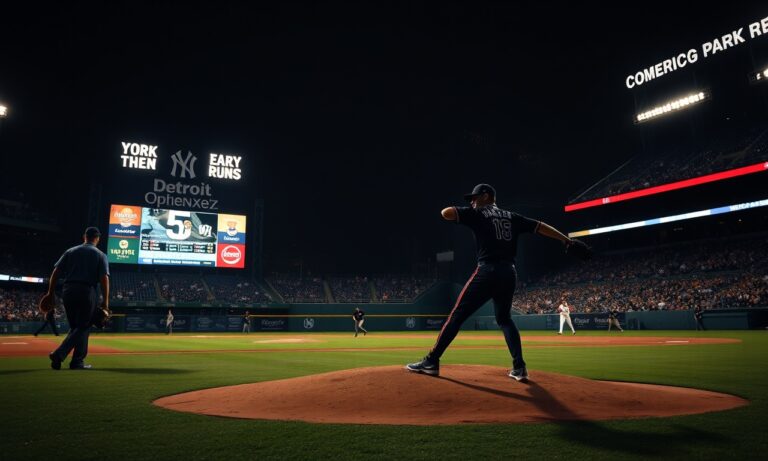
Seattle pitching provided the storyline for baseball fans Tuesday night as Bryce Miller pitching keyed a Mariners vs Angels game outcome that left the Mariners with a critical win over Los Angeles. The result matters beyond the box score for many Detroit residents who follow national MLB storylines, especially when standout outings from teams like Seattle reshape the playoff picture and keep fans engaged during the grind of the season.
Miller delivered a strong outing, helping the Mariners hold off the Angels in a contest that drew attention for its pitching duels and timely stops. For Detroit sports audiences—who routinely split their attention across the Tigers, Lions, Pistons and Red Wings—Seattle’s performance offers another example of how top-level pitching continues to set the tempo in MLB, even for teams that don’t play in the Great Lakes region.
How Bryce Miller pitching shaped the Mariners’ win over the Angels
According to the Associated Press, Miller’s start stood out for its control and effectiveness against the Angels’ lineup. Pitching like that is rarely an accident; it typically reflects a blend of command, pitch sequencing and the ability to limit hard-contact opportunities over multiple at-bat cycles. In games shaped by marginal swings—extra-base hits, walk-to-strikeout balance, and late-inning situational pitching—those details often decide the margin.
In the context of the Seattle vs Los Angeles matchup, Miller’s performance gave Seattle an early and repeatable plan: keep the opponent’s swings from turning into damage and trust the defense once runners were limited. Even when hitters made contact, the Mariners were able to convert key moments into outs rather than extended innings.
Baseball coverage outlets consistently note that an MLB starter’s value isn’t only raw statistics, but also the ability to sustain pressure as a game progresses. The Mariners benefited from that kind of steadiness, while the Angels struggled to string together consistent offensive sequences—an issue that tends to widen when opposing teams get ahead in counts and disrupt timing.
Impact on Detroit residents: why national MLB games still matter locally
For Detroit residents, MLB isn’t just local news—it’s part of everyday sports culture. When teams like the Mariners or the Angels win or lose, it influences national narratives that Detroit fans track through TV, radio and mobile alerts. Those storylines show up in conversation at workplaces, watch parties and local sports bars, and they also affect player momentum and team positioning across the league.
National baseball outcomes can indirectly influence how fans experience Detroit’s own sports calendar. As the Tigers navigate their schedule, Detroit supporters who also follow MLB nationally often compare pitching styles, team approaches and roster moves across multiple franchises. That kind of cross-team attention can shape how fans interpret fundamentals—like command and pitch selection—and brings additional context to what they see from Detroit’s teams.
Detroit’s media and community spaces also reflect that shared sports attention. The Detroit Sports Headlines ecosystem often includes quick hits on big-league performances because they are widely discussed and quickly searchable. When a MLB strong outing like Miller’s occurs, it becomes part of that broader sports feed, even for fans whose closest ballpark is in another city.
Background & data: MLB pitching, fan habits and what drives attention
Baseball has become increasingly data-driven, and pitching remains at the center of how teams evaluate outcomes. Data from the U.S. Bureau of Labor Statistics shows that overall screen time and media consumption patterns among adults remain substantial, helping explain why fans access sports highlights and analysis on demand. That accessibility supports rapid spread of game results and player performance updates—especially when a start like Miller’s generates a clear narrative.
From a fan-behavior standpoint, the modern MLB calendar also keeps attention moving. Teams play frequent series, and the standings update daily, so a single strong outing can carry extra weight when other teams win the same day. That’s especially true when matchups involve high-leverage moments—late-inning relievers, defensive conversions and bullpen availability—where one game can shift expectations for the next few matchups.
While Detroit residents aren’t watching Seattle play at Comerica Park, the league’s national structure still ties outcomes together. A Mariners win over the Angels can affect wildcard and division race projections, and those projections are exactly what fans look at when deciding which teams they’ll track most closely as the postseason approaches.
What happens next for Seattle and for fans following from Detroit
Seattle’s next steps will depend on how the pitching staff recovers after this kind of performance and whether the Mariners can maintain run prevention in the following games. For Miller, the immediate focus is consistency—how quickly the mechanics and command translate into the next start and whether the team builds on the same approach that limited damage versus Los Angeles.
For Detroit fans, the practical takeaway is that Mariners vs Angels game results can become part of an ongoing watch list. Detroit-area sports coverage will likely continue to spotlight pitching storylines like Miller’s because they’re durable talking points—command, pitch mix, and the ability to win even when hitters aren’t producing at peak levels.
As the season moves forward, Detroit readers can expect more crossover relevance: when top performers emerge in national games, those performances often feed into discussions about how teams might adjust at the trade deadline, how lineups evolve, and which pitching staffs look most reliable under pressure.
Featured image suggestion: A dynamic, stadium-lit scene showing a Seattle pitcher delivering a pitch with the crowd in motion, plus subtle visual hints of the Mariners and Angels logos to emphasize the Mariners vs Angels matchup and Bryce Miller pitching.