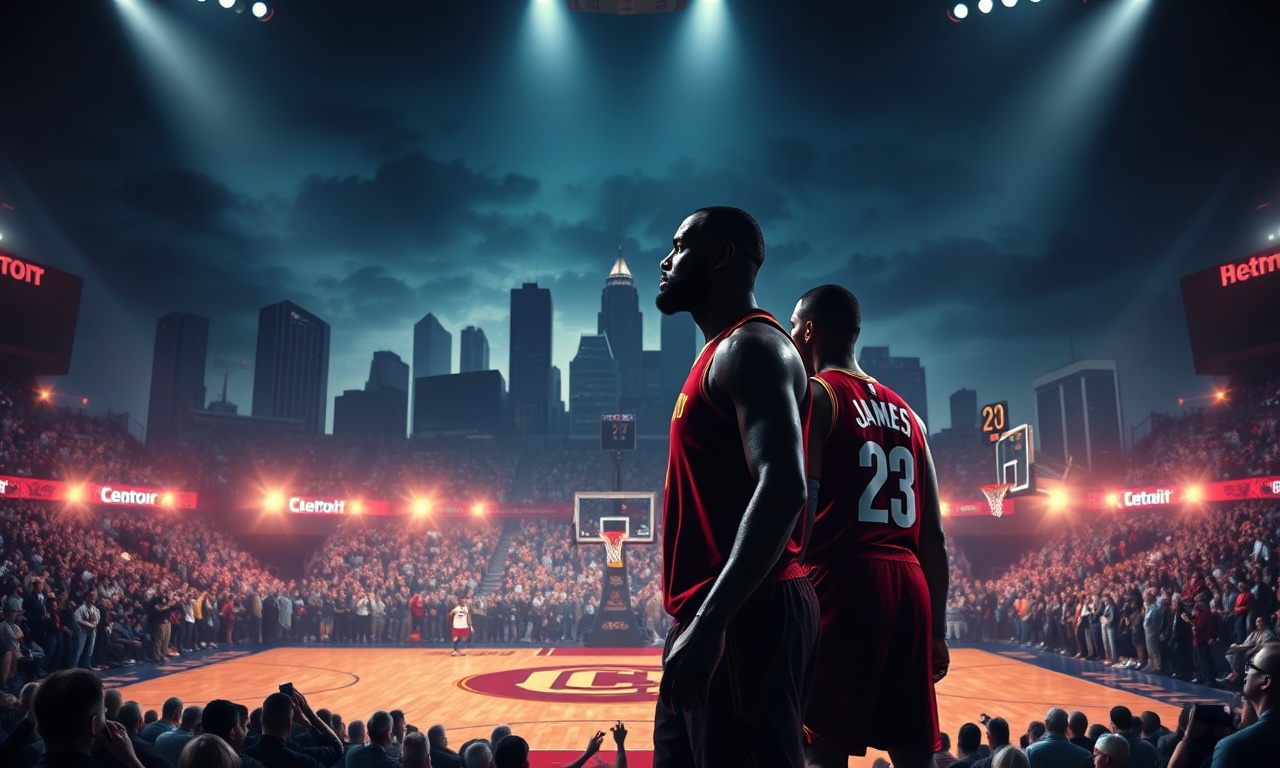
With the NBA season’s calendar tightening and roster news moving quickly, Detroit sports fans are again paying close attention to the LeBron James and Bronny James orbit—especially after the Cleveland Cavaliers signaled they are prepared to welcome them into the league’s biggest spotlight. For Detroit basketball headlines watchers, the storyline has a familiar local angle: when a Detroit-area fan base starts scanning the same national updates that dominate Ohio, it’s usually because something about the next chapter could spill into how the sport is watched, marketed and even scheduled across the region.
Neither the Cavaliers nor the league announced a Detroit-specific event tied directly to the James family in connection with the homecoming narrative, but the Cavaliers’ public positioning of their plans is already shaping how fans interpret what comes next. It also offers Detroit residents a chance to think about what “NBA homecoming” means beyond nostalgia—how marquee players can affect retail traffic, sports media consumption, local viewership habits and the broader economy surrounding major games.
Cleveland Cavaliers messaging keeps LeBron Bronny return in focus
According to a recent statement from the Cleveland Cavaliers about their offseason priorities, the organization emphasized continuity, star-level impact and fan engagement as part of its long-term roster approach. Cavaliers spokespersons have also pointed to the importance of creating a platform for sustained competitiveness, a framing that many observers read as supportive of the kind of immediate-impact storyline Detroit fans associate with a high-profile return.
LeBron James’ legacy in the NBA is inseparable from the league’s national media cycle, and Bronny James’ emergence has already put “NBA homecoming” language into common circulation among sports outlets. In Detroit, where local teams like the Detroit Pistons also operate under constant competitive pressure, the Cavaliers’ renewed attention to star-driven momentum reinforces the broader reality that the league’s biggest stories tend to be felt locally, even when the games aren’t.
Why Detroit residents are watching even without a direct Detroit game
Detroit’s sports ecosystem—sports bars, ticket marketplaces, local media programming, and community youth basketball events—tracks the NBA intensely during peak storylines. When a figure like LeBron James is at the center of league attention, the downstream effect is often predictable: more viewers tune in, businesses plan promotions around game nights, and social media engagement spikes for teams and players across conferences.
In conversations with Detroit-area fans and small business owners, the practical question isn’t whether the Cavaliers come to Michigan, but how the next major league narrative changes viewing behavior and spending. A national spotlight can shift attention away from local schedules for a few days, then back again—usually with measurable ripple effects.
Local impact: the business side of Detroit sports attention
Detroit’s economy includes a dense footprint of hospitality and entertainment businesses that benefit from event-driven crowds. When the NBA’s most prominent storylines trend, sports bars and event spaces often see higher demand for televised games—particularly on nights when ratings incentives encourage national coverage.
Data from the U.S. Bureau of Economic Analysis shows that “arts, entertainment, and recreation” is a meaningful component of household and business spending in metropolitan areas, which includes sports viewing and related services. While that dataset doesn’t isolate a specific player’s effect, it supports the broader expectation that discretionary entertainment spending responds to high-profile cultural moments.
For Detroit residents, that can translate into:
- More likely same-day promotions at local sports venues during marquee NBA windows.
- Higher foot traffic around major games, affecting staffing and local traffic patterns on nights when games overlap with community events.
- Greater engagement by Detroit youth basketball leagues, where local organizers often incorporate current NBA themes into coaching and viewing nights.
Even in households that don’t track every roster detail, the “Lebron Bronny return” narrative tends to become a shared reference point—an easy conversation starter that blends sports culture with family legacy, ambition and generational change.
Detroit basketball headlines: what this means for the Pistons and the city’s sports identity
Detroit basketball headlines rarely focus only on what’s happening in Detroit; they also reflect what the rest of the league is doing, particularly when national stars are changing the conversation. That dynamic becomes sharper when the Cavaliers’ plans suggest they expect major attention and high-stakes performance.
For the Detroit Pistons, competitive outcomes matter, but so does the clarity of the franchise narrative. Leagues operate in cycles, and Detroit’s fans—long attuned to eras of rebuilding and resurgence—tend to compare their own team’s trajectory with whatever story captures the national spotlight. That comparison can be constructive, but it can also heighten expectations.
As Detroit residents assess their own team’s direction, they may also ask how the NBA’s most prominent storylines influence league-wide business decisions—like media deals, the availability of nationally televised games, and where the NBA focuses its marketing. In turn, those choices can affect what Detroit audiences see most often on their local broadcasts.
Background & data: how NBA star narratives move the sports market
Sports economists and media researchers have long noted that marquee athletes tend to act as “demand multipliers” for attention and advertising, increasing the value of broadcasts and sponsorship placements. In practical terms, the same ratings momentum that fuels league coverage often spills into local consumption patterns—especially in markets with active sports bar culture.
In Detroit specifically, that means the city’s sports identity is influenced by both local franchise performance and the national storylines that reach Michigan television screens. Even without a Detroit-hosted event tied to Cleveland, Detroit fans can experience the effect through programming choices: networks and local outlets may allocate more airtime to LeBron-related content, while social media feeds accelerate conversation across teams.
Additionally, Detroit’s youth sports community frequently uses NBA moments for engagement. Local coaches and organizations have described how popular player milestones create “teachable moments” for fundamentals and confidence-building, according to interviews and public programming materials from Detroit-area youth sports initiatives. While individual programs vary, the pattern is consistent: when NBA attention is high, participation and viewership tend to rise among young athletes and their families.
What happens next for the Cavaliers—and the Detroit audience
For Detroit residents hoping to translate the national headlines into local meaning, the next steps will likely come in waves:
- Scheduling and media coverage: As games and national broadcasts are finalized, Detroit audiences will see how often Cavaliers-related programming hits the lineup.
- Ticketing and viewing promotions: Sports venues in Michigan often build short-term promotions around nationally prominent storylines. Detroit consumers should expect more time-sensitive offers during major Cavaliers windows.
- Roster clarity: Any confirmed lineup or role changes tied to the Cavaliers’ star timeline could intensify the “NBA homecoming” narrative and its fan engagement.
At the league level, “NBA homecoming” is more than a slogan; it’s a way of describing a renewed focus on legacy, family storylines and competitive stakes. For Detroit, the value lies in understanding the practical ripple effects—how attention turns into spending, how viewing changes daily routines, and how sports culture continues to connect cities that are hundreds of miles apart.
Detroit’s fans will be watching the Cavaliers closely, not just for what happens in Ohio, but for what the spotlight does to the wider basketball conversation Michigan residents share—through bars on game nights, neighborhood courts on weekends, and the constant stream of Detroit sports news that echoes what the league is doing next.