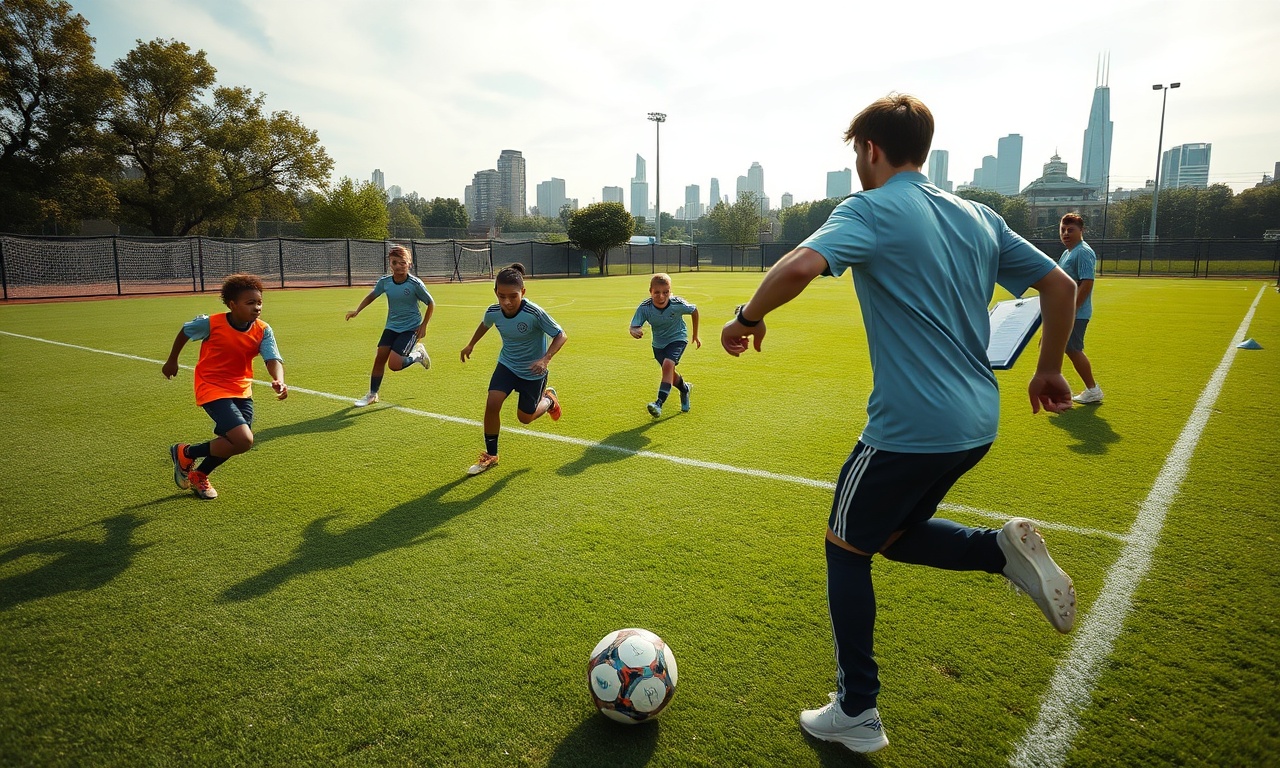
Detroit coaches and youth clubs are increasingly pointing to a shared development philosophy—find athletic edge early, sharpen it relentlessly, and build a pipeline that can translate into college opportunities and, increasingly, professional interest. In interviews and training materials reviewed by this publication, leaders describe a model that, while rooted in local infrastructure and community access, echoes the rise-and-startfast feel of Norway’s Erling Haaland: speed, timing, and finishing confidence built through repeated, targeted reps rather than waiting for “later” development.
For Detroit, that emphasis is unfolding across recreational leagues, academy partnerships, and high school programs—at a time when the city is also trying to keep talent local amid intense competition for attention, facilities, and travel budgets. The result is a growing conversation around what star wingers and high-impact attackers require in their formative years, and how US soccer talent scouting is beginning to value that profile.
From Detroit training grounds to an “Haaland edge” mindset
In Norway, Haaland’s early breakthrough is often summarized as an instinct-driven striker’s path—arriving in the box quickly, reading rebounds, and converting chances with composure. Detroit programs aren’t copying a single player’s story, but they are borrowing the principle: create match-ready habits while players are still flexible enough to learn faster than they can unlearn.
“We talk about competitive habits, not just technique,” said Marcus Hill, director of coaching education for a Detroit-area youth nonprofit that supports training and placement. “If a kid can accelerate, receive under pressure, and finish with intent, scouts notice because it shows up in games—not just on a warm day at practice.”
Several youth directors and trainers described similar progressions: winger-focused 1v1 work to develop directness; small-sided games that reward first-touch precision; and finishing sessions that emphasize near-post angles and second-ball reactions. The common thread is repeatable decision-making under speed.
That approach aligns with how scouts increasingly evaluate potential in the United States—less about whether a player looks “ready” on day one and more about whether they demonstrate a credible path to impact. When that profile is paired with high athletic ceilings, the timing can matter.
Detroit soccer development is turning attention toward star wingers
The “edge” conversation in Detroit has also broadened to the wider skill set around elite attackers, including the modern winger role. Coaches say the best wingers don’t simply beat defenders—they stretch the field, arrive in the right pocket, and time their runs so that a pass can be played early rather than waiting for a scramble.
As fans debate elite forwards and wingers globally—often citing names like Vinicius Junior prime as an example of a wide player who combines pace with feints and fearless attacking—local trainers say they’re adapting those traits into instruction. It’s not about copying a highlight reel; it’s about teaching how the movement happens.
“A lot of young players learn to dribble but not to understand space,” said Daniela Perez, a youth program coordinator who has worked with players moving through Detroit-area club systems. “We’re trying to teach kids when to go at the outside, when to cut inside, and how to recognize where the defender’s weight is. That’s what turns a winger into a game-changer.”
In Detroit, that training emphasis can be a competitive differentiator because the city’s youth soccer landscape spans varied resources. Some players have access to year-round training, while others come from families juggling time and transportation. Programs say they aim to level the playing field by concentrating coaching intensity into sessions that players can reliably attend.
Impact on Detroit Residents: stronger pathways and community credibility
Local soccer development is often discussed as entertainment, but Detroit leaders increasingly treat it as a youth opportunity system—one that can help students build academic connections through college recruiting, find mentors, and stay engaged through structured physical activity.
According to the U.S. Census Bureau, Detroit’s population has faced longstanding economic transitions, and youth outcomes can be influenced by neighborhood resources and access to programs. While soccer doesn’t solve every challenge, Detroit youth organizers say structured training can reduce the “dead time” that contributes to disengagement by offering consistent coaching, peer networks, and measurable goals.
“When families see that a training plan can translate to tryouts and roster spots, participation goes up,” said Hill. “And when participation goes up, the community gets better—more competition, better standards, and more mentors.”
That community effect matters in a city where sports are tightly woven into local identity. Detroit-area high schools and athletic departments routinely serve as a bridge between youth leagues and longer-term development. Several youth coaches described how players who commit to offseason fitness—speed work, first-touch drills, and finishing under fatigue—are more likely to earn playing time when the school season arrives.
Coaches also say the pipeline can offer visibility beyond Michigan. With US soccer talent scouting expanding through showcases and regional tournaments, players who demonstrate tactical urgency and consistent finishing can draw attention sooner than peers who wait to develop those habits later.
Background & Data: why “pipeline” thinking is changing
Detroit’s soccer development conversation fits a broader national shift in talent evaluation. Scouts and clubs increasingly rely on match footage, performance indicators, and role-specific attributes rather than only traditional tryout outcomes. In practical terms, that means players are being assessed for traits that resemble what star wingers and high-end attackers bring to professional play.
U.S. Soccer, in its guidance on player development and coaching education, has emphasized that development should be age-appropriate, technically grounded, and supported by a clear learning environment. While that is not a Detroit-only framework, local programs say they use similar principles: build technique early, encourage game understanding, and create frequent opportunities for players to make decisions with a coach present to correct patterns.
Meanwhile, Detroit’s sports ecosystem continues to strengthen through collaborations. The city has seen more youth programming tied to education and community resources, and clubs have continued to refine their pathways toward higher-level competition. That matters for families, especially when the difference between a roster spot and a snub can come down to a player’s readiness in the specific role being scouted.
In winger development, readiness often means demonstrating repeatable actions: winning the first duel, controlling the ball at speed, and making an immediate next decision—cut, cross, shoot, or release a teammate—within a narrow time window. That is also why the “Haaland edge” metaphor resonates in Detroit coaching circles: the attacker who consistently turns chances into outcomes creates a visible signature that evaluators can trust.
How to use star wingers: training priorities Detroit coaches say work
While each program’s curriculum differs, Detroit youth staff described common priorities that resemble modern winger use—especially when trying to develop a player’s prime impact potential. Trainers said that the best sessions avoid one-dimensional “beat a defender” drills and instead require the player to connect movement to a functional result.
Coaches highlighted three training areas:
1) Receive-and-accelerate under pressure: Players practice first touch into space, then sprint into an attacking lane where a decision must be made quickly.
2) Cut timing and near-post finishing: Wingers learn when to go inside based on defender posture, then finish to recognizable target zones.
3) “Next action” reps: Every successful dribble leads to a next step—cross, cutback, through ball, or shot—so the winger becomes a threat rather than a highlight moment.
Hill said scouts tend to notice that “next action” quality. “Anyone can move with the ball in isolation,” he said. “The difference is whether you can do it in a game where choices are constrained.”
For Detroit families trying to support development, these priorities offer a practical checklist: look for programs that show how technique turns into repeated match contributions, not just isolated training outcomes.
What happens next: Detroit’s youth pipeline and US scouting watchlist
Detroit youth leaders say the next phase is about consistency—keeping high coaching standards across age groups, ensuring facilities and travel planning don’t collapse the pipeline, and building more structured relationships with college recruiters and tournament organizers.
As US soccer talent scouting becomes more data-driven and role-specific, local players who demonstrate the “edge” qualities—pace, timing, composure, and a winger’s functional decision-making—could find that attention arrives earlier. Detroit clubs are already adjusting tryout prep and training calendars to emphasize game-speed readiness rather than only technical repetition.
For residents, the long-term payoff could be straightforward but meaningful: more local athletes earning roster opportunities, more credible pathways into college competition, and stronger community confidence that youth development here can reach beyond the city’s boundaries.
In the meantime, Detroit coaches say their north star remains the same: build players who can impact games. Haaland’s name gets used as shorthand for that “arrive-ready” feeling, but the real work happens in training schedules, coaching education, and the daily grind that turns potential into performance.