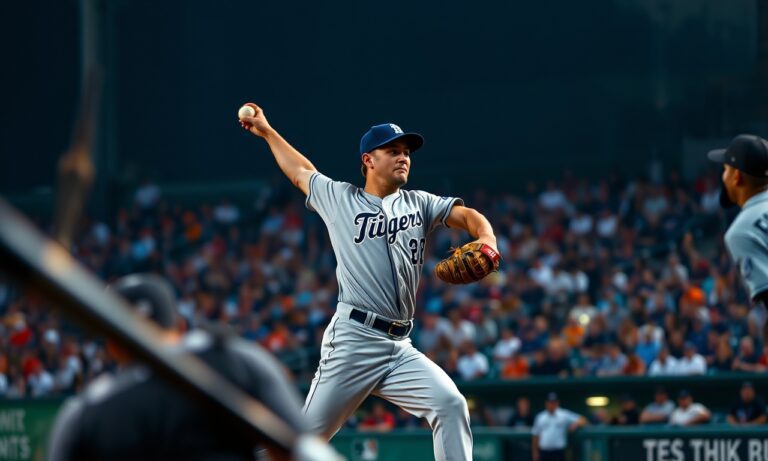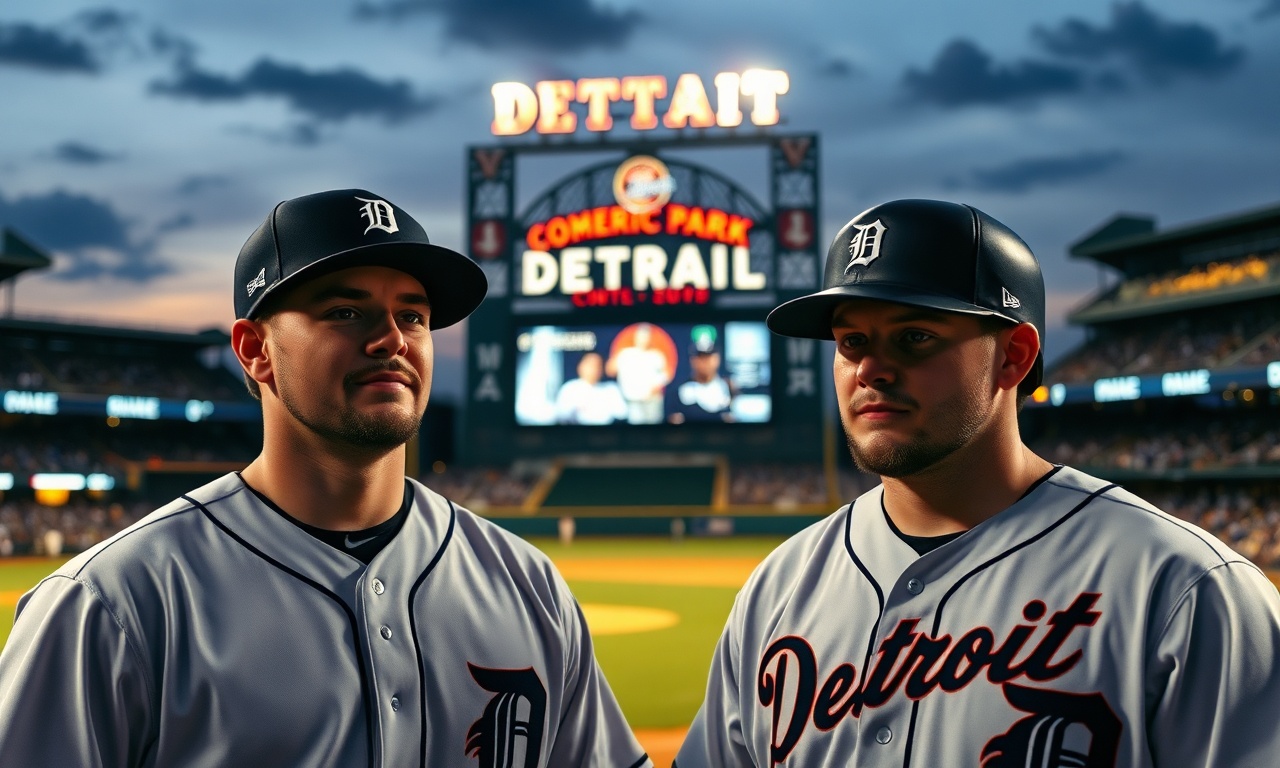
The Detroit Tigers will have a pair of homegrown standouts in the spotlight this summer, as Dillon Dingler and Kevin McGonigle have been selected to represent the American League in the All-Star Game, according to Major League Baseball and team announcements.
The nominations underscore a new wave of Tigers talent pushing through Detroit’s farm system and into major-league roles. For a franchise and a fan base that measures seasons by both wins and player development, the call-ups also provide a rare moment when the wider league’s attention falls directly on the Tigers’ next chapter.
All-Star selections highlight Detroit’s rising depth
Dingler and McGonigle earned their spots after strong seasons that have blended everyday contributions with game-changing moments. Tigers officials did not describe their exact selection path in public remarks beyond acknowledging performance and consistency, but the Tigers’ broader context matters: Detroit has spent recent seasons rebuilding roster identity around athleticism, improved plate approach, and pitching reliability.
“Selections like this reflect both the players’ work and the organizations’ ability to develop talent for the long term,” a team spokesperson said in a Tigers statement released alongside the announcements. The franchise framed the All-Star Game as both an honor for the players and a milestone for the Tigers development pipeline.
MLB’s selection process for the American League All-Star roster, meanwhile, is grounded in a mix of fan, player, and league input, with managers and league officials filling specific roles as needed. MLB communications have previously described the framework as a blend of performance and representative selection, and the current announcements follow that established approach.
Impact on Detroit Residents
For Detroit baseball fans, the announcement lands at a time when sports often serve as a community touchstone—an occasion to gather, talk, and measure progress. Local businesses tied to game-day routines also tend to benefit in indirect ways when a Detroit player appears on national stages.
“When local teams get national recognition, we see it reflected in fan engagement—whether that’s people coming out to watch games, buying merchandise, or talking about prospects,” said Mark McGhee, director of communications for a Detroit-area youth baseball nonprofit that partners with community leagues. McGhee noted that All-Star visibility can inspire younger athletes to stay in the sport, especially when the path from neighborhood fields to major leagues feels tangible.
Beyond morale, there is a practical dimension to All-Star attention for a Detroit sports market. The Tigers’ presence in the league’s marquee midseason event can amplify media coverage that reaches beyond the city limits. That can help sustain interest in the franchise during stretches when other headlines dominate and can also influence casual fans who are more likely to follow a team when one of its players is central to national conversation.
Detroit’s sports ecosystem is interconnected. According to the Detroit Regional Chamber, the metro area’s entertainment and hospitality sectors rely on both local attendance and broad brand exposure to drive visitation and spending. While the All-Star Game itself is not held in Detroit, the increased national spotlight on Detroit players can have a downstream effect on local viewership and game-day commerce.
What Dingler and McGonigle bring to the roster
Dillon Dingler has emerged as a dynamic presence whose contributions go beyond raw headlines. Tigers fans have watched him develop into a player who can impact games with timely hitting, attention to pitch selection, and the ability to perform across different situations. That blend is often what makes All-Star rosters meaningful: the game is designed to spotlight players who can adapt quickly, even when stepping into unfamiliar lineups and matchups.
Kevin McGonigle, meanwhile, has drawn attention for his steadier, situational approach—an attribute that often translates well to All-Star play. In an exhibition format that can feature high-velocity arms and elite hitters, teams prioritize choices that combine preparation with composure. McGonigle’s selection signals that Detroit’s development has produced not just talented prospects, but reliable performers expected to handle pressure.
Both players’ selections also reflect the Tigers’ emphasis on building depth. For Detroit’s coaching staff and front office, the All-Star nod can serve as validation that internal systems are producing major-league readiness, not only highlight-reel moments.
Background & data: why local development matters
Detroit’s relationship with baseball has long been shaped by the city’s capacity to cultivate talent through academies, community leagues, and the hard work of player development staff. The Tigers’ recent emphasis on prospects is a familiar theme to residents following major-league sports in the region.
From a broader standpoint, the U.S. Census Bureau has documented how population and household changes in metropolitan areas influence youth participation patterns and the demand for sports programming. For cities like Detroit, where community organizations play a central role in access to structured activities, MLB recognition can indirectly support youth engagement by keeping baseball visible and aspirational.
In practical terms, more attention on local players can also translate into renewed interest from sponsors and partners who support youth baseball, whether through equipment drives, field improvements, or coaching resources. Many community programs depend on year-to-year funding that can fluctuate, and national exposure can help create momentum.
What happens next for Detroit during All-Star Week
As the All-Star Game approaches, Detroit’s focus will shift to media sessions, event appearances, and the broader Tigers narrative for the remainder of the season. For players selected to represent the American League All-Star roster, the week typically includes additional scrutiny from fans and analysts, plus a boost in public attention. For a Detroit organization working toward sustained competitiveness, managing that attention—without losing day-to-day focus—is a key challenge.
For residents, the immediate payoff is less about the game itself and more about what it signals. The Tigers are sending players to the league’s showcase, reinforcing Detroit’s identity as a place where the next wave of major leaguers is being developed—not just acquired.
Detroit’s baseball community can also expect follow-on coverage as the Tigers’ season progresses. National outlets often revisit team scouting and player-development stories when All-Star rosters include new names, and that attention can continue to surface during postseason conversations.
How to follow the Tigers’ All-Star presence
Fans can track Dingler and McGonigle through MLB’s official channels for roster updates, interview quotes, and event schedules. Locally, Detroit-area sports media and team partners typically offer watch parties and live coverage of All-Star Week programming, giving residents a chance to share the moment.
For Tigers supporters, this is a rare convergence: a national event honoring standout American League performers, and a Detroit roster narrative that feels increasingly like the franchise’s future.