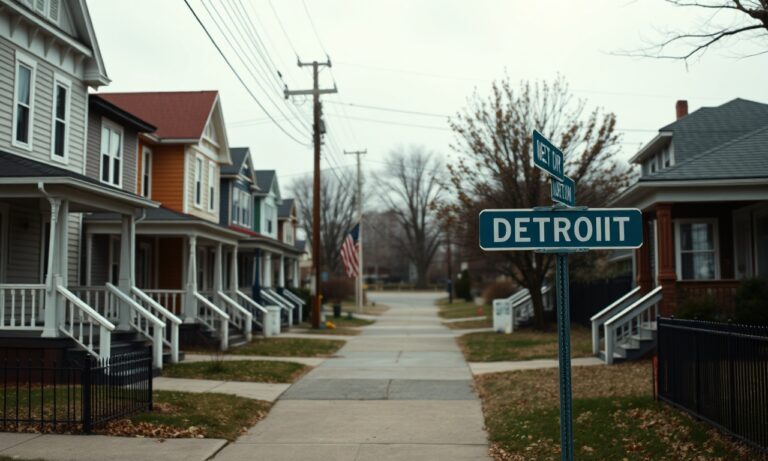
For decades, the narrative surrounding Detroit’s housing market was one of abundance and affordability. However, the search for cheap apartments in Detroit has become increasingly complex for long-term residents and newcomers alike. As development accelerates in neighborhoods like Midtown, Corktown, and New Center, the definition of affordability is shifting, creating a widening gap between market rates and the financial reality of many Detroiters.
Recent data indicates that while Detroit remains more affordable than coastal metropolises, the year-over-year increase in rental costs is outpacing wage growth for many local households. This trend signals a pivotal moment for the city’s housing landscape, where the availability of naturally occurring affordable housing is shrinking.
The Disappearing Stock of Cheap Apartments in Detroit
According to data from rent aggregation platforms and the U.S. Census Bureau, the inventory of units that can be classified as “cheap”—specifically those accessible to residents earning the city’s median household income—is under pressure. While luxury developments garner headlines, the stock of safe, renovated, and budget-friendly units is seeing high demand and low vacancy rates.
Real estate analysts point to a “tale of two cities” within the rental market. In the 7.2 square miles of the greater downtown area, rents have reached parity with some Chicago suburbs. Meanwhile, in neighborhoods further from the city center, prices remain lower, but issues regarding blight, code compliance, and utility costs often make these units less viable for families seeking stability.
“The days of easily finding a renovated one-bedroom apartment for under $800 in a prime location are largely behind us,” said a local housing advocate familiar with the Detroit real estate market. “What we are seeing now is a push to redefine what ‘cheap’ means in the context of a recovering city.”
Impact on Detroit Residents and Cost Burdens
The shifting market dynamics have a direct impact on the local population. The federal government defines a household as “cost-burdened” if they spend more than 30% of their income on housing. In Detroit, where the poverty rate remains significant, a slight increase in rent can push families into housing instability.
For many residents, the primary issue is that new “affordable” housing units coming online are often pegged to the Area Median Income (AMI) of the entire Metro Detroit region, rather than the city of Detroit itself. Consequently, an apartment listed as “affordable” at 80% AMI may still be financially out of reach for a resident searching for truly cheap apartments in Detroit.
Local business owners have also noted the strain. When residents spend a higher percentage of their income on rent, there is less disposable income circulating within the local economy. “It’s a ripple effect,” noted the owner of a coffee shop in the West Village. “If my regulars are stressed about their lease renewal, they aren’t buying that extra pastry. Housing security is the foundation of our local economy.”
City Initiatives and Definition of Affordability
The City of Detroit has acknowledged these challenges and is actively working to preserve affordability. Mayor Mike Duggan’s administration has emphasized the importance of ensuring that development benefits all Detroiters. The Housing and Revitalization Department has launched several initiatives aimed at preserving existing affordable units and incentivizing developers to include reserved units for lower-income tenants in new projects.
According to the City of Detroit Housing & Revitalization Department, millions of dollars have been allocated to the Affordable Housing Leverage Fund. This fund is designed to support the preservation and creation of housing options that remain accessible to low-income residents.
Furthermore, city officials are enforcing stricter rental ordinances to ensure that landlords maintain their properties. While this improves living conditions, some landlords argue that the cost of compliance forces them to raise rents, further complicating the ecosystem of cheap apartments in Detroit.
The Role of AMI in Pricing
Understanding the Area Median Income is crucial for renters navigating the current market. Federal guidelines set the AMI, which developers use to determine rent limits for subsidized units. Critics argue that because the AMI includes wealthy suburbs like Oakland County, the “affordable” rent caps are artificially high for the inner city.
This discrepancy has led to increased activism and calls for a “Detroit AMI” that would more accurately reflect the earnings of city residents, ensuring that units marketed as affordable are actually cheap enough for the people who live here.
Market Outlook: What Happens Next?
Looking ahead, the supply of rental units is expected to increase as several large-scale mixed-use developments near completion. Theoretically, an increase in supply should stabilize prices. However, construction costs and interest rates remain high, making it difficult for developers to deliver market-rate units at a low price point without significant government subsidy.
For tenants, the advice from housing counselors is to look for “naturally occurring” affordable housing in stabilizing neighborhoods adjacent to hotspots—areas like Bagley, the Villages, or Northwest Detroit. These areas often offer more space and lower price tags than Downtown or Midtown, though they may require reliable transportation.
As Detroit development continues to evolve, the balance between revitalization and displacement remains delicate. The availability of cheap apartments in Detroit will serve as a key metric for the city’s success in ensuring an equitable recovery.
Residents facing immediate housing crises are encouraged to contact the Detroit Housing Resource HelpLine or local nonprofits for assistance with placement and eviction diversion programs.