For decades, the global narrative surrounding Detroit focused largely on its ruins. Images of the dilapidated Michigan Central Station and the shuttered Book Tower served as symbols of industrial decline. However, a significant shift in urban planning and economic strategy has occurred in recent years. Today, the preservation of Detroit architectural heritage is no longer just a matter of nostalgia; it has become a central pillar of the city’s economic revitalization strategy.
As billions of dollars flow into developments across the city, urban planners, developers, and city officials are increasingly prioritizing adaptive reuse over demolition. This approach acknowledges that Detroit’s unique competitive advantage lies in its pre-war architecture—assets that cannot be replicated by modern construction.
The Shift from Demolition to Rehabilitation
In the early 2010s, the city’s approach to blight often involved the wrecking ball. While demolition remains necessary for structures that pose immediate safety hazards, the City of Detroit Planning and Development Department has pivoted toward a strategy that values density and historic character. This change is visible not just in the downtown core, but in neighborhoods where commercial corridors are being stabilized.
The recent reopening of Michigan Central Station by Ford Motor Company stands as the most high-profile example of this trend. After sitting vacant for thirty years, the station’s restoration has catalyzed development in the Corktown neighborhood. According to data from local real estate analysts, property values in areas surrounding major historic rehabilitations have outpaced the city average, suggesting that heritage assets act as anchors for broader economic growth.
Economic Drivers Behind Preservation
Preserving Detroit architectural heritage is costly, often exceeding the price tag of new construction due to the need for specialized craftsmanship and structural remediation. However, financial incentives have made these projects viable. The Federal Historic Preservation Tax Incentives program has been a crucial tool for developers in Detroit.
“Without federal and state historic tax credits, projects like the Book Tower or the David Whitney Building would simply not be financially feasible,” noted a representative from a Detroit-based development firm involved in recent downtown restorations. “These buildings require massive capital investment to bring up to code, but once finished, they offer a product that modern glass-and-steel towers cannot compete with in terms of character.”
This economic ripple effect extends beyond the buildings themselves. Heritage tourism is a growing sector for the local economy. Visitors are increasingly drawn to Detroit specifically to view its collection of Art Deco and Neoclassical architecture. By maintaining these structures, the city secures a recurring stream of tourism revenue.
Impact on Detroit Residents
For long-time Detroiters, the conversation around preservation is complex. It involves balancing the retention of community history with the pressures of gentrification. When a historic landmark is saved, it often signals the arrival of higher rents and new demographics. However, preservation advocates argue that adaptive reuse can also serve existing residents by transforming vacant eyesores into community assets.
Recent initiatives have focused on extending preservation efforts beyond Downtown and Midtown. In neighborhoods like Jefferson Chalmers and the Avenue of Fashion, efforts are underway to restore historic storefronts. These projects aim to provide space for local small businesses rather than just national chains.
Furthermore, adaptive reuse projects are increasingly including residential components. As reported in our recent coverage of Detroit real estate trends, developers are converting former hotels and office buildings into apartments. The challenge remains ensuring that a portion of these units remains affordable for the workforce, a stipulation often attached to tax abatements approved by the City Council.
Balancing the Old with the New
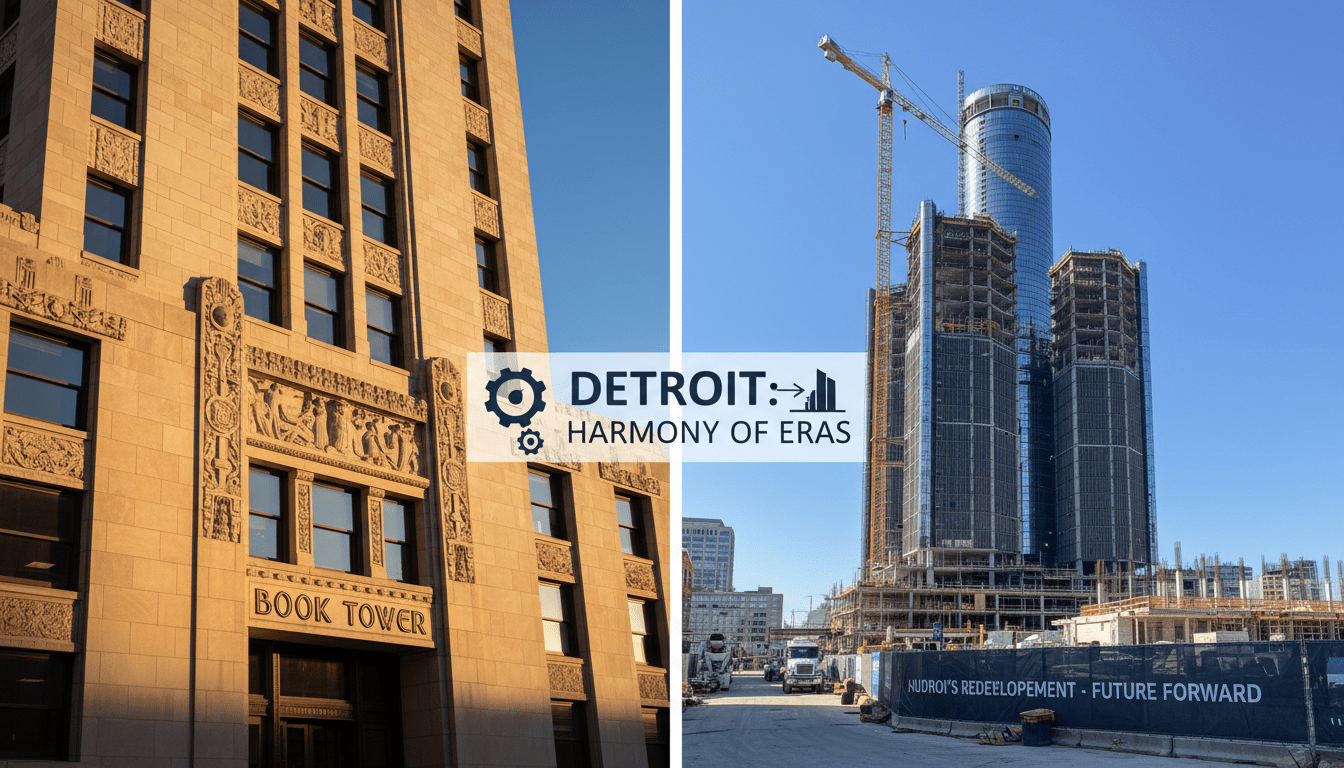
Detroit is not freezing in time; it is evolving. The skyline is currently being altered by the Hudson’s site development, a modern skyscraper rising on the footprint of a lost department store. This juxtaposition of the ultra-modern with the historic is redefining the city’s aesthetic.
Architectural critics suggest that the success of Detroit’s built environment relies on this dialogue between eras. The contrast highlights the intricate details of the older masonry while showcasing the sleekness of modern engineering. The consensus among urban designers is that Detroit architectural heritage provides the necessary texture that makes the modern additions feel grounded rather than generic.
Local historians have pointed out that the loss of buildings like the original Hudson’s store serves as a cautionary tale. The psychological impact of losing such landmarks was profound, contributing to a sense of civic loss. Preventing similar losses in the future is a priority for organizations like Historic Detroit, which tracks the status of endangered buildings.
The Future of Detroit’s Historic Stock
Looking ahead, the focus is shifting to difficult-to-redevelop sites such as the Lee Plaza and the United Artists Theatre. These structures have suffered severe degradation, yet plans are slowly materializing to bring them back to life. The city has signaled that it will continue to support these endeavors through the Strategic Neighborhood Fund and other financing mechanisms.
For more insights into how these projects are funded and their timelines, readers can follow our ongoing neighborhood development updates.
Ultimately, the preservation of Detroit’s built environment is about stabilizing the city’s identity. By saving the physical structures of the past, Detroit is betting that its history is the foundation for its future prosperity.