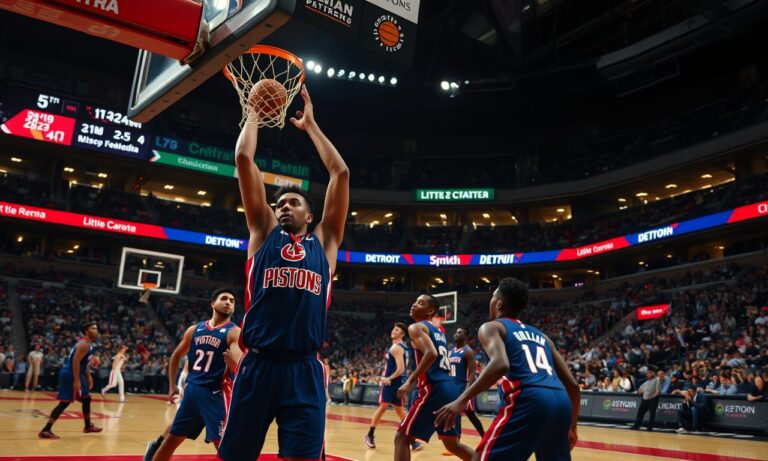
For the first time in several seasons, the conversation surrounding the Pistons standings is shifting from a sole focus on draft lottery odds to a cautious optimism about competitive basketball. As the 2024-2025 NBA season progresses, the Detroit Pistons are navigating a complex landscape in the Eastern Conference, attempting to shed the weight of historical struggles and establish a winning culture under new leadership.
The franchise, led by President of Basketball Operations Trajan Langdon and Head Coach J.B. Bickerstaff, has made it clear that the days of “tanking” are over. However, the reality of the NBA standings presents a rigorous test for Detroit’s young core, led by Cade Cunningham, Jaden Ivey, and Jalen Duren. As the team fights for position, the implications extend beyond the court, impacting ticket sales, fan engagement, and the broader narrative of Detroit sports resurgence.
The Eastern Conference Landscape
The current state of the Eastern Conference presents a stratified hierarchy. At the top, established powerhouses like the Boston Celtics remain dominant. However, the middle of the pack—often referred to as the “Play-In” tier—is where Detroit finds its current battleground. According to data from NBA.com, the separation between the 10th seed (the final Play-In spot) and the bottom tier of the lottery teams has historically been a matter of just a few games during the mid-season stretch.
For Detroit, climbing the Pistons standings requires consistency that has eluded the franchise for over a decade. The team is currently jockeying for position against conference rivals such as the Charlotte Hornets, Washington Wizards, and Toronto Raptors, while attempting to chase down teams like the Chicago Bulls and Atlanta Hawks. This “middle-class” of the East is crowded, and every divisional matchup carries significant weight in tie-breaker scenarios.
“The focus isn’t just on the number in the win column, but the net rating and defensive efficiency,” said a source close to the team’s analytics department. “Coach Bickerstaff has emphasized that rising in the standings is a byproduct of defensive habits, not just offensive output.”
Impact on Detroit Residents and Fans
The fluctuation of the Pistons in the standings has a tangible ripple effect on the city of Detroit, particularly the District Detroit area surrounding Little Caesars Arena. When the team is competitive, the economic impact is measurable.
Local business owners along Woodward Avenue and within the arena district have noted a shift in crowd energy compared to the previous season’s historic losing streak. “When the standings show the team is within two or three games of a playoff spot, the Friday and Saturday night crowds are different,” said Marcus Thorne, a manager at a sports bar near the arena. “People stay longer, they spend more, and there is a buzz in the air. When the team is 20 games back, that energy evaporates.”
Furthermore, the renewed hope impacts ticket demand. A competitive showing in the standings validates the fans’ investment in the team. For Detroit residents who have endured a prolonged rebuild, seeing the Pistons climb out of the conference basement is a matter of civic pride, mirroring the recent success of the Detroit Lions.
For more on how local sports influence the city’s economy, read our coverage on Downtown Detroit Business Growth.
The Lottery vs. The Playoffs: A Strategic Dilemma
One of the most debated aspects of the current Pistons standings is the tension between immediate success and long-term asset accumulation. While the front office has signaled a desire to win, the structure of the NBA Draft Lottery incentivizes finishing with a lower record.
The 2025 Draft Implications
The 2025 NBA Draft class is projected to be strong, led by headlining prospect Cooper Flagg. If the Pistons finish in the bottom three of the league standings, they guarantee themselves a 14% chance at the number one overall pick and a floor of the fifth pick. However, if they push for the 10th seed Play-In spot and fall short—landing, for instance, with the 9th or 10th worst record—their odds of jumping into the top four diminish significantly.
Despite this, the organization appears committed to prioritizing the development of winning habits over lottery balls. Cade Cunningham’s contract extension and the acquisition of veteran shooters suggest the mandate is to rise in the standings now, rather than wait for another savior in the draft.
Statistical Trends and Defensive Metrics
To understand the movement in the standings, one must look at the underlying data. Under Coach Bickerstaff, the Pistons have aimed to improve their Defensive Rating, a metric where they ranked near the bottom of the league in previous years.
According to Basketball Reference, teams that qualify for the Play-In Tournament typically maintain a defensive rating in the top 20 of the league. Early season trends suggest Detroit has made marginal improvements in rim protection and transition defense, largely aided by the physical presence of Jalen Duren and Isaiah Stewart.
- Home vs. Away Splits: Detroit has historically struggled on the road. To climb the standings, the team must improve its win percentage away from Little Caesars Arena.
- Clutch Time Performance: A major factor in the standings is performance in “clutch” situations (games within 5 points in the last 5 minutes). Learning to close out close games is the next step in the young core’s maturation.
You can read more about the arena’s atmosphere and infrastructure improvements in our report on Little Caesars Arena Upgrades.
What Happens Next?
As the season approaches the trade deadline, the Pistons’ position in the standings will dictate the front office’s strategy. If the team remains within striking distance of the Play-In tournament, Langdon may look to add veteran depth to bolster the rotation. Conversely, if a mid-season slump drops them back to the bottom of the East, the focus may shift back to asset management and evaluating younger talent.
For now, the daily check of the Eastern Conference standings has returned to the routine of Detroit sports fans. It is no longer just about calculating odds for the lottery, but about measuring the tangible progress of a restoration project that the city is desperate to see succeed. The climb is steep, but for the first time in years, the foothold looks secure.