As autumn leaves settle across Metro Detroit and morning frosts begin to coat windshields from Corktown to the Grosse Pointes, local automotive safety experts and state officials are issuing a unified warning: the window for effective winter tire replacement is closing rapidly. While many residents wait for the first significant snowfall to visit their mechanic, data suggests that waiting until the flakes fly may compromise road safety significantly.
According to meteorologists and automotive engineers, the critical factor for tire performance is not snow accumulation, but temperature. With Detroit’s daily averages now frequently dipping below the 45-degree Fahrenheit threshold, the rubber compounds in standard all-season tires are beginning to harden, reducing traction even on dry pavement.
The 45-Degree Rule and Road Safety
For decades, Michigan drivers have relied on “all-season” tires to navigate the state’s unpredictable weather. However, the National Highway Traffic Safety Administration (NHTSA) and independent testing bodies note a distinct difference in performance once the thermometer reads 45 degrees or lower.
“The misconception is that you only need winter tires when there is six inches of snow on the Lodge Freeway,” explains Mark Davison, a senior automotive safety consultant based in Southeast Michigan. “The reality is that traditional tire rubber becomes like a hockey puck at freezing temperatures. It loses its pliability, which means it can’t grip the microscopic texture of the road surface. Winter tire replacement isn’t just about snow; it is about cold-weather adhesion.”
Data from the tire industry indicates that at 30 mph, a vehicle equipped with winter tires can stop up to 60 feet shorter on ice than one with all-season tires. In a dense urban environment like Detroit, where intersection visibility can be poor and sudden stops are frequent, that distance often means the difference between a safe commute and a collision.
Impact on Detroit Residents
For the average Detroiter, the logistics of winter tire replacement involve both time and money, but local shop owners say the investment pays off in accident prevention. Service centers across Wayne County are already reporting an uptick in appointments, warning that wait times could extend to weeks once the first heavy storm hits.
The impact of neglecting this maintenance is felt disproportionately in a city where vehicle reliance is high. Commuters utilizing major arteries like I-75 and I-94 face notorious black ice conditions on overpasses. Furthermore, the varying state of road maintenance across municipal boundaries means drivers often transition abruptly from cleared roads to slick, unplowed side streets.
Local insurance agents also highlight the financial implications. “We see a spike in claims every year during the first freeze,” notes a representative from a Detroit-based insurance agency. “Many of these are low-speed slide-offs that could often be prevented with proper equipment. The deductible on a collision claim often exceeds the cost of a set of winter tires, which will last several seasons if stored correctly.”
Residents are advised to check Detroit road maintenance updates to stay informed about salting schedules, but officials emphasize that salt is less effective in extreme cold, reinforcing the need for proper tires.
The Myth of All-Wheel Drive
A prevalent sentiment among Detroit drivers is that All-Wheel Drive (AWD) or Four-Wheel Drive (4WD) negates the need for specialized rubber. Safety experts categorize this as a dangerous fallacy. While AWD helps a vehicle accelerate in slippery conditions, it does nothing to aid in braking or cornering.
“All-wheel drive helps you get going, but it doesn’t help you stop,” Davison added. “Your brakes stop the wheels, but the tires stop the car. If there is no friction between the tire and the road, the drivetrain configuration is irrelevant.”
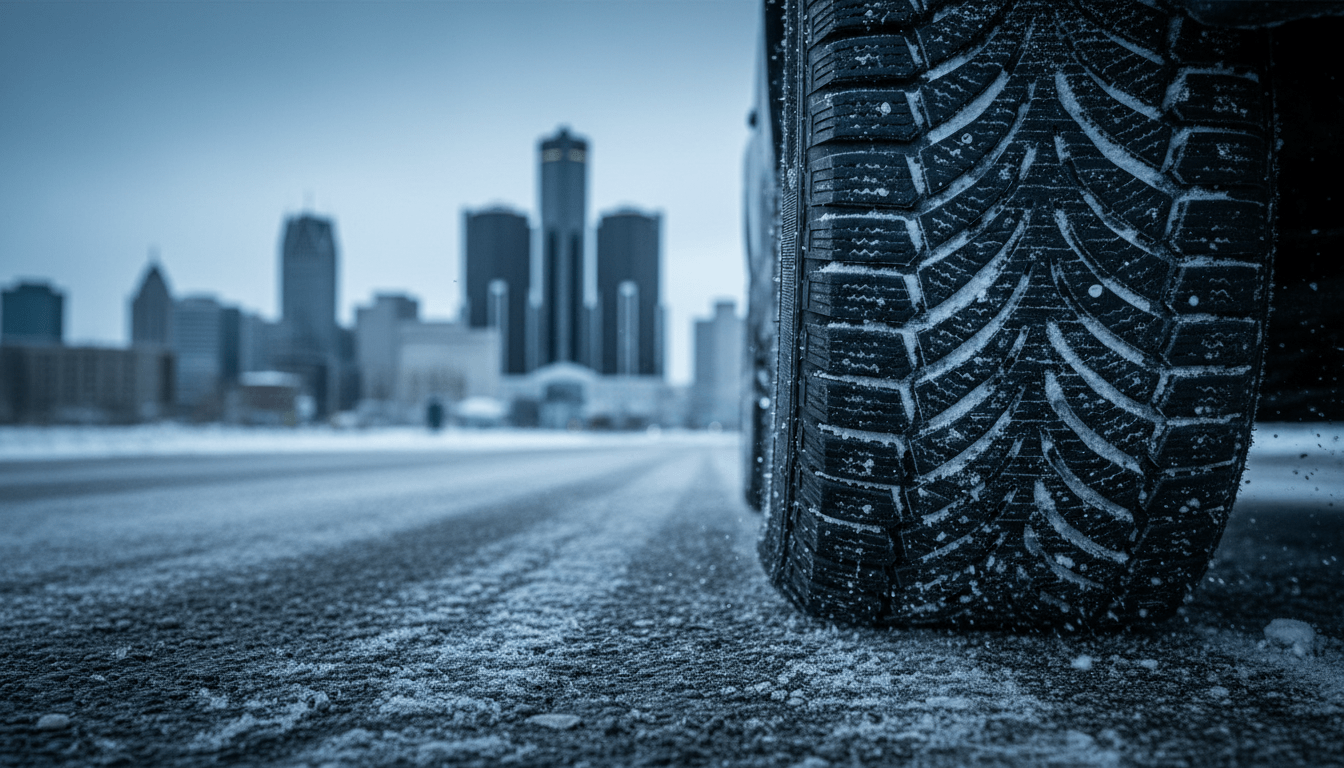
This distinction is vital for Detroit drivers navigating the city’s mix of highway speeds and stop-and-go neighborhood traffic. Without the specialized tread patterns—known as sipes—that bite into ice and snow, heavy SUVs and trucks are just as liable to slide through intersections as smaller sedans.
Background and Crash Statistics
The urgency of the current advisories is backed by sobering statistics. According to data from the Michigan State Police Criminal Justice Information Center, weather-related crashes remain a leading cause of vehicle damage and injury in the state. In previous years, tens of thousands of crashes in Michigan occurred on snowy, icy, or slushy roads.
Reports indicate that a significant percentage of these incidents involve vehicles losing control due to inadequate traction. While the City of Detroit continues to improve its snow removal response plans, the physical limitations of rubber in cold weather remain a constant variable that only drivers can address.
Furthermore, the tire market has evolved. The emergence of “All-Weather” tires—which carry the Three-Peak Mountain Snowflake symbol but can be driven year-round—offers a middle ground for residents who lack storage space for a second set of wheels. However, for maximum safety during the deep freeze of January and February, dedicated winter tires remain the gold standard.
What Happens Next?
As November progresses, Detroit area mechanic shops advise drivers to inspect their current tires immediately. The legal minimum tread depth is 2/32 of an inch, but for winter driving, experts recommend at least 5/32 of an inch to effectively channel slush and snow away from the contact patch.
With long-range forecasts predicting a potentially volatile winter for the Great Lakes region, the window for proactive winter tire replacement is narrowing. Local authorities urge residents not to wait for the first weather emergency to make the switch, ensuring that Detroit’s roads remain as safe as possible through the coming months.